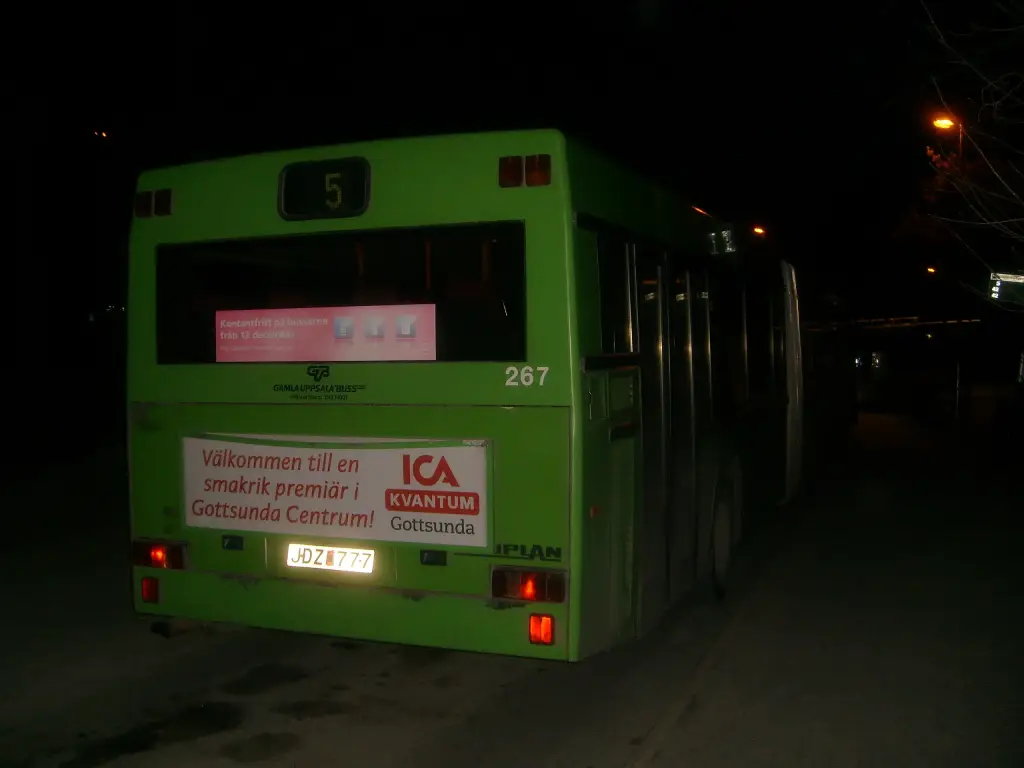
The Neoplan N 4021 is an articulated city bus of the N40 series, built by Gottlob Auwärter with the engine at the rear in a pusher layout. It grew out of the low-floor articulated buses Neoplan developed at the end of the 1980s, and it stayed in production until 1999, when the improved N 4421 replaced it.
Neoplan N 4021 at a glance
| Type | articulated city bus, N40 series |
|---|---|
| Layout | pusher, rear-axle drive |
| Predecessor | Neoplan N 421 |
| Prototypes | 1987, two N 421 SG II / 3N for Munich |
| First large series | 35 buses for Bremen’s BSAG, 1988 |
| Production ended | 1999 |
| Successor | Neoplan N 4421 |
| Low floor | step-free at doors 1 and 2 |
| Accessibility | electric wheelchair ramp at the front door |
| Fuel | diesel; natural gas as the N 4021 CNG |
| Licence production | Neoplan Polska, for Eastern Europe |
Based on one source, the German Wikipedia article on the N 4021.
History of the Neoplan N 4021
From the N 421 to the N 4021
Neoplan had built two prototypes of a low-floor articulated bus in 1987, designated N 421 SG II / 3N, and Munich’s MVG put them into service. In 1989 the Cologne operator KVB bought the first five low-floor articulated buses of the N421 SGIII type, which combined a low-floor front section with a high-floor rear. The design was then renamed N 4021 and replaced the N 421. The first large series, 35 vehicles, had already gone to Bremen’s Bremer Straßenbahn AG in 1988.
Low floor, step by step
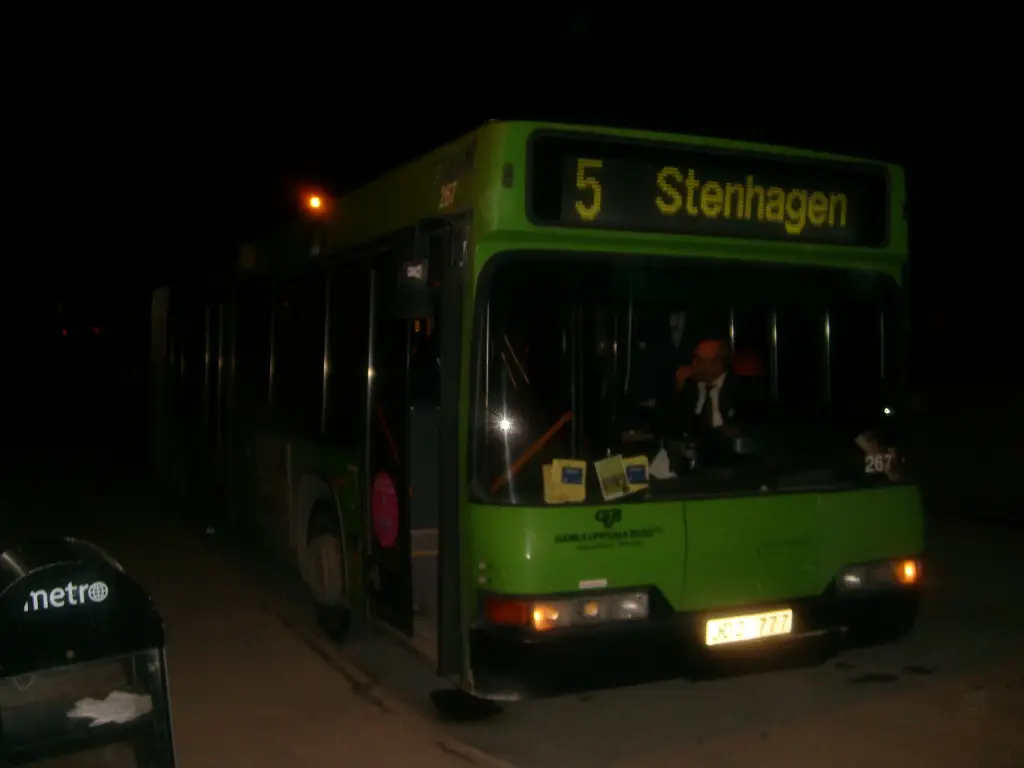
On the first N 4021 buses the entry areas at doors 1 and 2 were completely step-free, while behind the articulation, at door 3 and at door 4 where fitted, passengers had to climb a step, and all seats stood on podiums. In 1989 and 1990 Neoplan changed the layout between doors 1 and 2, removing the podiums so that the seats sat at floor level; the side windows in that section grew larger and their lower edge dropped. A new front mask arrived in 1992 and 1993. From 1997 the side window edges ran all the way down to the rear and the third door area became step-free as well.
Versions and service
A shortened trailer was built as the N 4018 for the Wilhelmshaven municipal works, and the N 4021 was also produced under licence by Neoplan Polska for the Eastern European market. Cologne’s KVB operated ten of the type, and many buses were later sold on to Eastern Europe. Production ended in 1999 and the developed N 4421 followed. Some versions used the front of the Neoplan N 416.
Design and features
- Step-free entry: low-floor access at the front and middle doors gave the bus its Niederflur-Gelenkbus description.
- Wheelchair ramp: an electrically operated ramp at the front door made the N 4021 accessible.
- Space inside: the middle-door area held a wheelchair position or two prams.
- Gas option: customers could order a natural gas engine, sold as the N 4021 CNG.
- Pusher layout: the engine drove the rear axle, the usual arrangement for a modern articulated city bus.
Neoplan N 4021 versions
- N 421 SG II / 3N (1987): two prototypes evaluated in Munich.
- N 4021: the standard diesel articulated bus.
- N 4018: a version with a shortened trailer for Wilhelmshaven.
- N 4021 CNG: with a natural gas engine.
- N 4021 with N 416 front: one of several front-end variations.
The N 4021 belongs to Neoplan’s city-bus programme of the 1990s; the company’s better-known touring coaches are described under the Cityliner and Starliner. The full range is in the Neoplan collection.
Sources
- Neoplan N 4021, German Wikipedia: development, low-floor layout, versions, production end