The Multicar 24 was the light truck that replaced the Multicar 22 at VEB Fahrzeugwerk Waltershausen in 1974. It brought a newly developed four-cylinder diesel, a fully revised cab that could be tilted forward and, from 1977, a two-seater version. Production lasted four years and ended in 1978 after exactly 25,659 vehicles.
Multicar 24 at a glance
| Maker | VEB Fahrzeugwerk Waltershausen |
|---|---|
| Production | 1974–1978 |
| Predecessor | Multicar 22 |
| Successor | Multicar 25 |
| Unbuilt forerunner | Multicar 23 of 1969 |
| Cab | single-seat, fully revised and tilting |
| Two-seater | Multicar 24-0 from 1977 |
| Engine | new four-cylinder diesel from Motorenwerk Cunewalde |
| Built | 25,659, including the 24-0 |
| Exported | 48 per cent |
| Sold in West Germany | through a company in Wehrheim |
The Multicar 24 has no article of its own in English Wikipedia; this page is based on the German Wikipedia article on the model and on the English article about the Multicar brand.
History of the Multicar 24
Work on a replacement for the Multicar 22 began at the end of the 1960s. One weakness of the older design was that its cab had room only for the driver, while some jobs needed two people on board. In 1969 the works therefore built the Multicar 23, whose name combined two tonnes of payload with the third series. It was technically based on the Multicar 22 but had a completely revised cab that already looked much like the later cabin of the 24. The 23 never reached series production.
From the Leipzig fair to the line
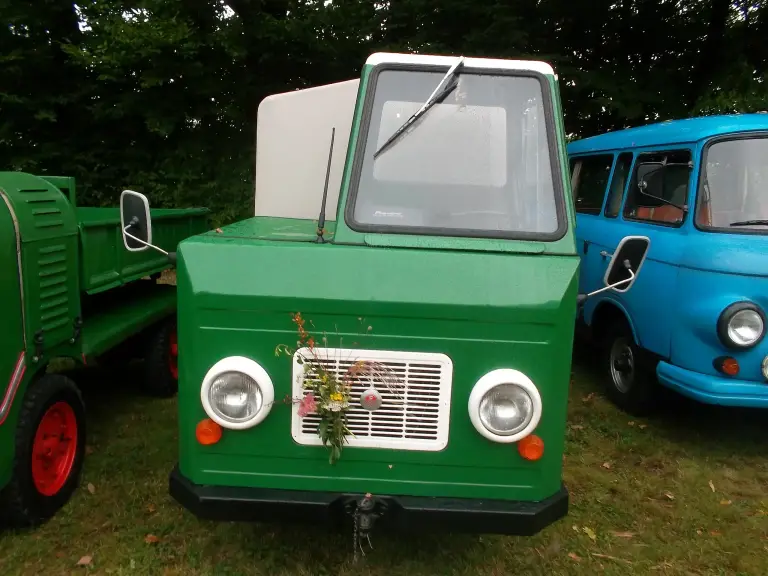
Instead, the Multicar 24 was presented at the Leipzig fair in 1974. The truck again had a single-seat cab, but this one was completely redesigned and could be tilted. In place of the two-cylinder engine came a newly developed four-cylinder, which tripled both power and top speed and widened the truck’s field of use considerably.
Demand for a two-seater had been growing since the early 1970s, so in 1977 the idea of the Multicar 23 was taken up again and the Multicar 24-0 was built with a two-seat cab. Otherwise it was no different from the single-seat version; the step had originally been planned for the successor, the Multicar 25. Including the 24-0, exactly 25,659 vehicles were built by 1978, and 48 per cent of them were exported. From 1978 only the Multicar 25 was made. In West Germany a company in Wehrheim distributed the truck.
Bodies for every job
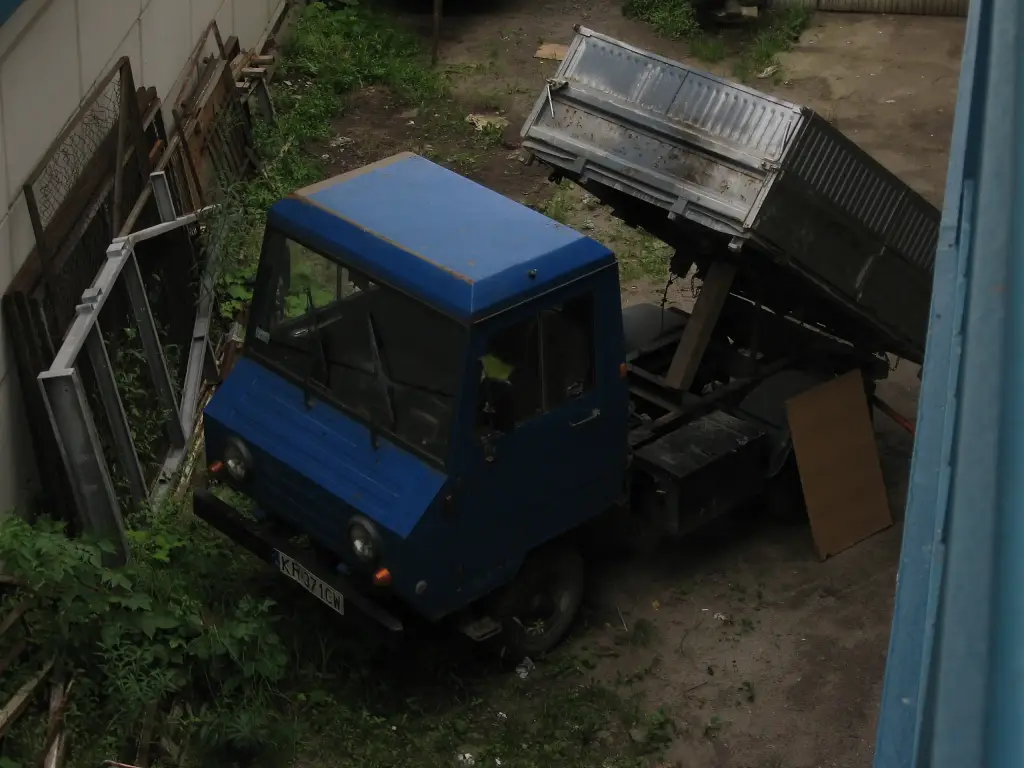
The 24 was built in a long list of versions, most of them defined by their bodies. The 24 01 was the platform lorry and the basic model without hydraulics, with more transport capacity and range than its predecessor. The 24 09 had the LH 300 mechanical tail lift. The 24 10 was a three-way tipper with low sides, the 24 12 a rear tipper with sides twice as high as standard and intended for coal, and the 24 13 a trough tipper with a tipping angle raised to 76 degrees so that concrete and nearly liquid loads would slide out.
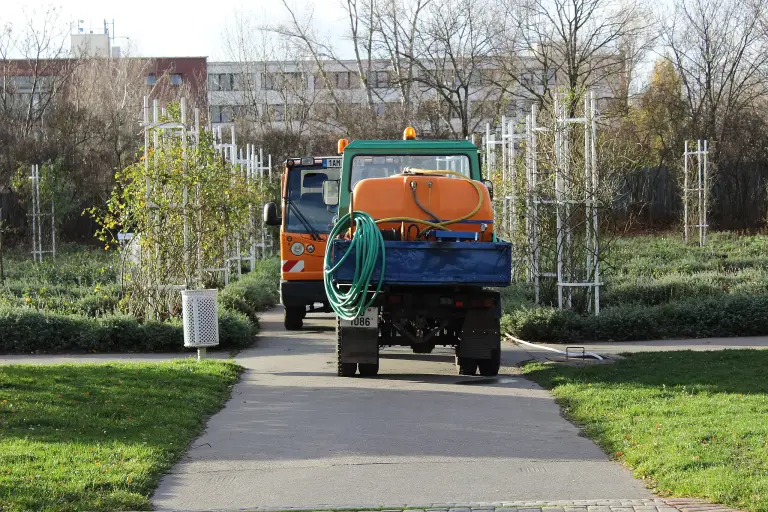
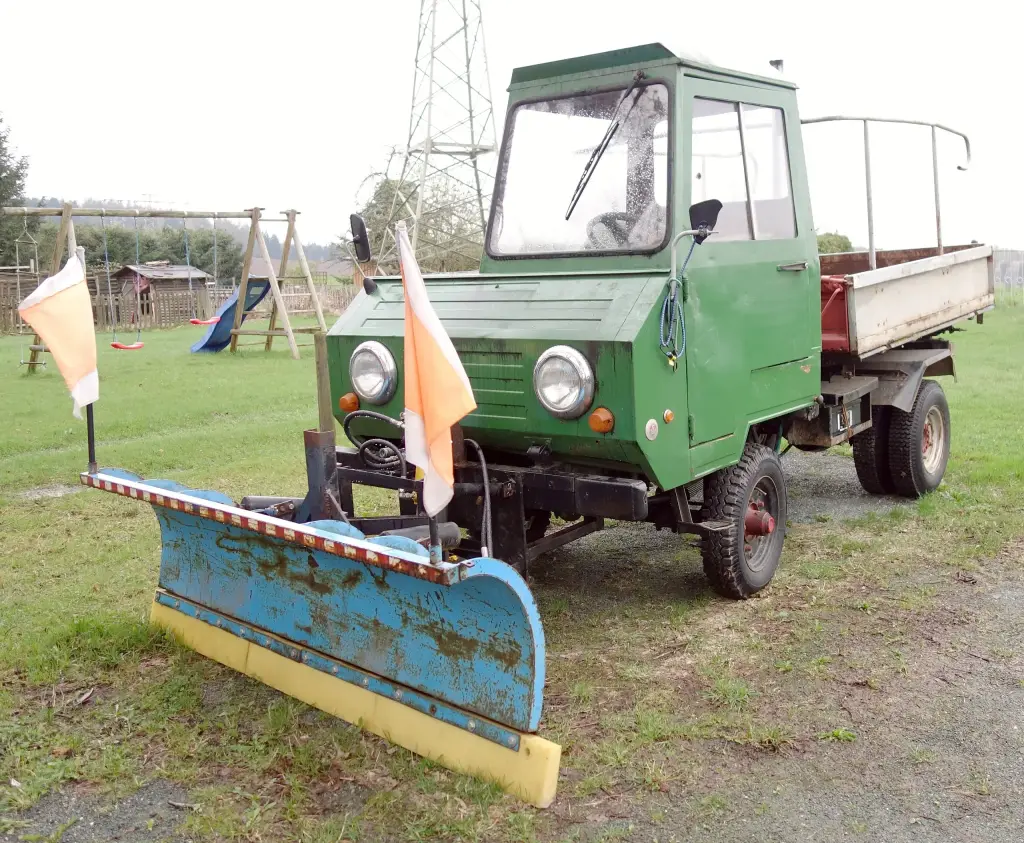
For winter service there was the 24 19 with a snow plough and spreading equipment, able to climb gradients of 25 per cent even when fully loaded; it was tested from 1975 and built from 1977. The 24 22 carried a front sweeping roller, the 24 30 a turntable ladder of up to ten metres with hydraulic outriggers that kept the truck level on sloping ground and a folding bench for two extra people. The 24 32 had a mounting platform reaching about twelve metres, the 24 48 was a washing and spraying vehicle with an 1800-litre tank and the 24 51 a small refuse lorry with a press for emptying public litter bins. A box body for the postal and telecommunications service followed in 1977.
Design and features
- Four-cylinder diesel: a new engine from Motorenwerk Cunewalde replaced the two-cylinder of the 22.
- Tilting cab: the single-seat cab was fully revised and could be tilted forward for access.
- Two seats from 1977: the 24-0 answered years of requests for a second place in the cab.
- Body range: tippers, tail lift, sweeper, ladder, platform, tanker and refuse bodies shared one chassis.
- Export: 48 per cent of production went abroad, and the truck was also sold in West Germany.
Multicar 24 versions
- 24 01: platform lorry, basic model without hydraulics.
- 24 09: platform with the LH 300 mechanical tail lift.
- 24 10, 24 12, 24 13: three-way tipper, high-sided rear tipper for coal and trough tipper with a 76-degree tip.
- 24 19: snow plough and spreader for winter service.
- 24 30 and 24 32: turntable ladder of up to ten metres and mounting platform of about twelve metres.
- 24 48 and 24 51: washing and spraying vehicle with an 1800-litre tank and a small refuse lorry with press.
- 24-0: two-seat cab from 1977, otherwise identical to the single-seat version.
The Multicar 24 replaced the Multicar 22 and was itself replaced by the Multicar 25, which stayed in production until 1991. More of the marque is in the Multicar collection.
Video: Multicar M24 Part 1
Video on YouTube.
Sources
- Multicar 24, German Wikipedia: history, bodies, production total
- Multicar, English Wikipedia: production years and exports