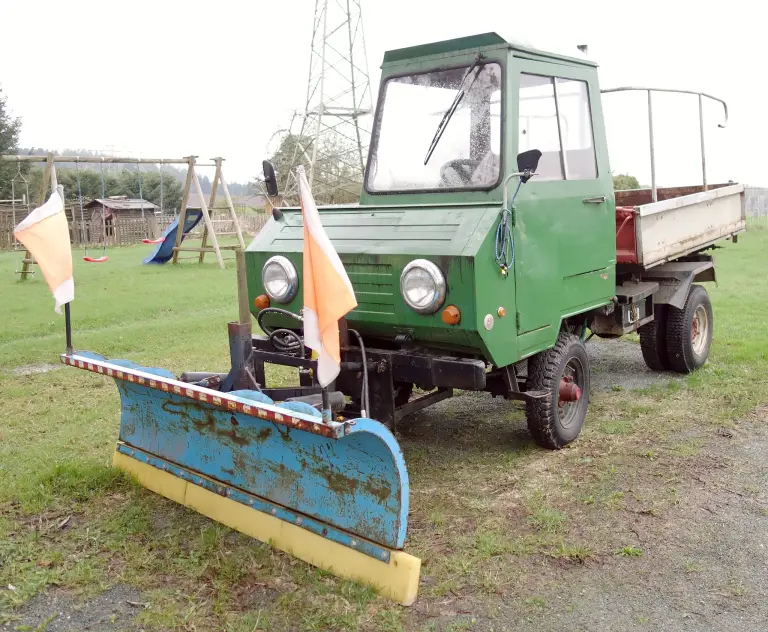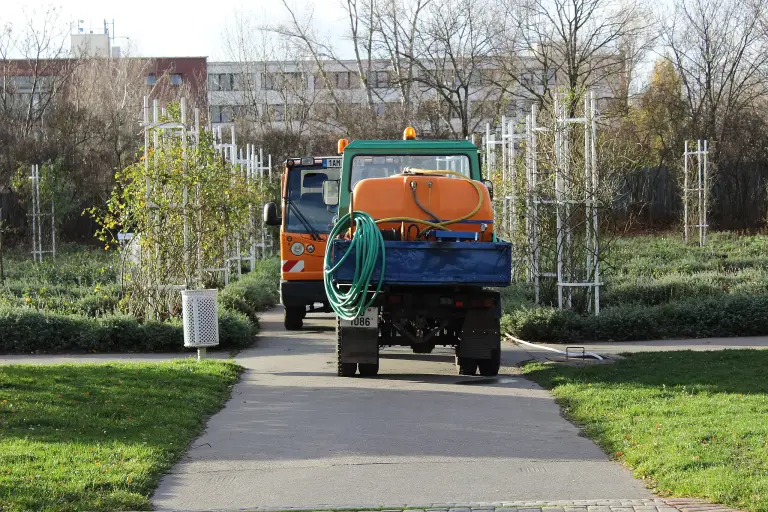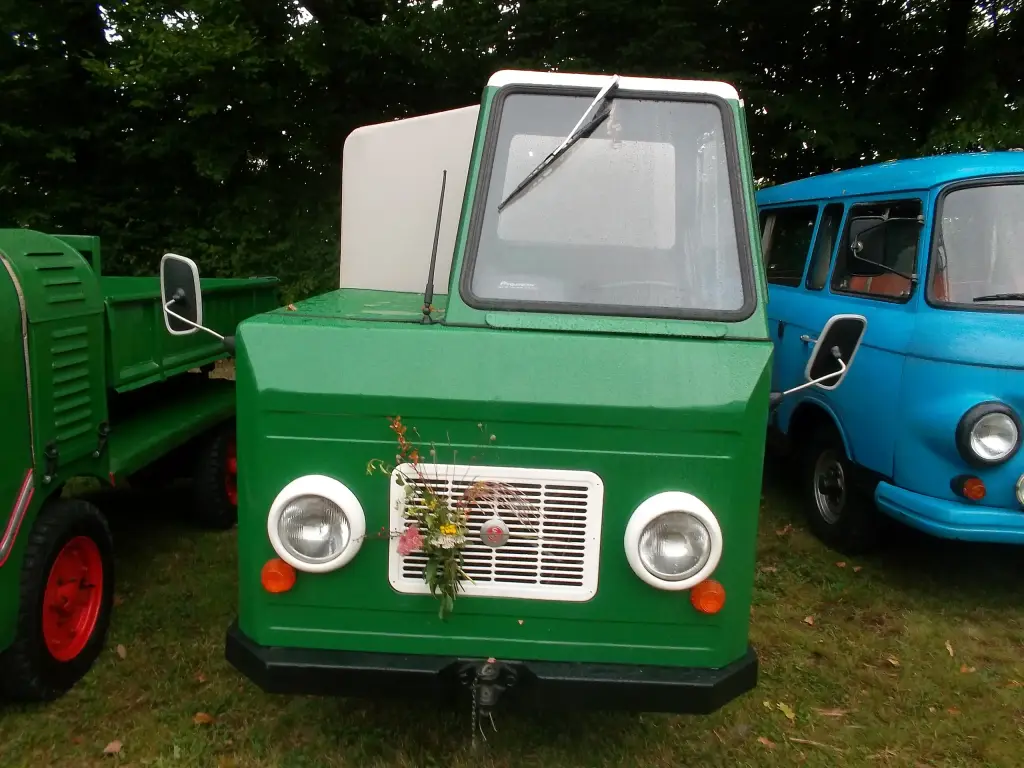
The Multicar 22 was the second series of the small multifunctional truck built by VEB Fahrzeugwerk Waltershausen in East Germany. Shown at the Leipzig spring fair in 1964, it replaced the Multicar 21 with a closed driver’s cab, a proper steering wheel and a payload raised to two tonnes. By 1974 it had been built 42,579 times.
Multicar 22 at a glance
| Maker | VEB Fahrzeugwerk Waltershausen |
|---|---|
| Production | 1964–1974 |
| Predecessor | Multicar 21 |
| Successor | Multicar 24, after the Multicar 23 prototype |
| Payload | 2 tonnes |
| Engine | 2 VD 8/8.5 SVL two-cylinder air-cooled diesel, 800 cc |
| Power | 13 hp, 15 hp from 1970 |
| Top speed | 23 km/h |
| Gradient | 16 per cent in first gear |
| Gearbox | four-speed, fully synchronised, plus reverse |
| Price | about 11,225 DDR marks, against 7,871.58 for the M21 |
| Built | 42,579 |
The Multicar 22 has no article of its own in English Wikipedia; this page is based on the German Wikipedia article on the model and on the English article about the Multicar brand.
History of the Multicar 22
The Multicar 22 continued the line that began in 1958 with the M21, the first vehicle to carry the Multicar name. It was made at the Waltershausen works that had been founded in 1920 as the ADE works and was renamed VEB Fahrzeugwerk Waltershausen in 1948. The new model was presented for the first time at the Leipzig spring fair in 1964 and went into production in the same year.
A proper cab and a steering wheel
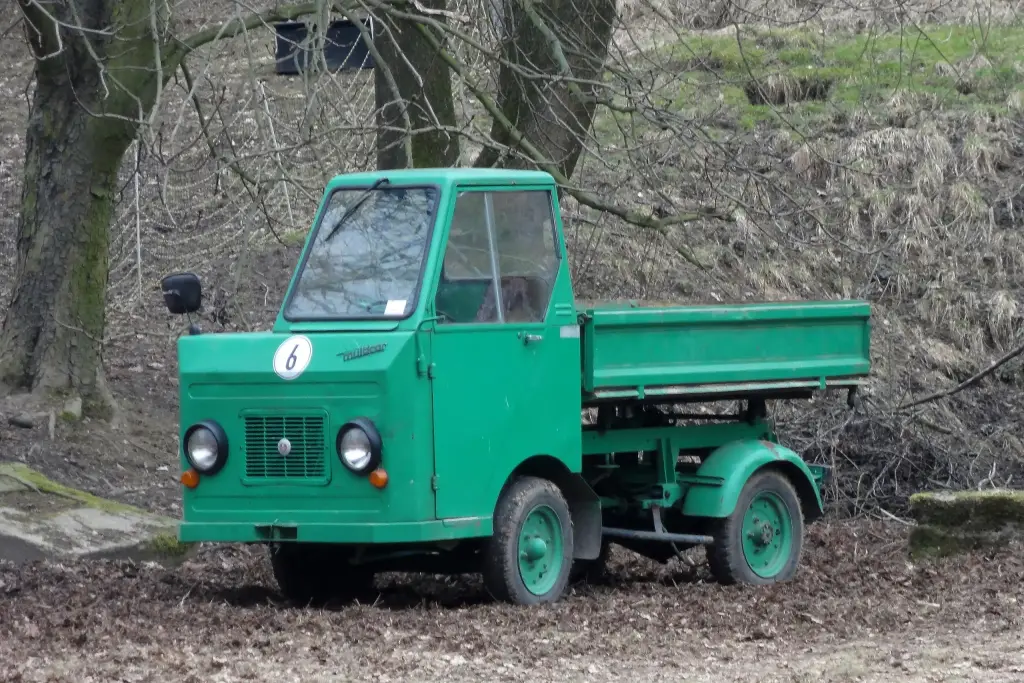
Two of the demands made of the new model shaped it most. The M21 had an open driving position and foot steering; the Multicar 22 received a closed single-driver cab, a driver’s seat and conventional steering with a wheel. It also carried lighting to the road-traffic regulations, with main, dipped and side lights, indicators, tail and brake lights and a number-plate lamp, and hydraulic brakes that met the required deceleration of 2.5 m/s².
The transport performance rose considerably. Payload went up to two tonnes, the gradient the truck could climb in first gear doubled to 16 per cent and top speed reached 23 km/h. That made the Multicar 22 interesting not only as works transport but as a short-haul vehicle and as the basis for a growing range of special bodies. The price rose with it, from 7,871.58 DDR marks for the M21 to about 11,225 marks.
Bodies and exports
At the start of production the truck was supplied with a platform (P), a three-way tipper (D) or a trough tipper (M) body, as its predecessor had been. From the platform version came bodies with a sprinkler, a sweeper, a hydraulic loading aid and a turntable ladder, the last with two folding emergency seats behind the cab. Later bodies included a collecting container, a concrete mixer, a feed distributor, a spreader, a coal container and a mounting platform with a working height of up to twelve metres. Most of the production, 58 per cent, was exported; in West Germany the truck was sold as the Fawa-Car 22.
By the end of the 1960s the model had been updated with a rise in power to 15 hp, a uniform chassis for all versions, optional differential lock and coarse-tread tyres, and a heating and ventilation system for the cab. Its successor was the Multicar 23 prototype and, from 1974, the Multicar 24.
Design and features
- Closed cab: a single-driver cab replaced the open driving position of the M21.
- Steering wheel: conventional steering replaced the foot steering of the earlier model.
- Two tonnes: payload doubled the truck’s usefulness and allowed a wider range of bodies.
- Road equipment: full lighting and hydraulic brakes to the road-traffic regulations.
- 23 km/h and 16 per cent: enough for short-haul work on poor roads and gradients.
Multicar 22 versions
- P, D and M: platform, three-way tipper and trough tipper bodies at the start of production.
- Sprinkler, sweeper and loading aid: municipal bodies derived from the platform version.
- Turntable ladder: with two folding emergency seats behind the cab.
- Later bodies: collecting container, concrete mixer, feed distributor, spreader, coal container and a mounting platform of up to twelve metres.
- Fawa-Car 22: the name under which the truck was offered in West Germany.
The Multicar 22 was replaced by the Multicar 24, itself succeeded by the Multicar 25. More of the marque is in the Multicar collection.
Video: Multicar 22
Video on YouTube.
Sources
- Multicar 22, German Wikipedia: history, bodies, engine, production total
- Multicar, English Wikipedia: place in the Waltershausen model line