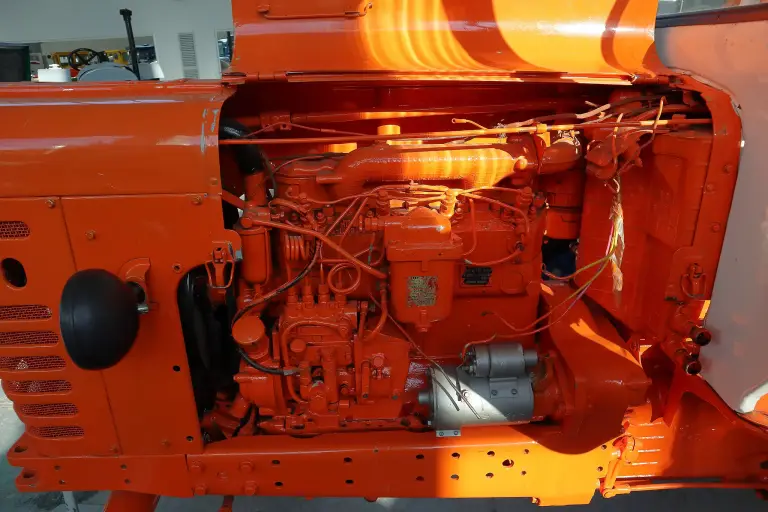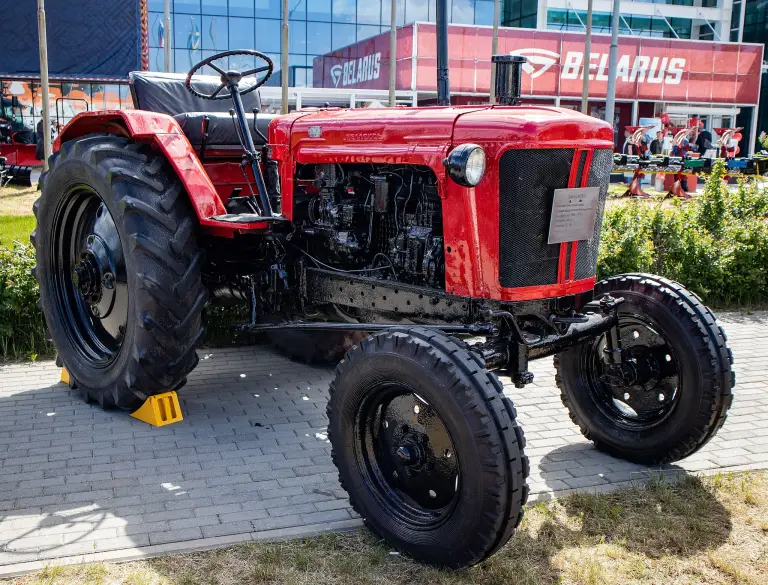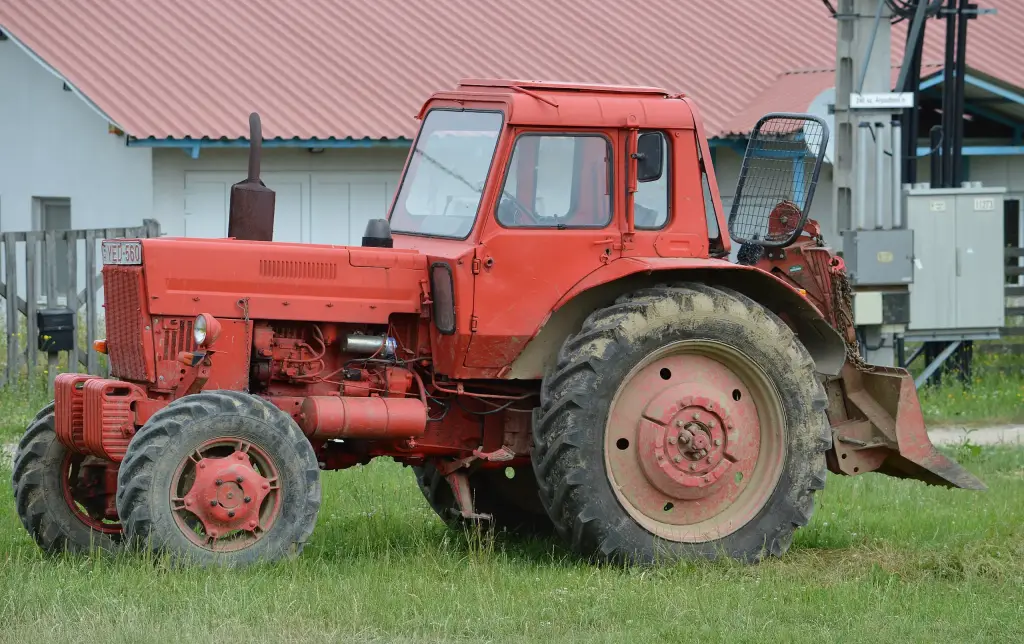
The MTZ-82 is the four-wheel-drive member of the MTZ-80 family, the 1.4-tonne row-crop tractor that Minsk Tractor Works has built since 1974. Both tractors use the 4.75-litre D-240 diesel, reach 33 km/h and share up to 70 per cent of their parts with the MTZ-50 they replaced.
MTZ-80 and MTZ-82 at a glance
| Maker | Minsk Tractor Works, Minsk |
|---|---|
| Production | from 1974 |
| Class | 1.4 t (14 kN) universal row-crop tractor |
| Drive | MTZ-80 rear wheels only; MTZ-82 all four wheels |
| Engine | D-240, D-243 or D-245 diesel, 4.75 litres |
| Power | 55 kW (75 hp) at first, 59 kW (80 hp) later |
| Turbocharged power | 67.5–100 kW (90–136 hp) |
| Starting | electric starter or PD-10 petrol starting engine |
| Design speed | 33 km/h |
| Cab | larger glazed cab from 1980 on some versions, standard from 1988 |
| Shared with MTZ-50 | up to 70 per cent of parts |
| Matched implements | about 230 |
The MTZ-80 and the MTZ-82 are described in one article of Russian Wikipedia and have no English-language page of their own; this page is based on that article and on the English article about the Minsk Tractor Works.
History of the MTZ-80 and MTZ-82
The MTZ-80 came out of a 1966 decree of the USSR Council of Ministers, number 606, which called for universal row-crop tractors of at least 75–80 hp in the 1.4 traction class. Rather than design a completely new machine, Minsk Tractor Works chose a deep modernisation of the MTZ-50 and MTZ-52 family, which saved time and the cost of re-equipping the plant and its suppliers. The new tractor received fresh bodywork, a new cab and the more powerful D-240 engine from the Minsk Motor Plant. The first prototype was ready in 1970, testing was completed successfully in 1972 with about 230 matched machines and implements, and the design speed rose to 33 km/h. The MTZ-80 went onto the line in 1974; in 1975 a tracked version, the T-70, followed at Chișinău.
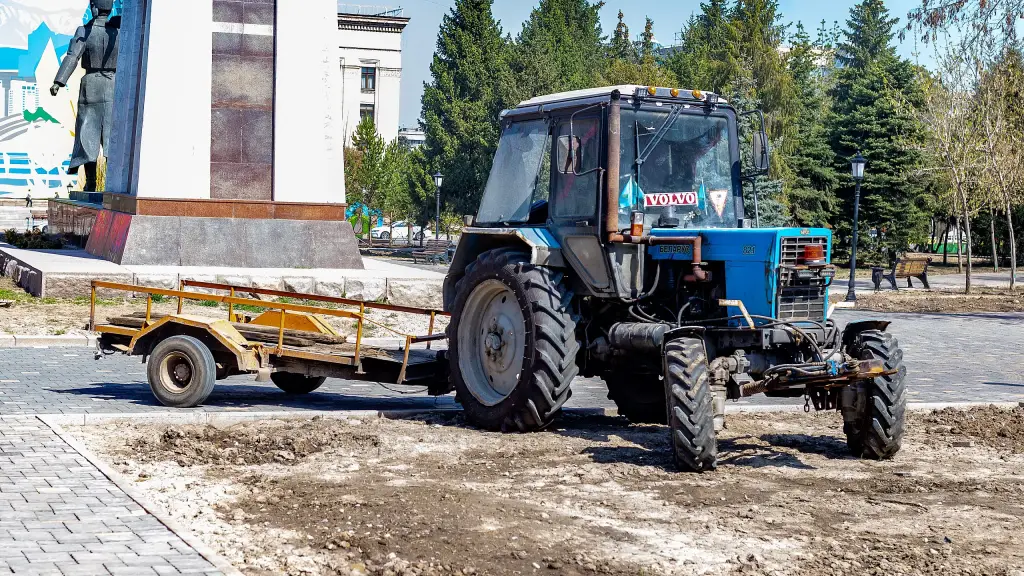
The MTZ-80 is the base model of the family, with drive to the rear axle only, while the MTZ-82 has two driving axles and was put into production at the same time as the MTZ-80. Both keep the traditional MTZ layout of a semi-frame, the engine in front, large driving wheels at the back and smaller steered wheels in front, and both are products of the deep modernisation of the MTZ-50: parts commonality between the two families reaches 70 per cent. The tractors are used for the mechanisation of row crops such as maize, sugar beet, potatoes and sunflowers, and, with their air system and lighting, for general transport work as well. The versions differ in transmission type and ratios, the way the engine is started, the attachment points for implements, exterior finish, tyre type, ground clearance and engine power.
In the 1970s and 1980s the tractors carried D-240 diesels with an electric starter or D-240L engines with a petrol two-stroke starting engine; the D-240L tractors were designated MTZ-80L and MTZ-82L. The four-cylinder, four-stroke, water-cooled engines of the D-240, D-243 and D-245 families have a displacement of at least 4.75 litres. Nominal power was 55.16 kW (75 hp) at first and later 59.25 kW (80 hp); turbocharged versions developed from 67.5 to 100 kW (90 to 136 hp) and were also fitted to GAZ-3308 and ZIL lorries and to KAvZ and PAZ buses. Starting is by electric starter or by a PD-10 petrol starting device of 10 hp, although later engines used only the starter, and some versions had a PZhB-200B preheater.
The first MTZ-80s had a small cab. In 1980 some versions received the larger, better glazed cab designed in the mid-1970s, and from 1988 that cab was fitted to all models built on the MTZ-80.1 and MTZ-82.1 base. Together with the DT-75 and the T-40, the MTZ-80 and MTZ-82 became some of the most widespread tractors in the former Soviet Union.
Design and features
- Four-wheel drive: the MTZ-82 drove all four wheels, the MTZ-80 only the rear pair.
- D-240 family: 4.75-litre four-cylinder diesels, naturally aspirated or turbocharged up to 136 hp.
- 33 km/h: the higher design speed made the tractor more useful for transport work.
- Common parts: up to 70 per cent shared with the MTZ-50 family it replaced.
- Equipment: about 230 matched machines and implements were listed at launch.
- Cab: a larger glazed cab arrived in 1980 and became standard in 1988.
MTZ-80 and MTZ-82 versions
- MTZ-80: the base rear-wheel-drive model.
- MTZ-82: the four-wheel-drive version, built from the start of production.
- MTZ-80L and MTZ-82L: D-240L engines with a petrol starting engine.
- MTZ-80.1 and MTZ-82.1: later versions on which the larger cab became standard in 1988.
- T-70: tracked variant built at Chișinău from 1975.
- Turbocharged versions: D-245 engines from 90 to 136 hp.
The family replaced the MTZ-50 and MTZ-52, which in turn followed the MTZ-5 and MTZ-7; more Belarus tractors are in the MTZ collection.
Video: MTZ 82
Video by Csabi250 on YouTube.
Sources
- МТЗ-80, Russian Wikipedia: history, design, engines, versions
- Minsk Tractor Works, English Wikipedia: plant background