The Vespa 160 GS was the sporting member of Piaggio’s 160 range and the successor to the Vespa GS 150, known as the GS3. It was built in two series on the lighter shell frame that Piaggio introduced from 1959, and it used a newly designed front suspension with the spring and damper combined in one unit.
Vespa 160 GS at a glance
| Maker | Piaggio |
|---|---|
| Model | Vespa 160 GS (Gran Sport) |
| Series | two |
| Predecessor | Vespa GS 150 (“GS3”) |
| Frame | lighter shell frame, the type used from 1959 |
| Rear suspension | newly developed engine swing arm |
| Front suspension | newly designed arm with a combined spring-damper unit |
| Later user of the fork | Vespa 180 SS |
| First series detail | tool compartment flap above the tail light |
Based on one source, the German Wikipedia article on the Vespa 160 GS; it is short, so this page is shorter than the others in the collection.
History of the Vespa 160 GS
A sporting model in the range
The Vespa 160 GS continued a Piaggio habit of offering a sportier model within a standard range. It was the successor to the Vespa GS 150, the third of the GS 150 line and known as the GS3, and it was built in two series.
A lighter frame and a new fork
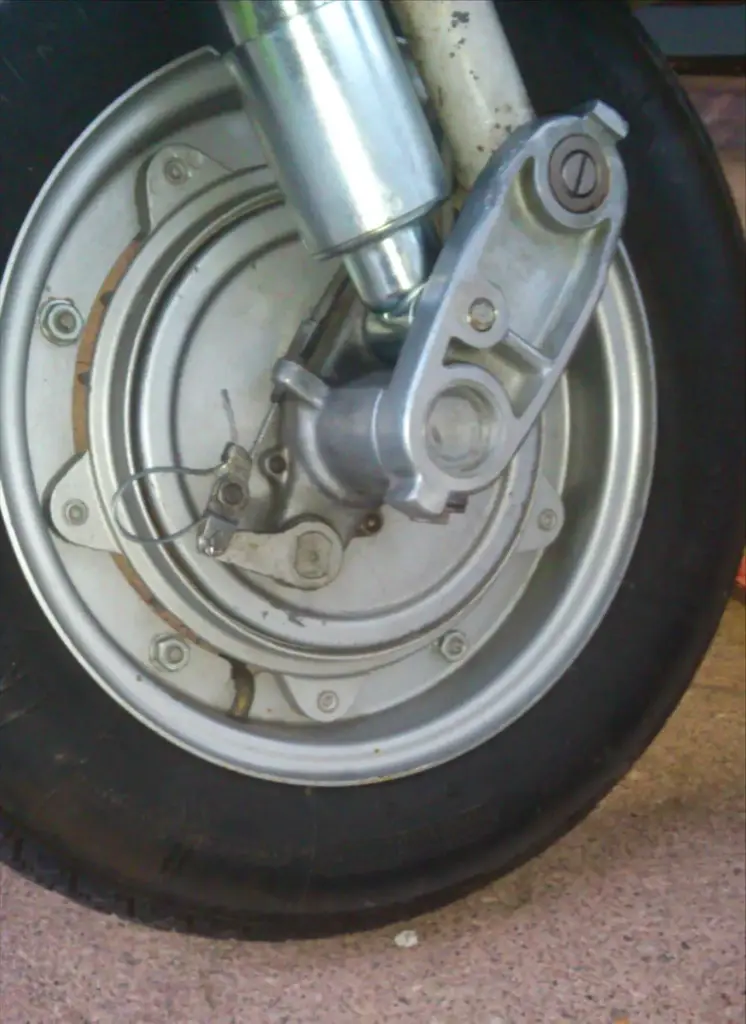
The 160 GS was built on the lighter shell-frame type that Piaggio had used from 1959, together with a newly developed engine swing arm. The GS 150 models up to the GS3 had still used the older wideframe chassis, in which the engine unit carried its swing arm separately. The 160 GS was the first Vespa to use a newly designed front arm with the spring and damper built as one unit, a layout otherwise found only on its successor, the Vespa 180 SS; every other Vespa, the GS 150 included, kept a front arm with the damper mounted separately from the suspension spring.
Telling the two series apart
First-series scooters can be recognised by the tool compartment flap above the tail light. The design detail photographed below, the combined front spring and damper, is the clearest mechanical difference between the 160 GS and everything Piaggio had built before it.
Design and features
- Lighter shell frame: the frame type Piaggio had used from 1959, shared with the rest of the new generation.
- New engine swing arm: a redesigned rear suspension unit carried over from the modernised chassis.
- Combined spring and damper: a front fork layout otherwise used only on the 180 SS that followed.
- Two series: the early scooters are identified by the tool flap above the tail light.
Vespa 160 GS versions
- First series: identifiable by the tool compartment flap above the tail light.
- Second series: the later production, without that flap.
- Predecessor, Vespa GS 150 (GS3): the wideframe sporting 150 the 160 GS replaced.
- Successor, Vespa 180 SS: the only other Vespa with the combined spring-damper front fork.
The 160 GS grew out of the Vespa 150 generation, and the line ended with the Vespa PX. More scooters are in the Vespa collection.
Video: Motovespa 160
Video on YouTube.
Sources
- Vespa 160 GS, German Wikipedia: the two series, the frame and swing arm, the front suspension