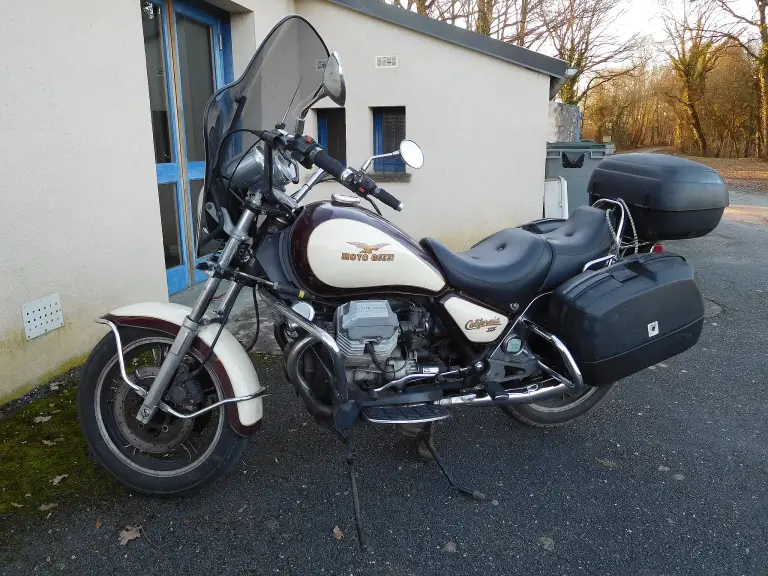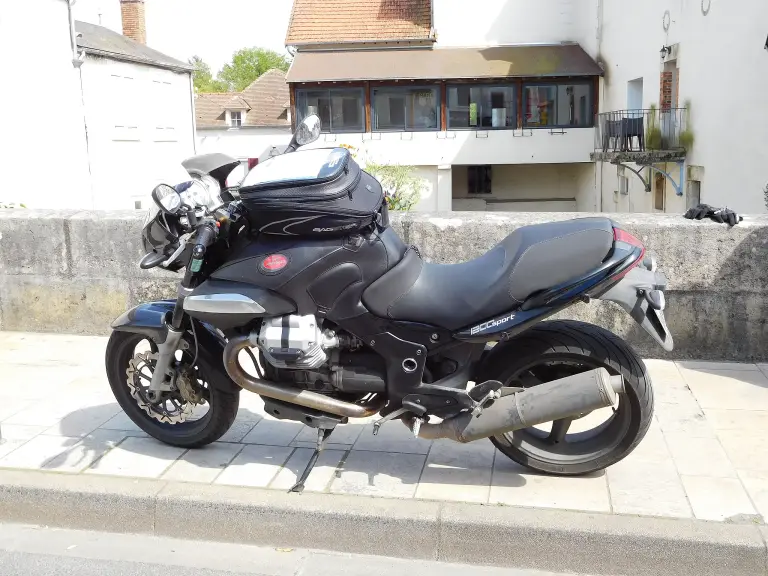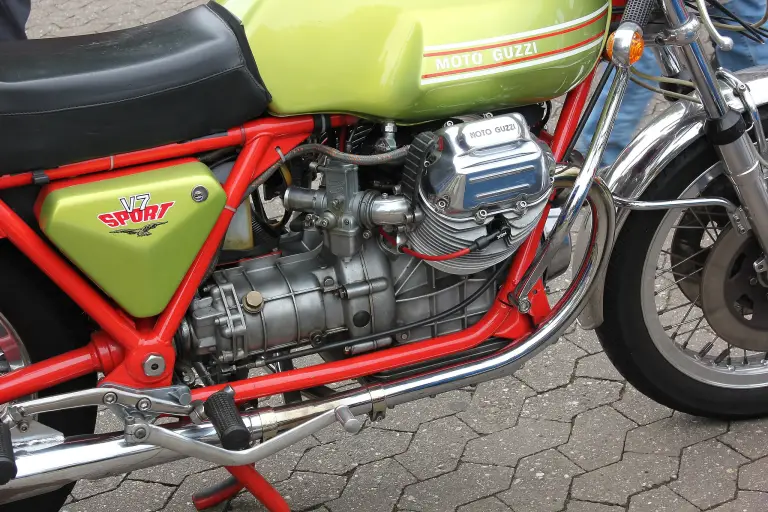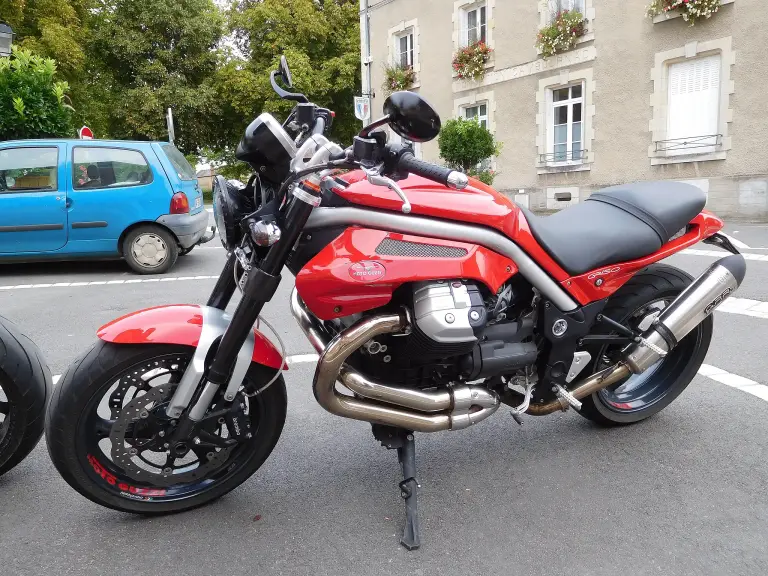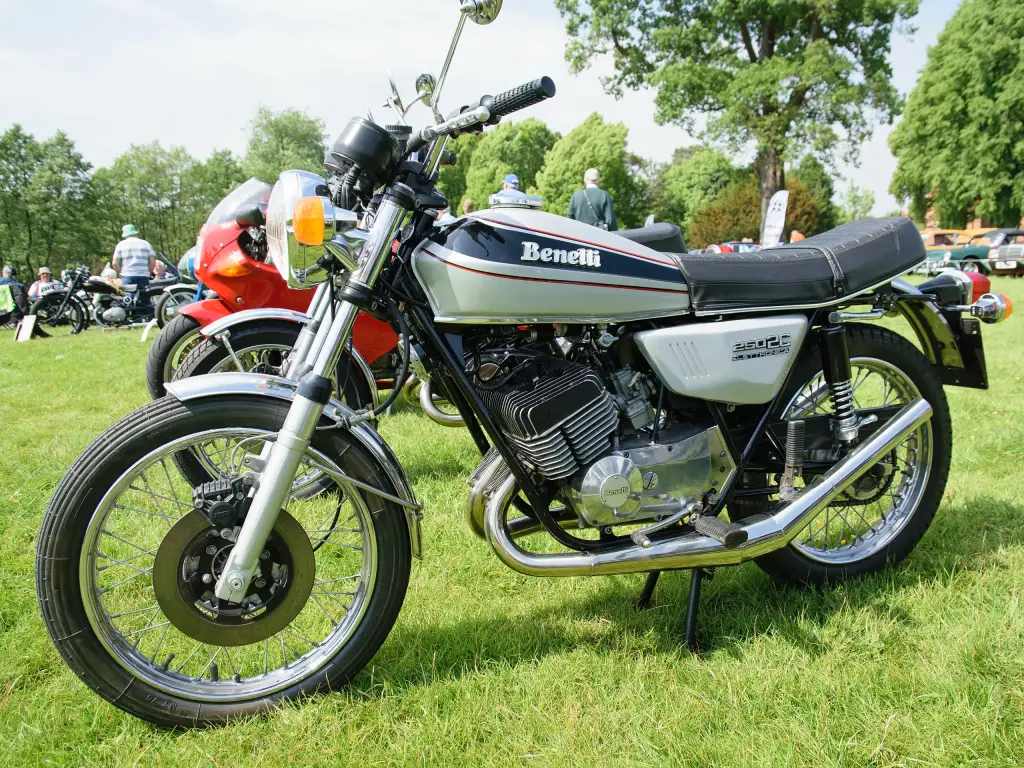
The Moto Guzzi 250 TS was sold under the Guzzi badge from 1974 to 1981, but it was designed and built as part of the Benelli range. The two-stroke inline twin, known as the Benelli 2C, was one of the quickest 250 cc road bikes of its time.
Moto Guzzi 250 TS at a glance
| Maker | Moto Guzzi badge, Benelli design and production |
|---|---|
| Production | 1974–1981 as a Moto Guzzi |
| Engine | two-stroke inline twin, air cooled |
| Power | about 26 hp at the crankshaft in the alloy-cylinder version |
| Top speed | 143 km/h, measured on track |
| Gearbox | five speeds, chain final drive |
| Front brake | solid disc from 1976 |
| Cylinders | cast iron at first, light alloy with chrome liners later |
| Related model | Benelli 2C, also sold as MotoBi |
The 250 TS is described in the Italian Wikipedia article on the Benelli 2C, of which it was the Moto Guzzi-badged version; this page is based on that one source and covers only the 250.
History of the Moto Guzzi 250 TS
The Benelli 2C was presented at the Milan motorcycle show in 1971 and the 250 version reached the market first, in 1972, at 435,000 lire; the 125 arrived later. The 250 was the more impressive of the two: about 26 hp at the crankshaft with alloy cylinders, 143 km/h measured on track and a stronger torque curve than its smaller sister. From 1974 the Benelli and MotoBi versions were joined by the 250 TS sold under the Moto Guzzi badge, and it stayed in production until 1981.
The changes made to the 250 followed those of the 125. A solid front disc appeared in 1976, together with light alloy cylinders with chrome-plated liners instead of cast iron, which in the 125 allowed the oil ratio in the mixture to drop and brought a gain in power and a saving in weight. The last update of the 250, purely cosmetic, came in 1982, and the Benelli-badged version stayed on the market until 1986, for export under the name 250 CE.
The Guzzi badge on a De Tomaso range
The 2C was part of the range built under Alejandro de Tomaso, who owned Benelli, Moto Guzzi, Maserati and Innocenti, and much of the equipment, including instruments and switchgear, was shared across the group. For the 250 this meant a machine with a modern look and strong performance, but one that was also priced above simpler rivals; by the end of its life the 250 cost over 1,800,000 lire in Italy.
Design and features
- Two-stroke twin: the Benelli 2C engine, air cooled and fed through carburettors with the air lever on the handlebar at first.
- Strong performance: about 26 hp and 143 km/h made it quicker than most quarter-litre roadsters of the 1970s.
- Front disc from 1976: the same update brought light alloy cylinders with chrome liners.
- Group components: instruments and switchgear shared with other Benelli and Moto Guzzi models of the De Tomaso era.
Moto Guzzi 250 TS versions
- 250 TS (1974–1981): Moto Guzzi-badged version, built after the Benelli and MotoBi models.
- Benelli 2C 250 (1972–1986): the original model, exported as the 250 CE.
- Benelli 2C Sport (1979–1986): faired version from the Benelli range.
- Benelli 2C Custom and Turismo: other versions of the same two-stroke twin.
The 250 TS was a small-capacity model from the De Tomaso years, like the four-cylinder 254. A later small Guzzi is the V35. More machines are in the Moto Guzzi collection.
Sources
- Benelli 2C, Italian Wikipedia: production dates, power, speed, updates, prices