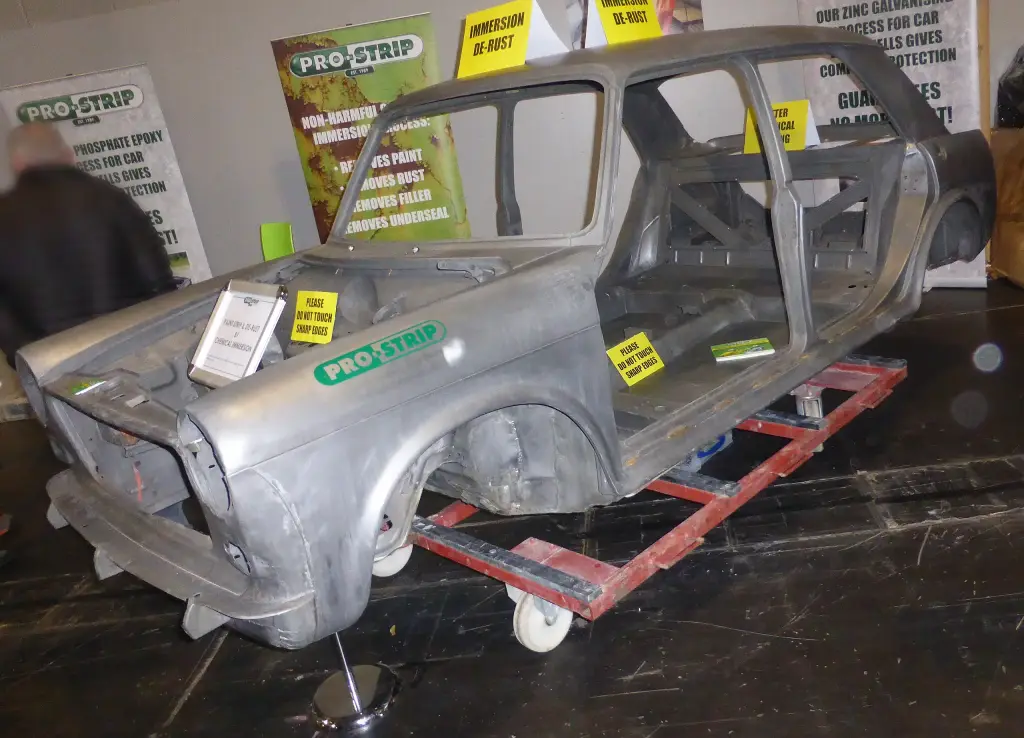
The Morris 1100 was the car that opened BMC’s ADO16 range when it was launched on 15 August 1962. Designed by Alec Issigonis and styled by Pininfarina, it was Britain’s best-selling car for most of the 1960s. From 1967 the same body was sold with a 1275 cc engine as the Morris 1300.
Morris 1100 at a glance
| Also known as | BMC ADO16, Austin 1100, Morris 1300 |
|---|---|
| Production | 1962–1974 (Morris 1100/1300 to 1971) |
| Launched | 15 August 1962 |
| Designer | Alec Issigonis; styling by Pininfarina |
| Engine | BMC A-Series, transverse, front-wheel drive |
| Suspension | Hydrolastic interconnected fluid suspension |
| Brakes | discs at the front, drums at the rear |
| Bodies | four-door saloon; three-door estate from 1966 |
| Estates | Morris 1100 Traveller, Austin 1100 Countryman |
| Best-seller | Britain’s best-selling car 1963–66 and 1968–71 |
| Built | about 2.3 million ADO16 cars, 1962–1974 |
| Successors | Morris Marina, Austin Allegro |
History of the Morris 1100
The ADO16 was the second of Issigonis’s front-wheel-drive family cars, following the Mini. BMC commissioned Pininfarina, which had already styled the Austin A40 Farina, to give the car its body, and the result offered interior space comparable with the larger Ford Cortina. Like the Mini, the ADO16 used the BMC A-Series engine mounted transversely and driving the front wheels; it added front disc brakes and Hydrolastic interconnected fluid suspension designed by Alex Moulton, which gave a softer ride than the simple rubber cones of the Mini.
Mark I, 1962–1967
At first the Morris 1100 was offered only as a four-door saloon. The Mark I is recognised by its Hydrolastic suspension and by a cabin that was unusually roomy for a British small car of 1962, when its rivals were still rear-wheel drive with live axles. In March 1966 a three-door estate joined the range, badged as the Morris 1100 Traveller and the Austin 1100 Countryman. A two-door saloon was not offered in Britain until the Mark II of 1967, although two-door cars had already been sold in some export markets.
Morris 1300 and the rest of the range
BMC sold the same car under many names: Austin 1100 and 1300, MG 1100 and 1300, Riley Kestrel, Wolseley 1100 and 1300 and Vanden Plas Princess 1100. When the 1275 cc engine was fitted the car was marketed as the 1300. The Morris-badged 1100 and 1300 went out of production when the Morris Marina was launched in 1971, while the Austin and Vanden Plas versions stayed on the home market until June 1974. In 1964 the 1100 was named Car of the Year by the Australian magazine Wheels, and at its peak the range took around 15 per cent of the British new car market before the Ford Cortina finally outsold it in 1972.
Design and features
- Front-wheel drive: the A-Series engine sits transversely ahead of the gearbox, as in the Mini.
- Hydrolastic suspension: interconnected fluid displaces between front and rear, giving a compliant ride.
- Pininfarina body: a clean three-box shape with a large glass area and room for four adults.
- Front disc brakes: still unusual on a mass-produced small car in the early 1960s.
Morris 1100 versions
- Morris 1100 saloon (1962–1971): the original four-door with the 1098 cc engine.
- Morris 1100 Traveller (1966–1971): three-door estate version.
- Morris 1300 (1967–1971): 1275 cc engine, sold alongside the 1100.
- Badge-engineered sisters: Austin, MG, Riley, Wolseley and Vanden Plas versions of the same ADO16 shell.
- Export cars: assembled in Spain, Italy, Yugoslavia, Belgium, Australia, South Africa, New Zealand and Malta.
The 1100 was the larger stablemate of the Morris Minor and was replaced in the Morris range by the Marina. Its bigger brother was the Morris 1800, and more Morris cars are in the Morris collection.
Sources
- BMC ADO16, English Wikipedia: launch, design, naming, production, estates