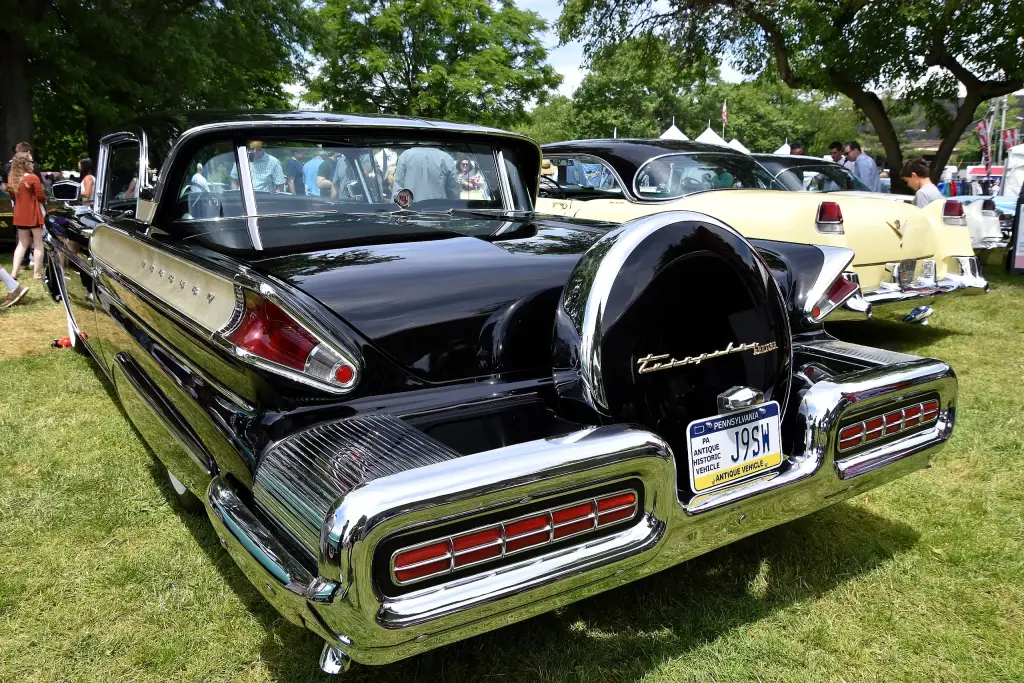
The Mercury Turnpike Cruiser was a luxury flagship sold for the 1957 and 1958 model years. Named to mark the new Interstate Highway System, it introduced a retractable rear window, push-button transmission controls and a trip computer, and Mercury built 23,268 of them in two years.
Mercury Turnpike Cruiser at a glance
| Model years | 1957 and 1958 |
|---|---|
| Position | flagship, above the Montclair |
| Bodies | two-door and four-door hardtops; a limited convertible in 1957 |
| Concept | previewed by the 1956 XM-Turnpike Cruiser concept car |
| 1957 engine | 368 cu in V8, 290 hp |
| 1958 engines | 383 cu in Marauder V8, 330 hp; optional 430 cu in with 360 or 400 hp |
| Price 1957 | US$3,758 coupe, US$4,103 convertible |
| Chassis | body-on-frame, 122-inch wheelbase |
| Suspension | independent ball-joint front, live axle on leaf springs |
| Built | 23,268 over two years |
| Replaced by | the Park Lane as flagship |
The article is based on one source, the English Wikipedia page on the Turnpike Cruiser.
History of the Mercury Turnpike Cruiser
A car named after a road
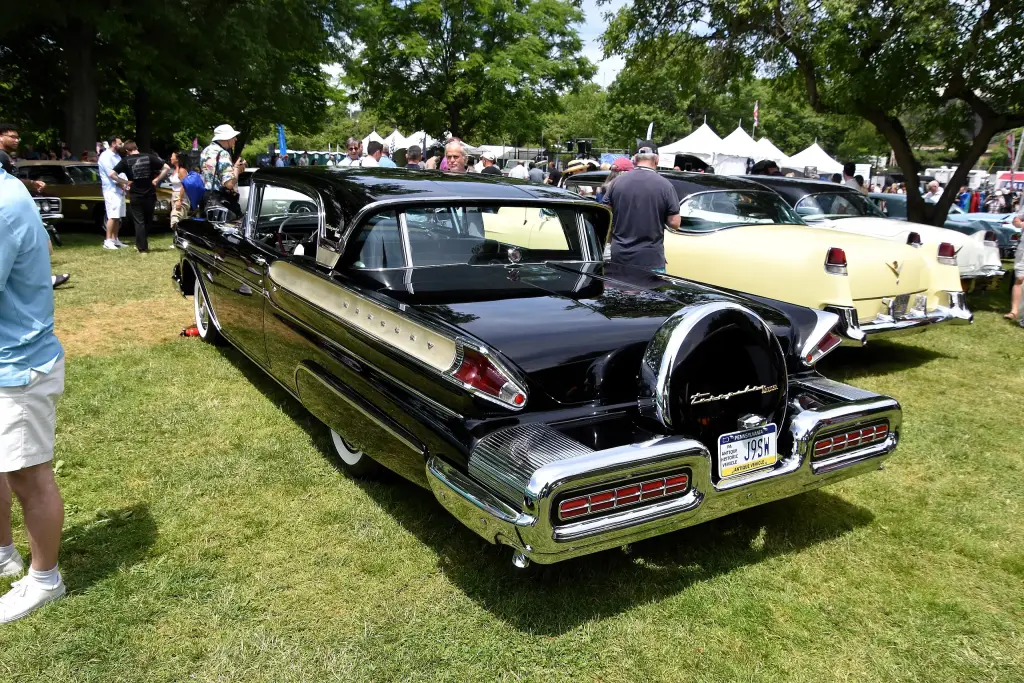
The Turnpike Cruiser took its name from the 1956 Mercury XM-Turnpike Cruiser concept car, a two-door hardtop that largely previewed the 1957 Mercury range. Its name commemorated the creation of the Interstate Highway System. For 1957 the Turnpike Cruiser was the top Mercury model line, with an approach to luxury similar to that of the updated four-passenger second-generation Ford Thunderbird. The coupe listed at US$3,758 and the convertible at US$4,103, and outside Ford the car was marketed against the Buick Roadmaster and Oldsmobile 98. It had a body-on-frame chassis while the Thunderbird used unibody construction. It was produced as a luxury two-door and a four-door hardtop sedan, and during 1957 a limited-run convertible called the Convertible Cruiser was offered, serving as the pace car for the Indianapolis 500.
Equipment ahead of its time
Mercury fitted the Turnpike Cruiser with a wide range of advanced features for the period: a retractable rear window marketed as the “Breezeway”, a compound-curve windscreen, mechanical push-button transmission controls and a trip computer. The push-button controls answered the Chrysler TorqueFlite buttons introduced in 1956. Mercury’s system was called Keyboard Control, with five buttons: a long “Drive” button on top and smaller buttons for Brake, Neutral Start, which allowed the engine to start with the ignition key, Hill Control and Reverse. Later versions relabelled as Multi-Drive for 1958 split the Drive button into Performance and Cruising. A separate push-pull lever marked Park locked out the buttons until it was released, and the control panel sat to the left of the steering wheel. In 1959 the keyboard control was dropped in favour of a steering-column selector.
Chassis and engines
The Turnpike Cruiser shared its 122-inch wheelbase, rear-wheel-drive, body-on-frame chassis with the Monterey and Montclair. Front suspension was independent ball-joint with coil springs, the rear a live axle on leaf springs, and the brakes were 11-inch drums all round. Edsel adopted a 124-inch-wheelbase version of the chassis for its 1958 Corsair and Citation. For 1957 the engine was a 368 cu in V8 with 290 hp, which shared its name with the car and was offered as an option across the rest of the Mercury line. For 1958 two all-new Marauder engines arrived: a 383 cu in V8 with 330 hp as standard, shared with the Montclair and Colony Park, and a 430 cu in V8 with 360 hp shared with the Park Lane. An optional triple two-barrel Super Marauder version of the 430 produced 400 hp, making it the first factory-produced engine with that output and Mercury’s answer to the 375 and 390 hp Chrysler 300C of 1957. All Turnpike Cruisers used a three-speed Merc-O-Matic automatic.
Two years only
In total 23,268 Turnpike Cruisers were produced over two years. For 1958 the model was phased into the Montclair line, and the premium flagship role passed to the newly introduced Park Lane, which also inherited the Breezeway rear window concept. The Turnpike Cruiser name did not return.
Design and features
- Breezeway window: a retractable rear window, a feature later adopted by the Continental Mark line.
- Keyboard Control: push-button transmission controls mounted left of the steering wheel.
- Trip computer: advanced instrumentation for a 1957 American car.
- Compound-curve windscreen: a wrap-around screen unusual for the period.
- Convertible Cruiser: a limited 1957 convertible that paced the Indianapolis 500.
Mercury Turnpike Cruiser versions
- Turnpike Cruiser two-door hardtop (1957–1958): the coupe body.
- Turnpike Cruiser four-door hardtop (1957–1958): the sedan body.
- Convertible Cruiser (1957): the limited-production convertible pace car.
- 1958 Marauder versions: with the 383 or the 430 engine.
The Turnpike Cruiser topped the range above the Monterey and Montclair, and handed the flagship role to the Park Lane. More cars are in the Mercury collection.
Video: 1958 Mercury Turnpike Cruiser, drive around
Video by Samuel Pine on YouTube.
Sources
- Mercury Turnpike Cruiser, English Wikipedia: model years, equipment, engines, prices and production