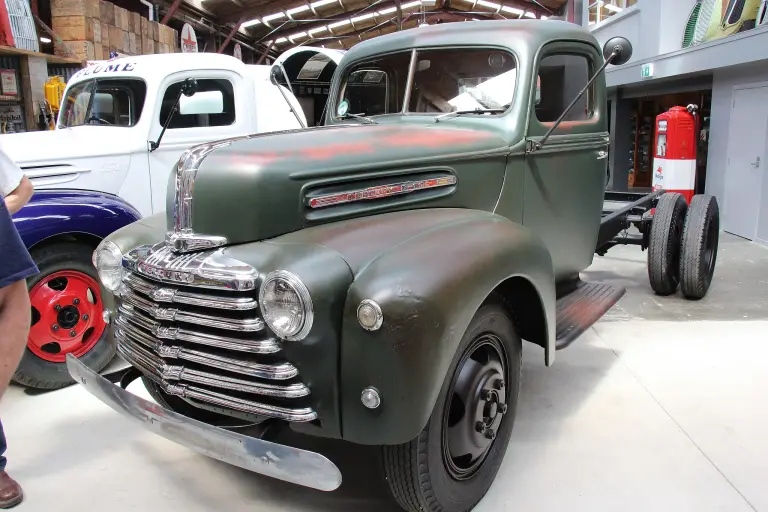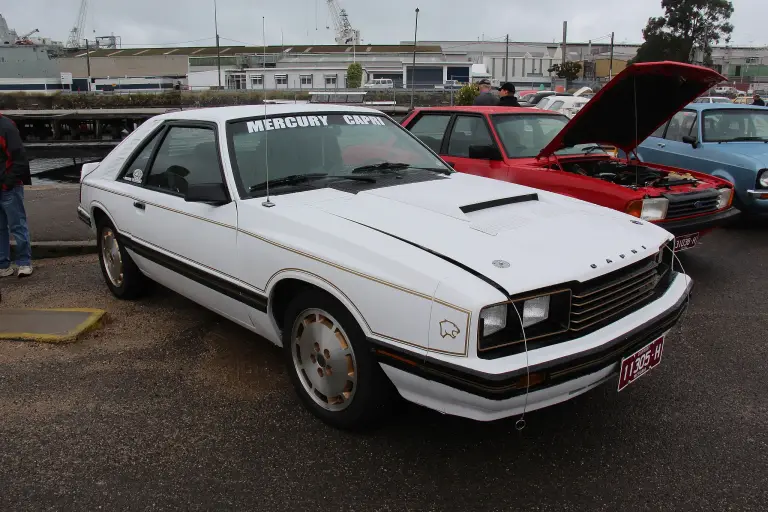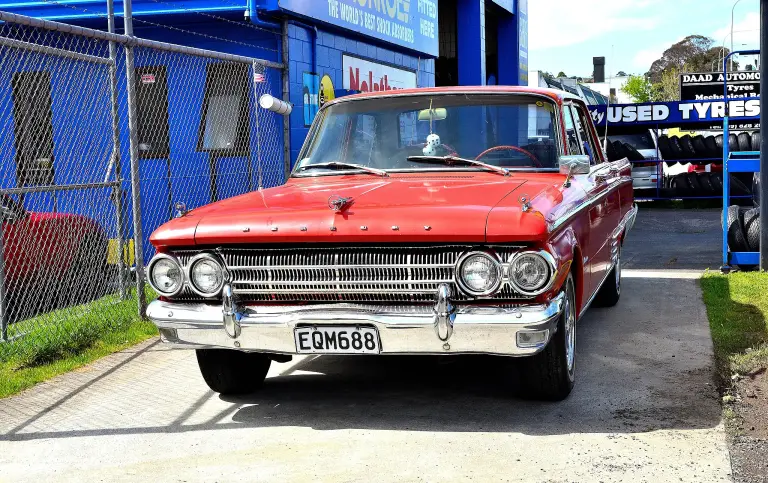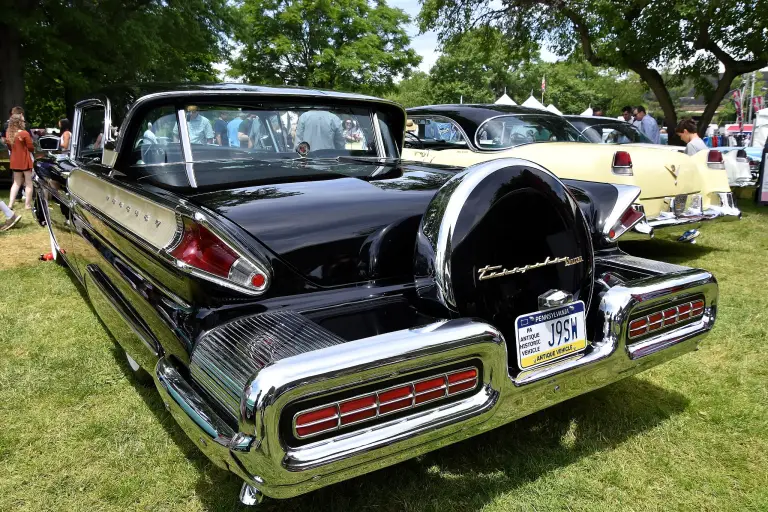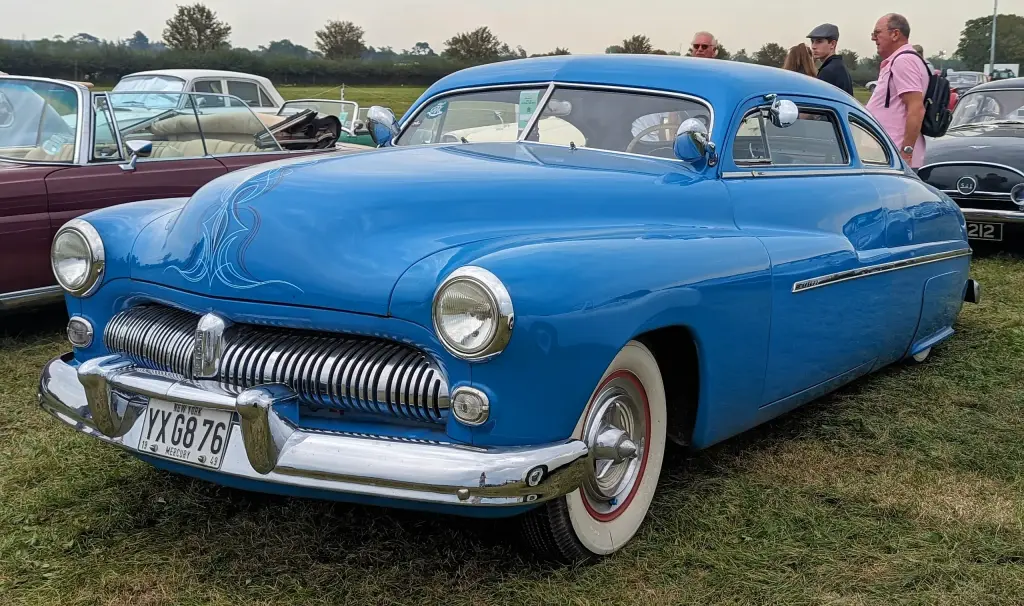
The Mercury Eight was an American car built by Ford Motor Company under its Mercury division between 1939 and 1951. It was the debut model of Mercury, priced between the Ford and the Lincoln, and came in three generations: 1939–1940, 1941–1948 (interrupted by the war) and the 1949–1951 “pontoon” body shared with the Lincoln.
Mercury Eight at a glance
| Maker | Ford Motor Company, Mercury division |
|---|---|
| Production | 1939–1951 |
| Generations | three: 1939–1940, 1941–1948, 1949–1951 |
| Position | between the Ford Deluxe (later Custom) and the Lincoln |
| Body styles | coupés, sedans, convertibles, station wagons |
| Engine | Ford flathead V8: 95 hp in 1939–1940, 100 hp in 1942, 110 hp from 1949 (255 cu in) |
| Wheelbase | 116.0 in (2,946 mm) in 1939–1940; 118.0 in (2,997 mm) from 1941 |
| Price in 1939 | US$946 for the two-door sedan |
| Name | chosen by Edsel Ford after the Roman messenger of the gods |
| Replaced by | Mercury Custom and Monterey, 1952 |
This page is based on English Wikipedia only (a trusted source); the German Wikipedia has no page on the Mercury Eight, so the facts were not cross-checked against a second source.
History of the Mercury Eight
First generation, 1939–1940
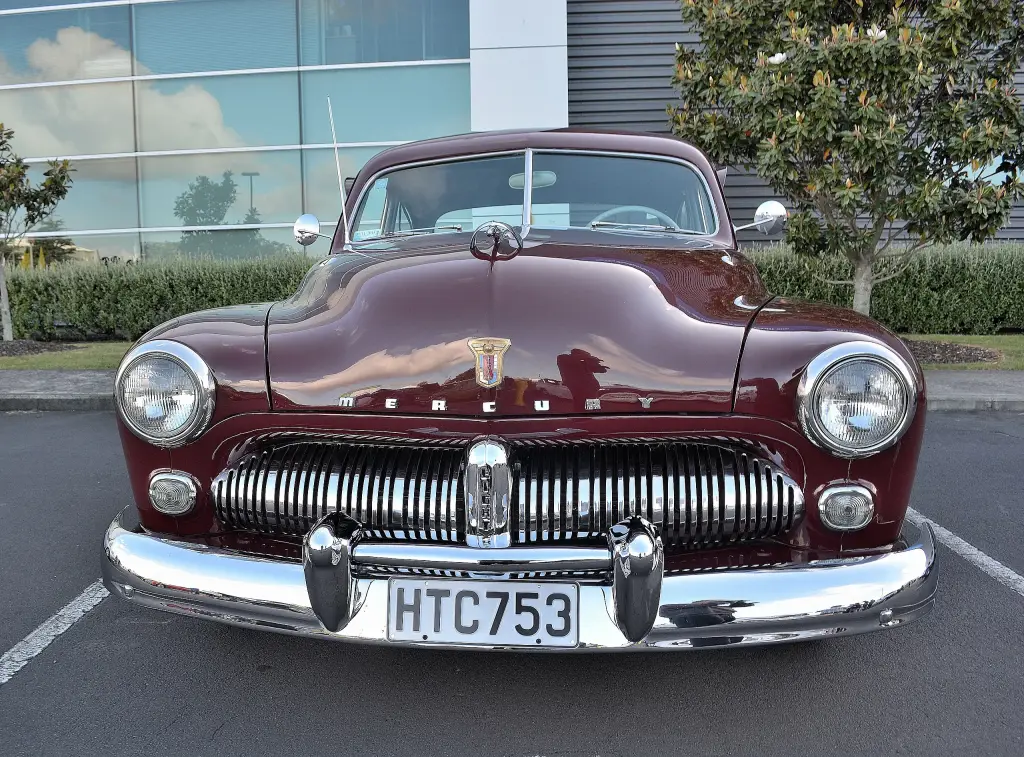
The Mercury Eight was the first model of the new division. Its styling was inspired by the Lincoln-Zephyr, and its engine was a 95 hp version of the Ford flathead V8. Advertisements asked why a big car could not also be economical, and Ford promoted economy of up to 20 mpg. The two-door sedan was listed at US$946, a few hundred dollars more than a 1937 Ford V8 and a few hundred less than a Lincoln-Zephyr. Sales literature called the car the Mercury Eight from the start, even though the series codes were 99A and 09A. By the end of 1940 Mercury could advertise that it had made 150,000 owners change cars.
Second generation, 1941–1948
The 1941 car had all-new styling, a body shared with the Ford Super DeLuxe, and a wheelbase two inches longer. The body flared over the running boards, giving wider seats, and 90,556 cars were sold in the 1941 model year. In 1942 the Eight got rectangular parking lights and a grille closer to the Lincoln-Zephyr; power rose to 100 hp, and Ford’s first semi-automatic transmission, Liquamatic, was offered but was unsuccessful. Output stopped in February 1942 as US auto plants turned to war material, after only 1,902 cars that year.
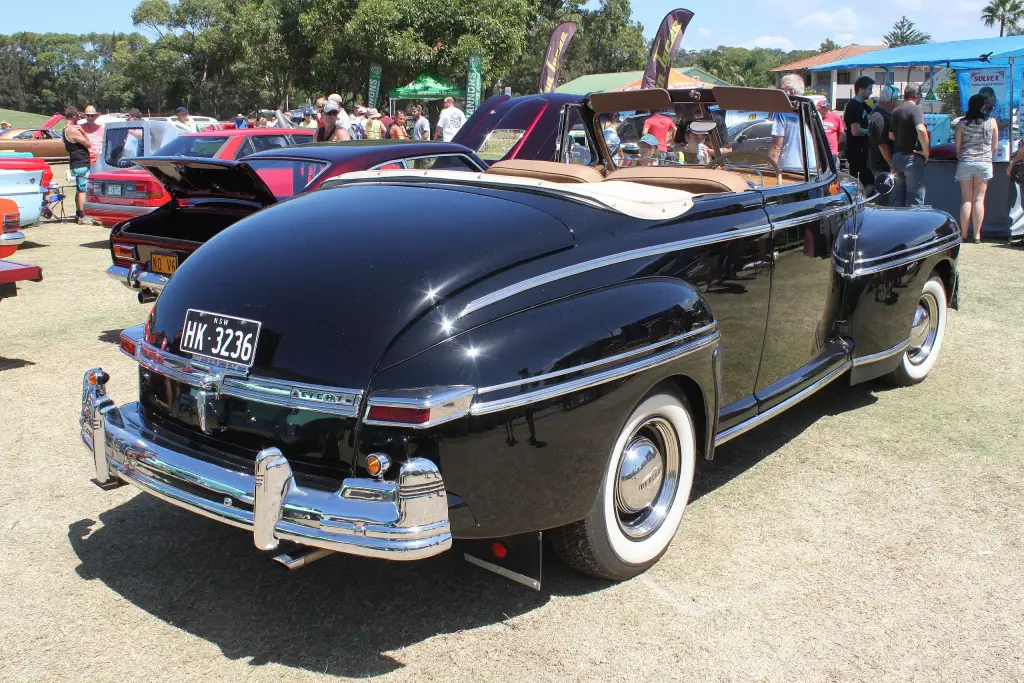
After the war, the 1946 car had a new grille with thin vertical bars. Its most distinctive version was the wood-panelled Sportsman convertible, of which only 205 were built. Mercury Eight sales were 86,603 in 1946, 86,363 in 1947 and 50,268 in 1948. A Mercury coupe utility was also built in Australia from 1946 to 1948.
Third generation, 1949–1951
For 1949 the Eight was redesigned as the first postwar line of the combined Lincoln-Mercury Division and shared its body with the Lincoln. Its “pontoon” styling dropped separate fenders and running boards. The wheelbase stayed at 118 inches, the front suspension became independent with stabiliser bars, and the flathead V8, now 255 cubic inches, made 110 hp. An overdrive was optional. The Monterey arrived in 1950 as the flagship Eight, a counterpart of the Ford Crestliner and a response to General Motors’ hardtop coupés, with a fabric-covered roof. For 1951 the Merc-O-Matic three-speed automatic became an option. The change to the Lincoln body helped sales rise by over 250,000 vehicles from 1948 to 1949. For 1952 Mercury renamed the Eight the Custom and made the Monterey its flagship.
Design and features
- Flathead V8: Ford’s V8 gave the Mercury a “hot car” image as well as good fuel economy.
- Bodies: the first generation had its own body; the second used a Ford body; the third shared the Lincoln body.
- Pontoon body, 1949: no running boards and no free-standing fenders, with a wider and lower bonnet.
- Transmissions: Liquamatic in 1942, an optional overdrive in 1949, and the true automatic Merc-O-Matic in 1951.
Mercury Eight versions
- Coupes, sedans and convertibles: offered in every generation.
- Station wagons: a wooden-bodied wagon from 1941, a two-door version from 1949 with wood relegated to the side paneling.
- Sportsman convertible (1946): wood-panelled, only 205 built.
- Monterey (1950–1951): the flagship trim with a fabric-covered roof.
- Australian coupe utility and panel van: built 1946–1948.
More Mercury cars are in our Mercury collection, for example the 350 and the 850.
Mercury Eight questions and answers
What was the Mercury Eight?
The first model of Ford’s Mercury division, built between 1939 and 1951.
What engine did it have?
A Ford flathead V8, rated at 95 hp in 1939–1940 and 110 hp (255 cubic inches) in 1949.
Why is it called the Eight?
Sales literature used the name Mercury Eight from the beginning; the “Eight” script appeared on the hood from 1941.
What replaced it?
In 1952 the Eight became the Mercury Custom and the Monterey became the flagship.
What changed in 1949?
A new pontoon body shared with the Lincoln, independent front suspension and a 110 hp V8.
Video: 1949 Mercury Eight
Video by Jenkkiauto on YouTube.
Sources
- Mercury Eight, English Wikipedia: history, generations, sales figures