The MCW Metrobus was a two- and three-axle double-decker bus manufactured by Metro Cammell Weymann between 1977 and 1989. Conceived as a semi-integral product built completely by MCW, it became one of the mainstays of the British double-decker fleet, and its design rights were bought by Optare and DAF after the maker collapsed.
MCW Metrobus at a glance
| Maker | Metro Cammell Weymann (MCW) |
|---|---|
| Production | 1977–1989 |
| Types | two-axle and three-axle double-decker |
| Construction | semi-integral, bodied by MCW, Alexander or Northern Counties |
| Standard length | 9.7 m (31 ft 10 in) |
| MkI launched | January 1977 |
| MkII launched | 1982 |
| Engines at launch | Gardner 6LXB or Rolls-Royce Eagle 220 Mk III |
| Transmissions | Voith DIWA851, GKN SRM, Maxwell from 1981 |
| Suspension | air suspension as standard |
| Tri-axle version | Super Metrobus, 12.0 m, 158 passengers |
| London Transport | 1,440 MkI examples, 1978–1985 |
Based on one source, the English Wikipedia article on the Metrobus.
History of the MCW Metrobus
MkI: a successor to the Metropolitan
The Metrobus was launched in January 1977, the first five prototypes going to the West Midlands Passenger Transport Executive. MCW conceived it as a successor to the integrally bodied Scania Metropolitan, for which the company had built the bodywork in partnership with Scania AB. Compared with that body, the Metrobus body lined up with the chassis outriggers, and the engine was mounted on top of the rear engine bay instead of being bolted to the chassis. The floor sat directly on the chassis, creating an almost step-free lower deck and removing the need for a drop-centre rear axle.
Buses were built as standard to 9.7 metres, although an 11.0-metre length was provisionally offered for a single-deck version, with a two-piece front windscreen and a deeper nearside pane carried over from the earlier Metropolitan and Metro-Scania designs. Air suspension was standard, and the cooling system was unusual: one half ran through the engine to a heat exchanger and returned cool air to the engine, while the other ran from the heat exchanger to a front-mounted radiator through internal heaters on both decks. At launch buyers could choose a Gardner 6LXB with a Voith DIWA851 transmission or a Rolls-Royce Eagle 220 Mk III with a GKN SRM unit; by the end of 1978 the Rolls-Royce plan had been shelved, further Voith variants were offered instead, and Maxwell transmissions became available from 1981.
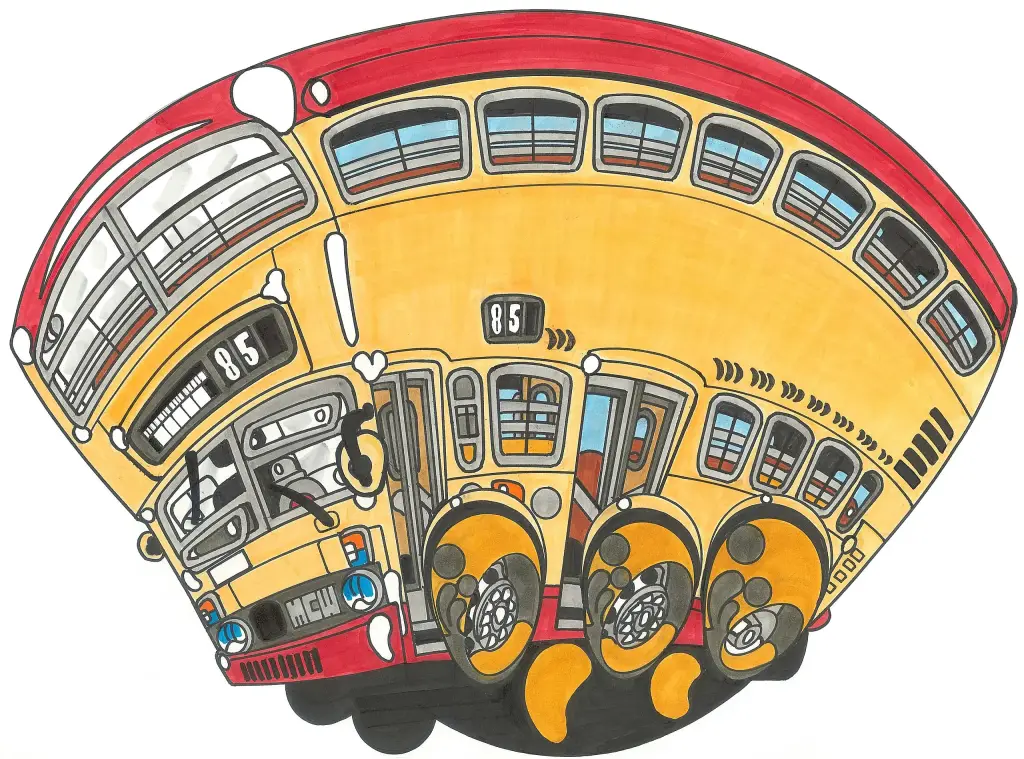
MkII: sixty per cent fewer body parts
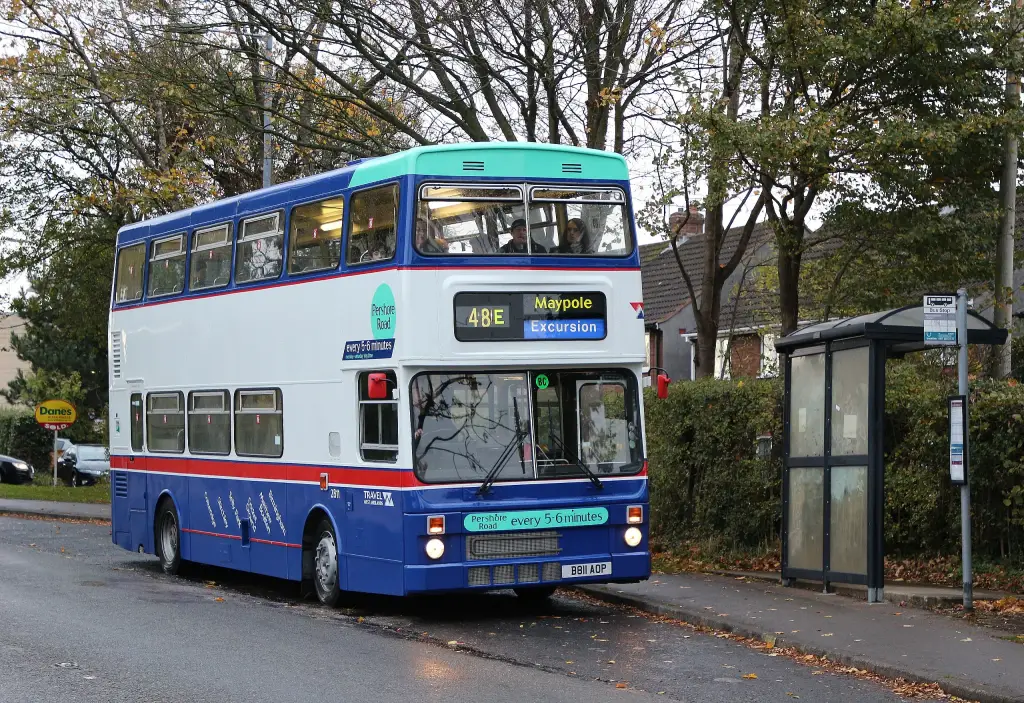
In 1982 MCW replaced the original design with the MkII, made cheaper to build and operate through different aluminium extrusions, three types of fixing bracket and common body and roof panels, cutting the number of individual bodywork components by 60 per cent. The most visible change was a revised front end with a symmetrical two-piece windscreen with an arched top and most grille badging removed. MkI production continued for the Greater Manchester Passenger Transport Executive until 1983 and for London Regional Transport until 1985.
A tri-axle MkII, marketed as the Super Metrobus, was built for export markets such as Hong Kong: 12.0 metres long and able to carry 158 passengers, 124 of them seated. Production ended in 1989 with the financial collapse of Metro Cammell Weymann, and the last two customers, Strathclyde Buses and West Midlands Travel, held back deliveries while they sought two-year warranties and parts support. Plaxton was interested only in the body, so the design rights went in October 1989 to an Optare–DAF Bus joint venture, which reworked the design into the DAF DB250-based Optare Spectra of 1991, keeping the same rear frame, rear axle and rear suspension.
Design and features
- Almost step-free lower deck: the floor was laid directly on the chassis, so no drop-centre rear axle was needed.
- Air suspension as standard: unusual for a British double-decker of the late 1970s.
- Unusual cooling circuit: a heat exchanger fed a front radiator through heaters on both decks.
- Simplified MkII body: common panels and brackets cut the component count by 60 per cent.
- Long life after the maker: the design became the Optare Spectra.
MCW Metrobus versions
- MkI (1977–1985): the original body, 9.7 m as standard.
- MkII (1982–1989): simplified body with an arched two-piece windscreen.
- Super Metrobus: tri-axle MkII of 12.0 m for Hong Kong and other export markets.
- Alexander and Northern Counties bodies: some examples were bodied outside MCW.
The Metrobus chassis also underpinned the tri-axle double-deck Metroliner coach, and the smaller Metrorider midibus was its stablemate in the MCW range. More buses are in the MCW collection.
Sources
- MCW Metrobus, English Wikipedia: design, MkI and MkII, operators, end of production