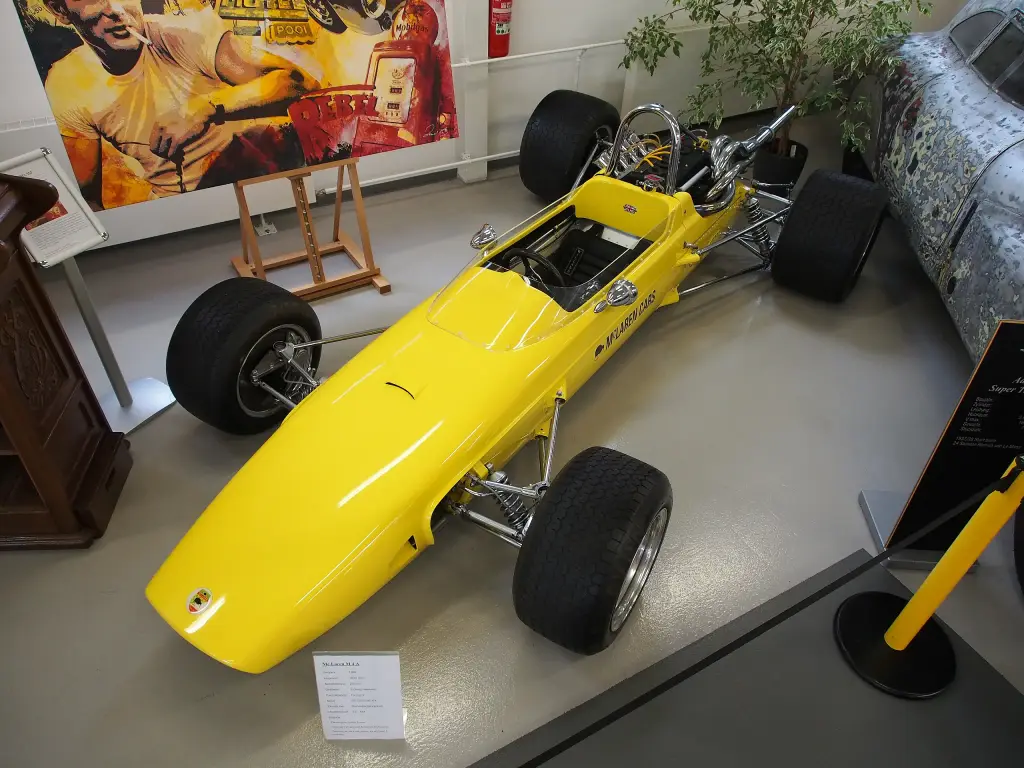
The McLaren M4A was an open-wheel racing car designed by Robin Herd and built by McLaren to compete in the European Formula Two Championship. It debuted in 1967 and its chassis went on to underpin two McLaren Formula One cars.
McLaren M4A at a glance
| Type | Formula Two racing car |
|---|---|
| Debut | 1967 European Formula Two Championship |
| Designer | Robin Herd |
| Engine | Ford Cosworth FVA |
| Works cars | two at first |
| Rivals | Brabham BT23, Lotus 48 |
| Later use | Tasman Series, Formula Three, Formula Libre, Australian Drivers’ Championship |
| Formula One derivatives | M4B and M5A |
based on one source (English Wikipedia).
History of the McLaren M4A
The M4A made its debut in the 1967 European Formula Two Championship, powered by Ford Cosworth FVA engines. Two works cars were produced at first. The car was reasonably competitive in the series but could not challenge the more capable Brabham BT23 or Lotus 48.
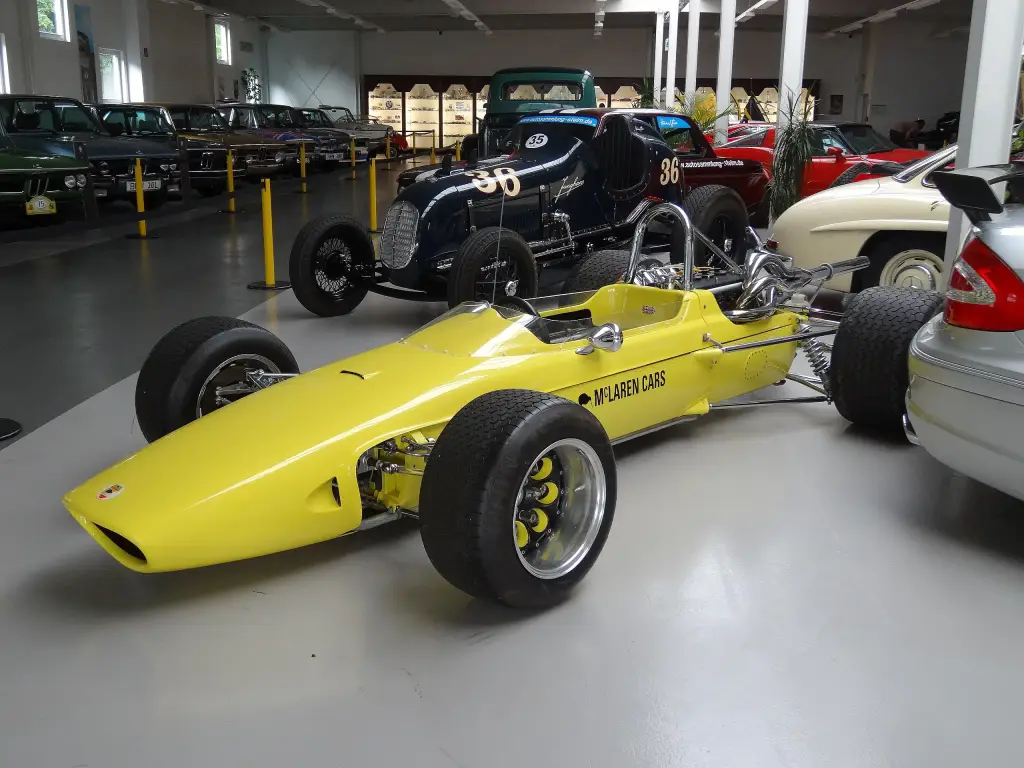
Graeme Lawrence, who drove the car in 1968 together with Frank Gardner, recalled that they struggled to handle the M4A and that McLaren’s focus at the time was firmly on Formula One. That explained why little development was done after the 1967 version and why customers were not offered much technical support.
Customer M4As were run in the 1968 and 1969 Tasman Series, and the car was used in several other series, among them Formula Three, Formula Libre and the Australian Drivers’ Championship. Both the M4B and M5A Formula One cars were based on the M4A chassis. Since its retirement from development the M4A has appeared in historic motorsport; the historic racer Richard Griot remembered from his first drive that nothing could touch it in a straight line.
Design and features
- Robin Herd design: a neat Formula Two chassis that proved adaptable to other formulas.
- Cosworth FVA engine: the standard Formula Two power unit of the period.
- Formula One offspring: the basis of the M4B and M5A, two of McLaren’s first Formula One cars.
- Straight-line speed: remembered by historic racers as very quick in a straight line.
- Wide use: raced in Formula Two, the Tasman Series, Formula Three, Formula Libre and Australian racing.
McLaren M4A versions
- Works M4A (1967): the two original cars in the European Formula Two Championship.
- Customer M4A (1968–1969): cars run in the Tasman Series and other championships.
- Formula One derivatives: the M4B and M5A, built on the M4A chassis.
The M4A led to the M1A sports car line in spirit and directly to McLaren’s early Formula One cars; the later Formula Two car was the M21. More cars are in the McLaren collection.
Sources
- McLaren M4A, English Wikipedia: design, 1967–1969 racing, derivatives