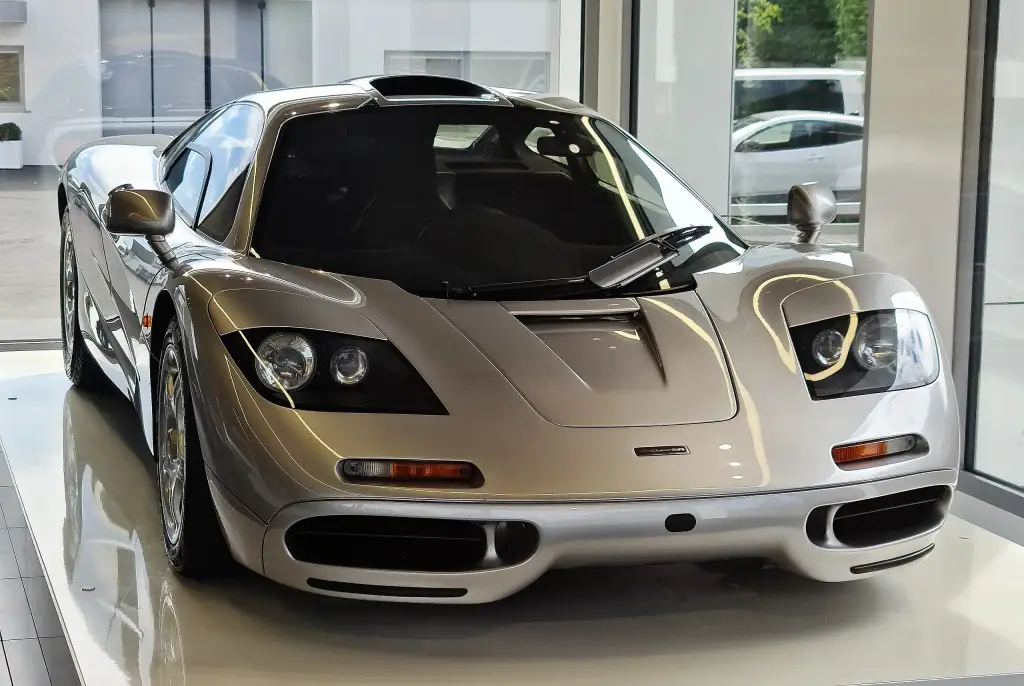
The McLaren F1 was the first road car built by the British Formula One team, designed by Gordon Murray and styled by Peter Stevens. Its central driving seat, carbon-fibre monocoque and BMW V12 made it the fastest production car in the world in 1998, and a racing version won the 24 Hours of Le Mans in 1995.
McLaren F1 at a glance
| Maker | McLaren Cars, Woking |
|---|---|
| Production | 1992–1998 |
| Built | 106 |
| Designer | Gordon Murray; styling by Peter Stevens |
| Engine | BMW S70/2 V12, built exclusively for the F1 |
| Seating | three abreast, driver in the centre |
| Chassis | carbon-fibre monocoque, the first in a production car |
| Le Mans | outright win in 1995 with a racing version |
| Top speed record | 240.1 mph (386.4 km/h), 31 March 1998, prototype XP5 |
| Replaced by | no direct successor until the 12C of 2011 |
based on one source (English Wikipedia).
History of the McLaren F1
Gordon Murray had wanted to build a three-seat sports car since his youth. Waiting for a flight home from the Italian Grand Prix in 1988 he sketched one and put the idea to Ron Dennis, arguing that the car should use the team’s Formula One experience and technology. Dennis backed the project and McLaren Cars was set up to build it, with Peter Stevens hired for the exterior and interior styling.
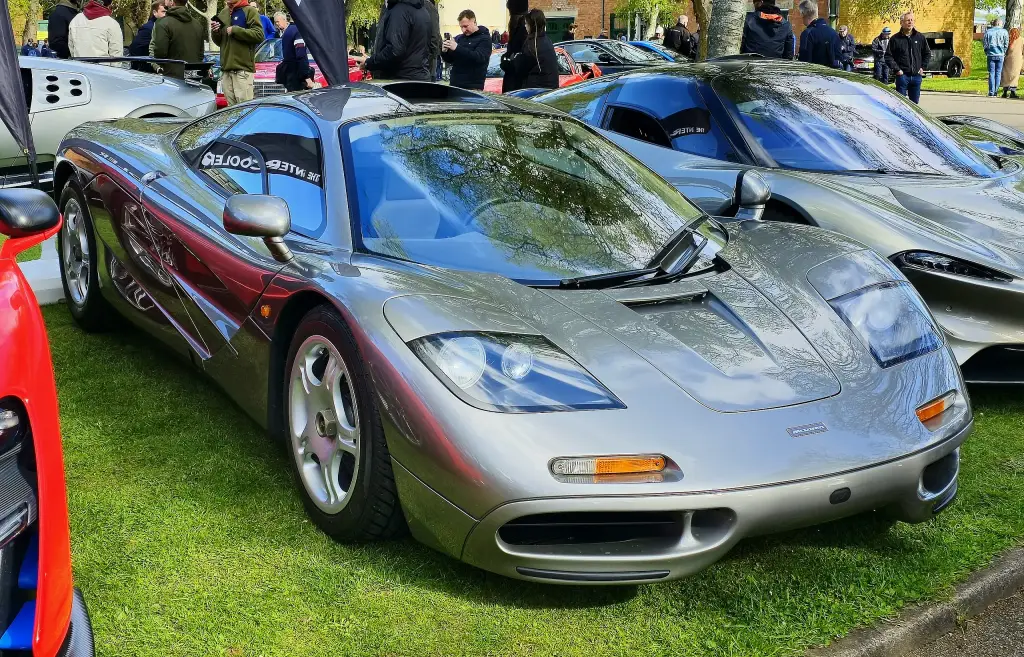
Murray wanted a Honda engine and asked the company twice to supply a V10 or V12 for the car; Honda declined, and McLaren turned to BMW, which developed and made the S70/2 V12 exclusively for the F1. Before the first cars were built, two Ultima MK3 kit cars were used as mules, one to test the gearbox with a 7.4-litre Chevrolet V8 and the other the V12, exhaust and cooling. Both were destroyed afterwards so that the car would not be linked with kit cars.
The F1 was unveiled at a launch show on 28 May 1992 at The Sporting Club in Monaco. Production ran from 1992 to 1998 and 106 cars were built in several variations. Although it was not designed as a racing car, modified versions won several races, among them the 1995 24 Hours of Le Mans. On 31 March 1998 the prototype XP5, with a modified rev limiter, set a Guinness record of 240.1 mph (386.4 km/h), beating the 217.1 mph of the Jaguar XJ220.
Design and features
- Central driving position: the driver sits in the middle with a passenger on each side, which gives better visibility.
- Carbon-fibre monocoque: the first used in a production car, and lighter than the structures of later rivals.
- Expensive materials: carbon fibre, titanium, kevlar, magnesium and gold were used to keep weight low and power high.
- BMW S70/2 V12: an engine developed specifically and exclusively for this car.
- Three seats in a compact body: room for three adults without the bulk of a conventional four-seater.
McLaren F1 versions
- F1 (1992–1998): the standard road car, 106 built in all variations.
- Racing versions: modified cars that won several races, including Le Mans in 1995.
- XP5 prototype: the car that set the 1998 speed record.
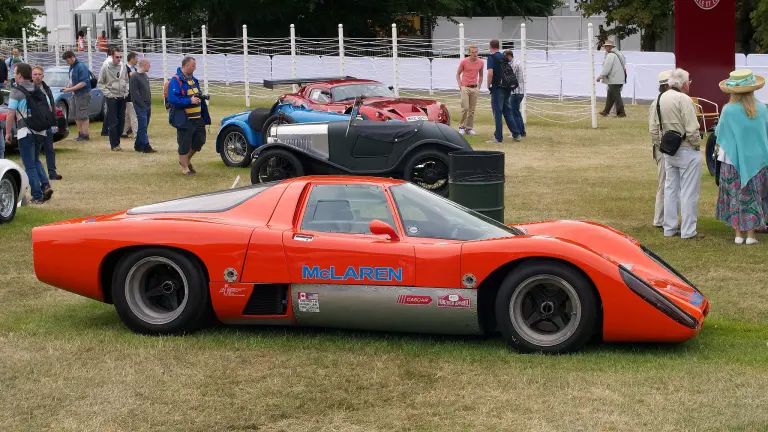
The F1 was followed much later by the McLaren 12C, and its idea of a road-going McLaren was sketched years earlier in the M6GT project. More cars are in the McLaren collection.
Video: Bugatti Veyron vs McLaren F1 (Top Gear)
Video by YouTube on YouTube.
Sources
- McLaren F1, English Wikipedia: design, engine, production, record