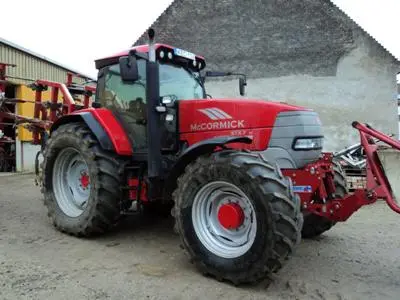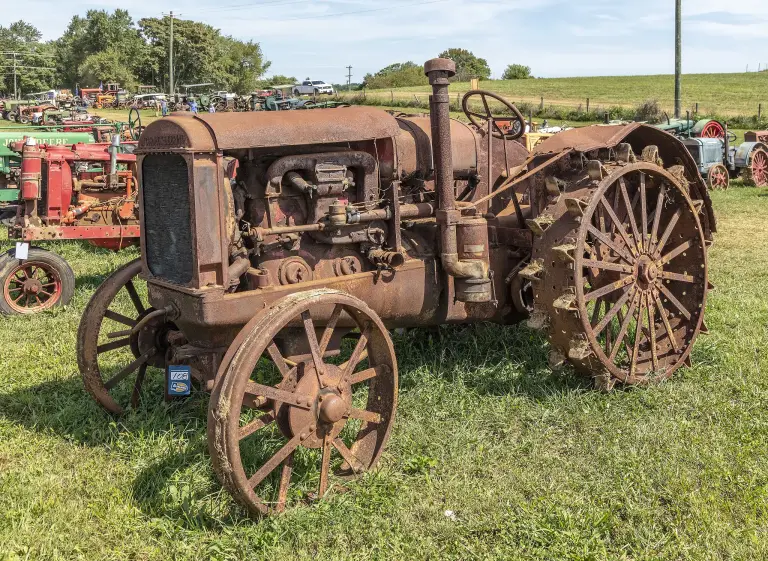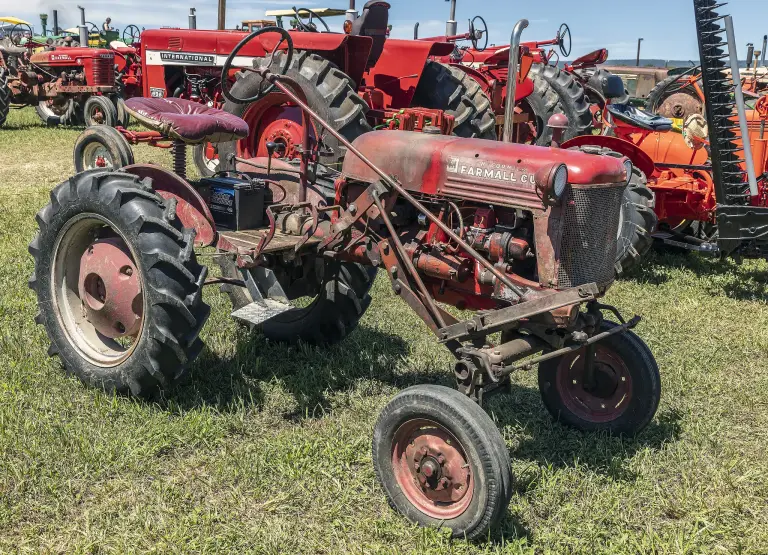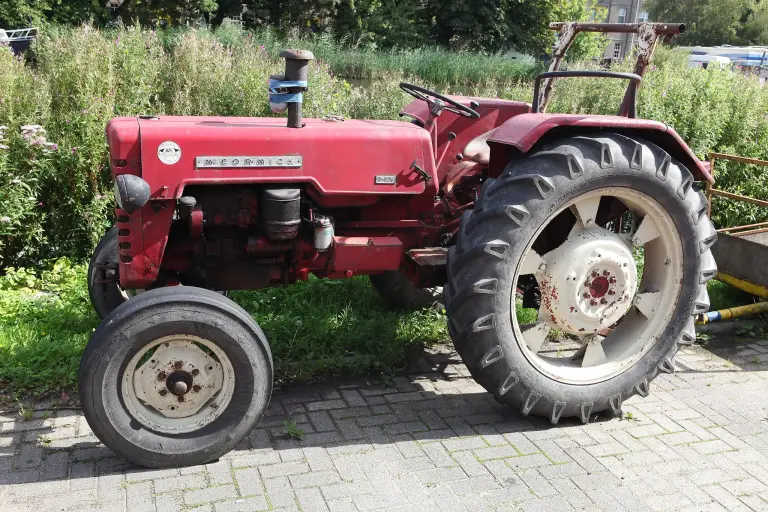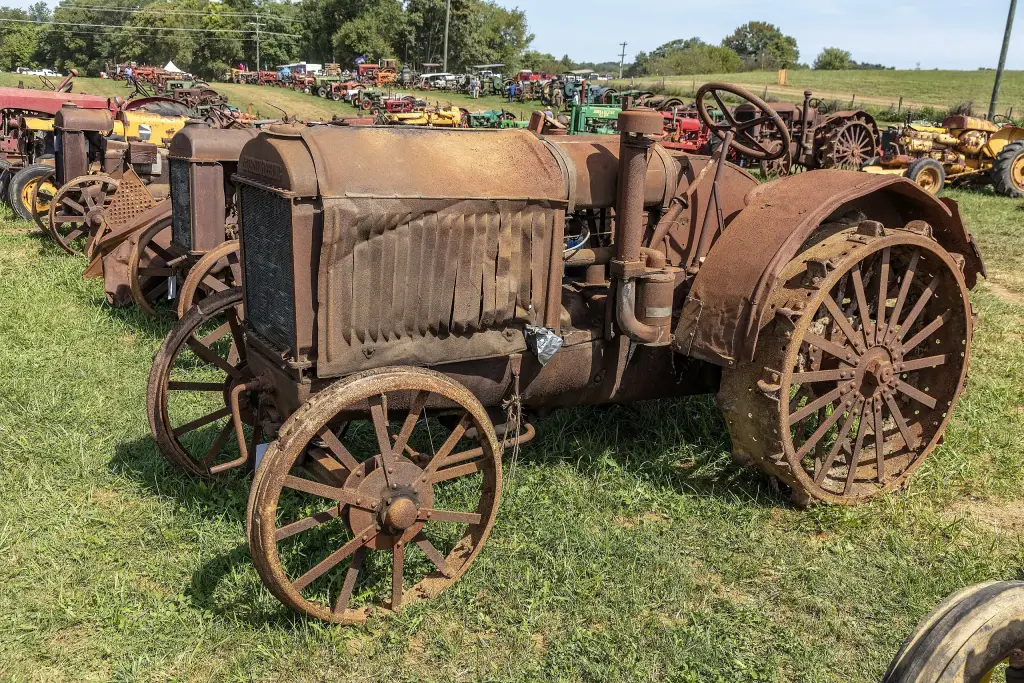
The McCormick-Deering 10-20 and the 15-30 were standard-tread tractors sold under the McCormick-Deering name, the trade mark International Harvester put on its farm machinery in the decades before the International branding took over in 1956.
McCormick-Deering 10-20 at a glance
| Maker | International Harvester Company, Chicago |
|---|---|
| Trade name | McCormick-Deering |
| Company formed | 1902, from McCormick Harvesting Machine Co. and Deering Harvester Co. |
| Value at formation | $150 million |
| Output in 1908 | 700,000 harvesters, worth $73 million |
| US tractor plants | Rock Island, Illinois (Farmall Works, from 1926); Louisville, Kentucky (from 1946) |
| European tractor plants | Neuss, Germany (tractors from 1937); Doncaster, England (tractors from 1949) |
| McCormick-Deering name dropped | 1956, when the W series joined the International numbering |
| Tractor number five million | a 1066, built at Rock Island in 1974 |
| Companion record | McCormick-Deering 15-30, merged into this page |
English Wikipedia has no article on the 10-20 or the 15-30 themselves. This page is based on the articles about International Harvester and the McCormick-Deering W series, so it describes the brand and the kind of tractor the 10-20 belonged to rather than the model’s own specifications.
History of the McCormick-Deering 10-20
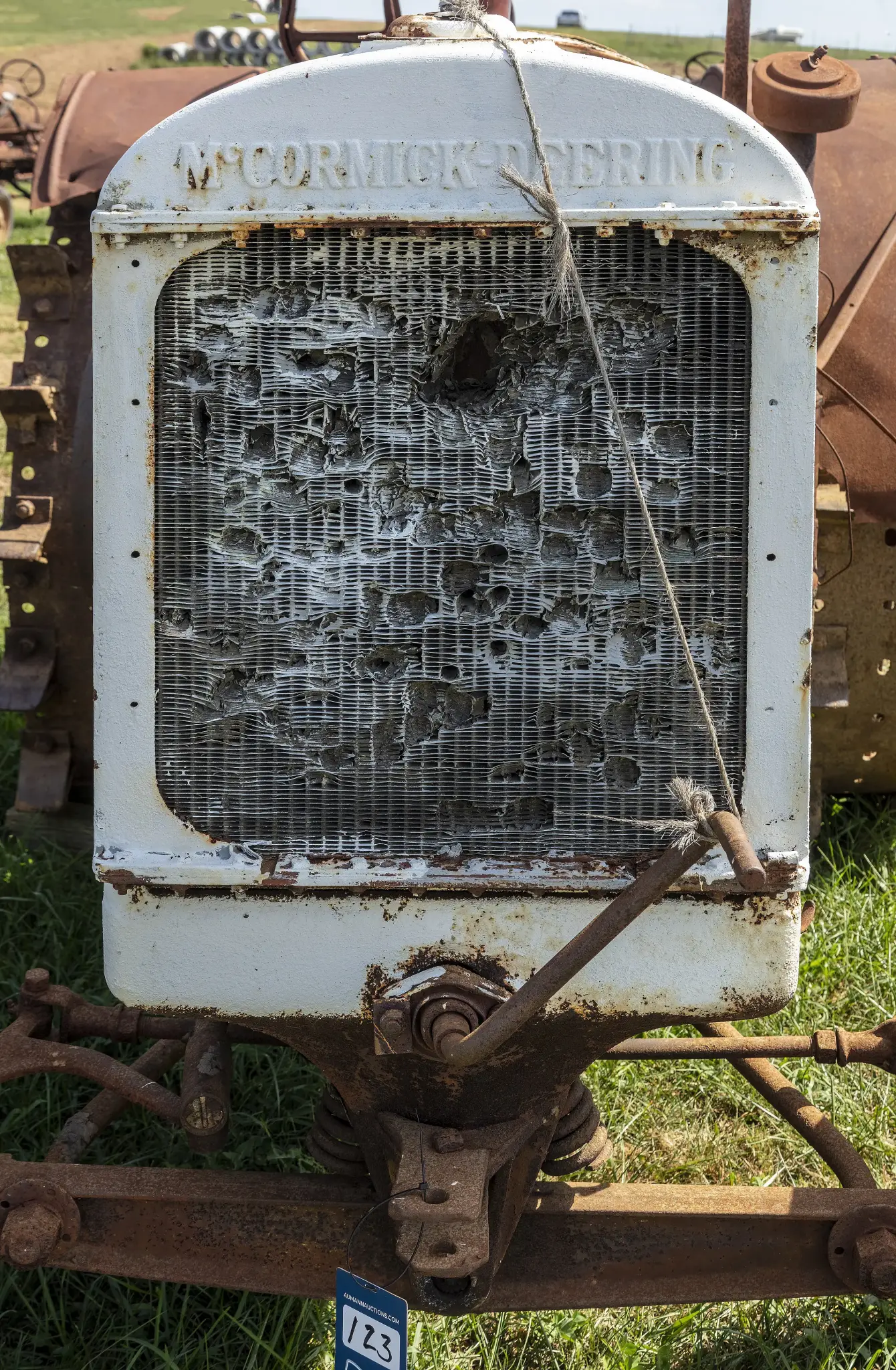
The McCormick-Deering name was born with International Harvester. In 1902 the McCormick Harvesting Machine Company of Chicago, founded by Cyrus McCormick in 1847, merged with the Deering Harvester Company and three smaller firms to form the International Harvester Company, a deal financed by J. P. Morgan and put together by his executive George W. Perkins. The new company was valued at $150 million. Its brands were McCormick and Deering, and later the combined McCormick-Deering, alongside International itself.
The merger created a company with an unusual reach. In 1908 it built 700,000 harvesters worldwide, worth $73 million; besides 25,000 employees it had 42,000 people working in its local agencies across the United States and parts of Europe. It bought the Parlin and Orendorff plough works in Canton, Illinois, in 1919, and in 1926 its Farmall Works opened a new plant at Rock Island, Illinois, where the 100,000th Farmall was built by 1930.
The tractors of this period came in two layouts. The Farmall was a row-crop machine with a tricycle front end, high clearance and quickly adjustable axles, made to straddle rows of young plants. The standard-tread tractors were the opposite: fixed wheel widths, a lower profile with smaller rear wheels and a wide front axle, meant for ploughing, orchards and wheatfields where row-crop features were of no use. That is the family the 10-20 and the 15-30 belonged to, and they wore the same red paint and Raymond Loewy styling as the Farmall line.
International Harvester also built in Europe. Its German subsidiary was set up at Neuss am Rhein in 1908, and tractor production there began in 1937 with the F-12-G, essentially an American Farmall F-12. At Doncaster in England the company started making farm machinery in 1939 and tractors in 1949, at first assembled from American parts. The German plant went on to build its own D-series, and the British one became the home of the McCormick International tractors of the 1960s.
The McCormick-Deering name did not survive the 1950s. When the W series was folded into the International Harvester numbering in 1956, the McCormick-Deering branding was dropped, and the tractors were sold as International. The company itself lasted until 1984–85, when the farm equipment division was sold to Tenneco’s Case Corporation and the brand continued as Case IH; the European side of the business exists today as McCormick Tractors, owned by ARGO of Italy.
Design and features
- Standard-tread layout: fixed wheel widths and a wide front axle instead of the Farmall’s adjustable row-crop axles.
- Lower build: smaller rear wheels and a lower profile than the row-crop tractors of the same years.
- Farmall styling: the same red paint and Raymond Loewy bodywork as the letter-series tractors.
- McCormick-Deering badge: the trade name used on the company’s farm machinery until 1956.
- Built for the field, not the row: ploughing, orchards and wheat were the work these tractors were sold for.
McCormick-Deering 10-20 versions
- McCormick-Deering 10-20: the standard-tread tractor this page is written around.
- McCormick-Deering 15-30: the companion record, merged into this page and redirected here.
- Farmall row-crop tractors: the tricycle-layout machines with high clearance and adjustable axles.
- W series (1940–1956): the later standard-tread line, from the W-4 and W-6 to the W-9, with fixed wheel widths and wide front axles.
The later standard-tread line is described on the page for the McCormick-Deering W-9, and the row-crop side of the range in the article on the Farmall. More machines are in the McCormick collection.
Sources
- International Harvester, English Wikipedia: company history, brands, plants, output
- International Harvester, German Wikipedia: Neuss and Doncaster plants
- McCormick-Deering W series tractors, English Wikipedia: standard-tread layout, end of the McCormick-Deering name
- Farmall, English Wikipedia: row-crop tractor concept