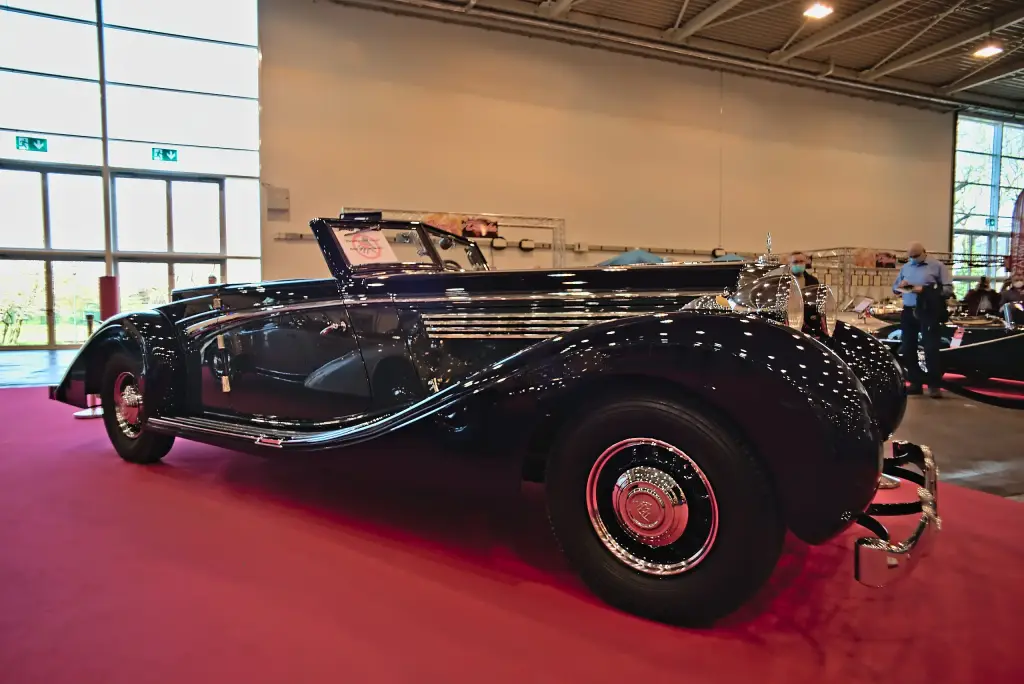
The Maybach SW 38 was the middle car of the SW series, the last classic Maybachs, built between 1935 and 1941. The letters stood for Schwingachswagen, swing-axle car, after the new rear suspension, and the number for the engine size: 3.5 litres in the SW 35, 3.8 in the SW 38 and 4.2 in the SW 42.
Maybach SW 38 at a glance
| Production | SW series 1935–1941 |
|---|---|
| SW 35 | 1935–1936, 3,435 cc, 140 PS |
| SW 38 | from 1936, 3,790 cc, 140 PS |
| SW 42 | 1939–1941, 4,197 cc, 140 PS |
| Engine | straight-six, HL series |
| Power | 140 PS at 4,500 rpm |
| Top speed | about 140 km/h |
| Fuel | 17–18 l/100 km |
| Rear suspension | swing axle |
| Front suspension | transverse arms |
| Bodies | by Spohn of Ravensburg and others |
| Built by Maybach | about 2,300 cars, 1921–1940 |
There is no English Wikipedia page for the model; this article uses the Italian page on the SW series and the German company page.
History of the Maybach SW 38
The SW series
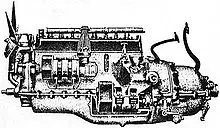
In the mid-1930s Maybach moved away from the very large engines of its earlier cars. The SW 35 of 1935 brought three things at once: a swing-axle rear end with transverse arms in front, a lower chassis that gave the car a sleeker stance, and the first engine of the HL series, a 3,435 cc straight-six with 140 PS at 4,500 rpm. That was 10 PS more than the DSH, reached partly by a higher compression ratio, and top speed rose to 140 km/h while consumption fell to 17–18 litres per 100 km against 25–30 for the older cars. The SW 35 lasted only a year.
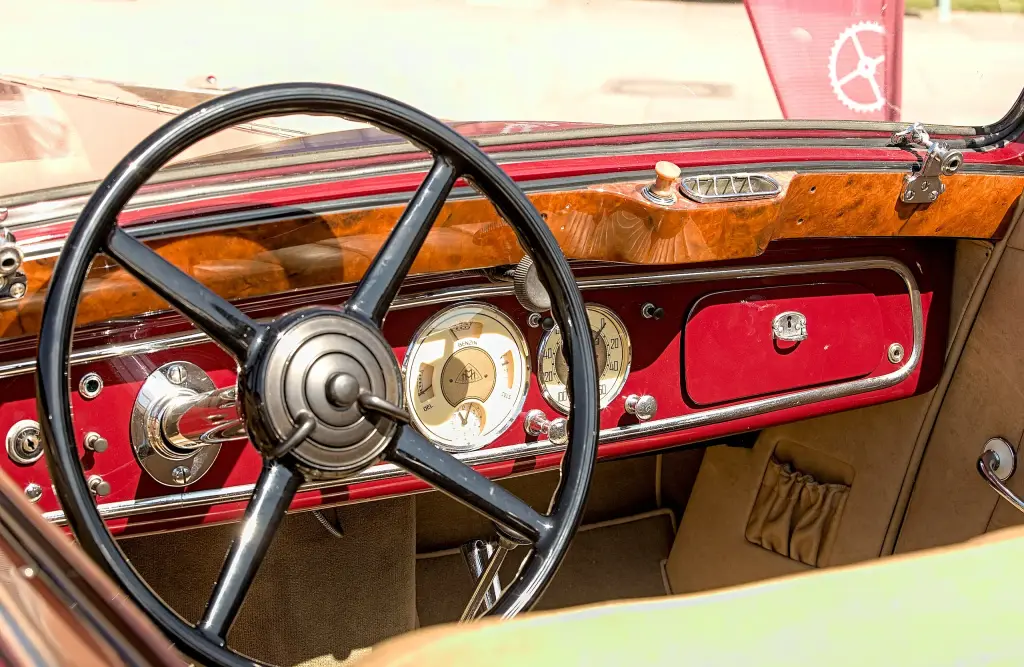
Why the SW 38
Germany in the 1930s was short of good fuel, because the regime was stockpiling the best petrol and leaving poorer grades to the public. The SW 38, presented at the Geneva Salon, answered this with a larger engine rather than a more powerful one: the HL 38 had 3,790 cc, obtained by lengthening the stroke from 90 to 100 mm, and the same 140 PS, but it ran better on poor fuel. The SW 42 followed in 1939 with a 4,197 cc HL 42, again with 140 PS.
End of the line
The SW 42 stayed in production for two more years, until 1941, when Maybach stopped building cars and turned to diesel engines for rail use. After the war some cars were rebodied by Spohn, the Ravensburg coachbuilder most closely associated with Maybach, in a much more modern style. The SW was the last classic Maybach until the 57 and 62, more than 65 years later.
Design and features
- Swing-axle rear end: the feature that gave the series its name and a more comfortable ride than the older rigid axles.
- Lower chassis: a new frame sat closer to the ground and made the car look longer and lower.
- Efficient six: 140 PS from 3.4 to 4.2 litres, with far better fuel consumption than the previous generation.
- Coachbuilt bodies: cars left the factory as chassis, and most were bodied by Spohn to the customer’s taste.
Maybach SW 38 versions
- SW 35 (1935–1936): 3,435 cc, the first of the series.
- SW 38 (1936–1939): 3,790 cc, the version built for poorer fuel.
- SW 42 (1939–1941): 4,197 cc, the last classic Maybach.
- Post-war Spohn cars: rebuilt examples with modern bodies.
The SW 38 was followed as the flagship by the Maybach Zeppelin V12, and it began the line that ended with the early Maybachs. More cars are in the Maybach collection.
Video: mit stil: Maybach SW 38 | Motor Mobil
Video on YouTube.
Sources
- Maybach SW, Italian Wikipedia: series, engines, suspension, fuel, Spohn
- Maybach-Motorenbau, German Wikipedia: company history, chassis-only deliveries, production totals