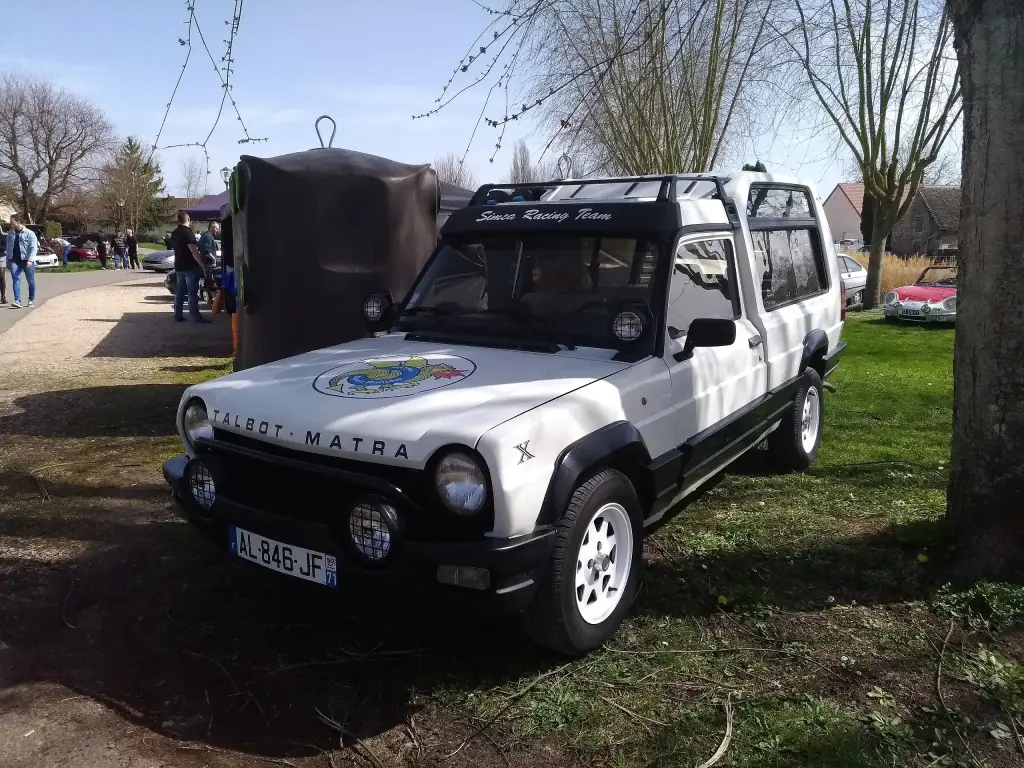
The Matra-Simca Rancho was Matra’s answer to the off-road fashion started by the Range Rover: a leisure vehicle that looked like a small all-terrain estate but was built on the chassis of the front-wheel-drive Simca 1100 pick-up. Launched in 1977, it offered the image cheaply and became Matra’s most popular model of the period.
Matra-Simca Rancho at a glance
| Maker | Matra, sold as Matra-Simca then Talbot-Matra |
|---|---|
| Production | 1977–1984, on sale until January 1985 |
| Based on | Simca 1100 pick-up VF2 |
| Body | two-door estate, fibreglass rear module on steel frame |
| Drive | front-wheel drive, no four-wheel-drive option |
| Engine | 1,442 cc “Poissy” four |
| Power | 80 DIN hp at 5,600 rpm |
| Price at launch | 35,000 francs |
| Built at | finished at Matra, Romorantin, from Poissy and Heuliez bodies |
| Built | 57,792 (English Wikipedia); 56,457 (French Wikipedia) |
The two Wikipedia articles give different production totals (57,792 and 56,457); both are shown in the table.
History of the Matra-Simca Rancho
The Rancho was unveiled at the Geneva Motor Show in March 1977 and was the second product of the Matra – Chrysler France partnership. Matra’s engineers took the platform and front structure of the Simca 1100 pick-up VF2, stretched the chassis and raised the ride height, then added a rear module of their own design: a steel frame covered with glassfibre-reinforced polyester panels and mouldings that made the car look sturdier than it was. Philippe Guédon, Matra’s technical director, called the recipe “the method of French toast applied to the motor car” — existing parts reassembled into something that had not existed before.
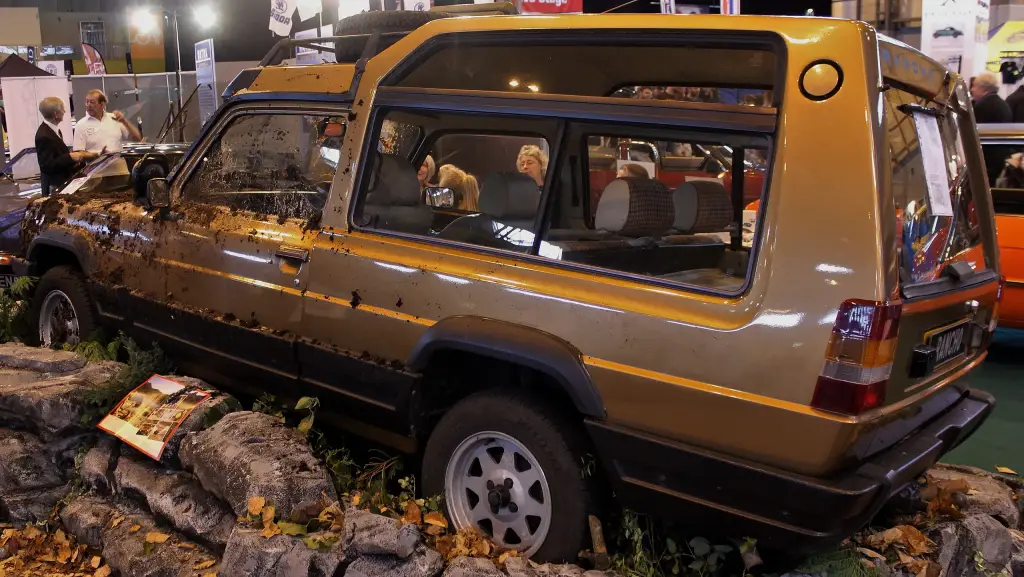
Rolling bases came from the Poissy factory and from Heuliez and were trucked to Romorantin, where Matra clothed and finished them. The dashboard and front seats were carried over from the Simca 1100 GLS, and the car kept the front-wheel-drive layout of the 1100: there was no all-wheel drive, and the off-road equipment was cosmetic.
The Rancho sold 4,073 units in the remainder of 1977 and 11,345 in 1978. After Chrysler Europe was sold to PSA in 1978 and Simca became Talbot in 1979, the car was marketed as the Talbot-Matra Rancho, but it changed little. For the 1980 model year Matra added the versions that broadened the range: the upmarket X, the off-road-styled Grand Raid and the open-backed Découvrable, alongside the commercial AS. Production ended in 1983, though remaining stock was sold into January 1985.
The Rancho’s indirect successor was the Renault Espace. Matra proposed to replace it with the “dessin orange” prototype, which already had the shape of the first Espace; Peugeot, then in control of Matra, thought it too expensive, and Matra took the project to Renault instead.
Design and features
- Off-road styling: raised ground clearance, wide wheel arches and moulded body add-ons gave the look of an all-terrain vehicle without its cost or weight.
- Simca 1100 mechanicals: the 1,442 cc Poissy engine with 80 hp, front-wheel drive and the 1100’s dashboard and front seats.
- Composite rear body: Matra’s steel frame and fibreglass panels, a technique later used on the Renault Espace.
- Two doors only: the pick-up base meant a single door each side, with a large glass area in the rear cabin.
- Commercial option: the AS version without rear seats was exempt from the French tax on passenger cars.
Matra-Simca Rancho versions
- Rancho base (1977–1984): the standard glazed estate.
- Rancho X (1980–1984): upscale model with alloy wheels and metallic paint.
- Rancho Grand Raid (1980–1981): electric front winch, roof-mounted spare wheel, limited-slip differential, underbody protection and matte green paint only.
- Rancho Découvrable (1981): an open rear cabin with roll-down fabric covers.
- Rancho AS (1980–1984): two-seat commercial version.
- Special series: Davos for the German importer, Loisir (also sold as Jeanneau Wind) and Midnight.
The Rancho shared its period and its Simca engines with the Matra-Simca Bagheera, and its composite-body technique led to the Matra Murena. The earlier Matra 530 began the line; more are in the Matra collection.
Sources
- Matra Rancho, English Wikipedia: history, versions, production
- Matra-Simca Rancho, French Wikipedia: development, prices, special series