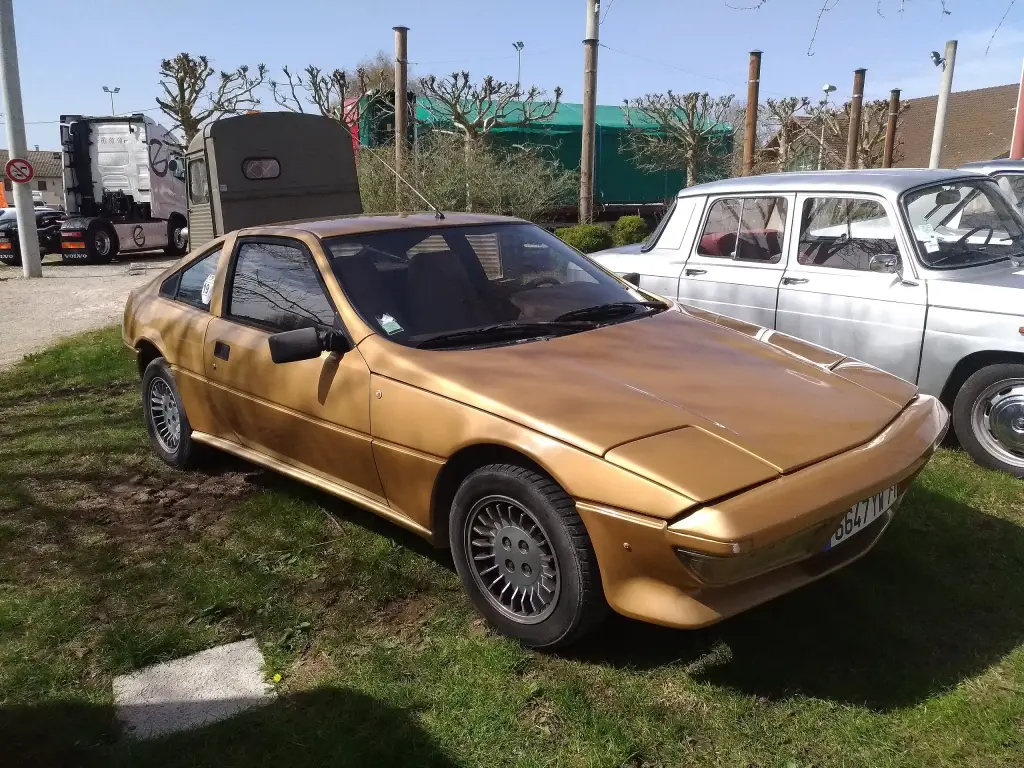
The Matra Murena was a mid-engined, rear-wheel-drive sports car produced from 1980 to 1983 by the French engineering group Matra at Romorantin-Lanthenay. It replaced the Bagheera, keeping its layout and hatchback body but fixing its main weaknesses.
Matra Murena at a glance
| Maker | Matra, Romorantin-Lanthenay, France |
|---|---|
| Production | 1980–1983 |
| Project codes | M551 (1.6), M552 (2.2) |
| Designer | Antonis Volanis |
| Layout | mid-engine, rear-wheel drive |
| Engines | 1.6-litre Poissy; 2.2-litre Type 180 |
| Power | 2.2: 118 PS; Murena S: 142 PS |
| Gearbox | five-speed transaxle from the Citroén CX |
| Chassis | fully galvanised steel, the first production car with this |
| Drag coefficient | 0.328 |
| Seats | three in one row, middle seat folds into an armrest |
Based on the English Wikipedia article on the Matra Murena.
History of the Matra Murena
Development
The Murena, whose name is Italian for “moray”, succeeded the Bagheera, the result of an earlier Matra–Simca collaboration. Development ran under two project names: M551 for the 1.6-litre version and M552 for the 2.2-litre version, with a prototype designated P-551. The Murena kept the mid-engined layout and hatchback shape but made substantial changes to answer the earlier car’s problems: a lack of power, no five-speed gearbox and a chassis extremely prone to rust. Engineering was done entirely by Matra, and Greek industrial designer Antonis Volanis, who had worked on the Bagheera’s interior and led the Rancho design, headed the Murena’s design.
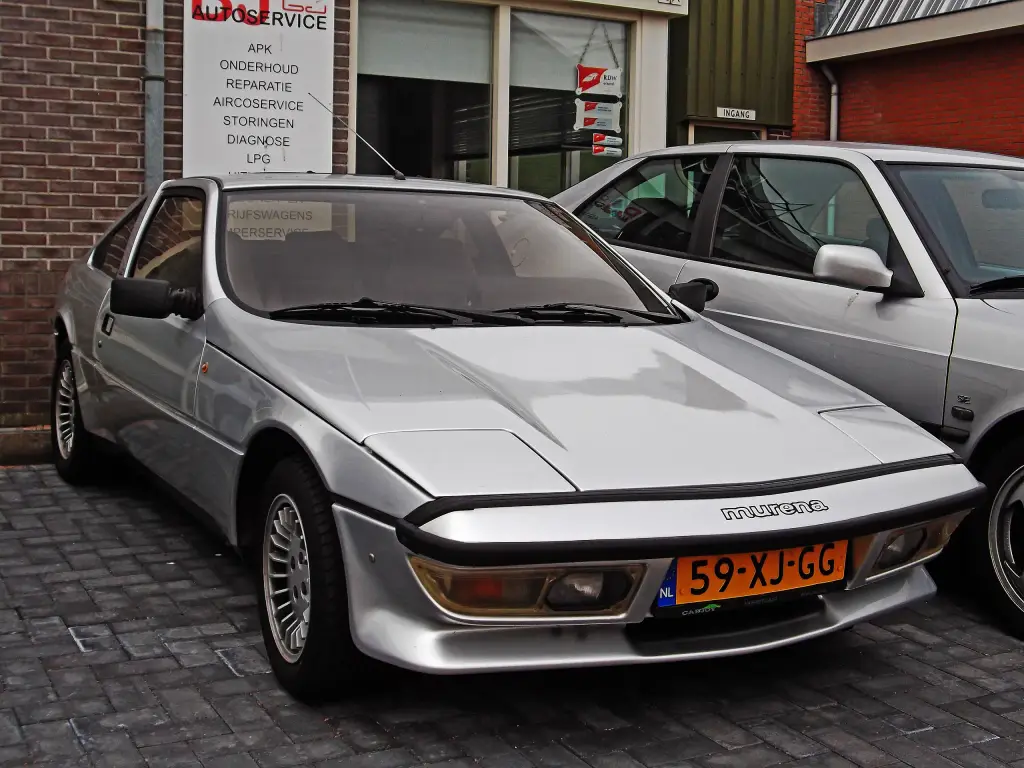
Parts-bin engineering
The Murena drew heavily on the corporate parts bin: engines from the Talbot Solara and Talbot Tagora, a transaxle developed by Citroén for the CX and also used in some Lancia Betas, Talbot Horizon taillamp clusters with custom lenses, the steering rack and front suspension from the Talbot Solara, front indicator and running lights from the Renault 12 and door handles from the Peugeot 505.
Chassis and body
The chassis was a new design, very close to a full unitary body. The rear cradle was reconfigured for a new rear suspension, and the entire chassis was galvanised to prevent the rust that plagued the Bagheera; the Murena was the first production car to use galvanised steel for all chassis parts. The car was built only in left-hand drive, though a small number of right-hand-drive conversions were done by Wooler-Hodec. The all-new shape was very aerodynamic, with a reported drag coefficient of 0.328. The twelve major body panels were fibreglass-epoxy, made by sheet moulding compound; the galvanised chassis and composite panels made the car essentially immune to rust except for the rear suspension trailing arms.
Inside and underneath
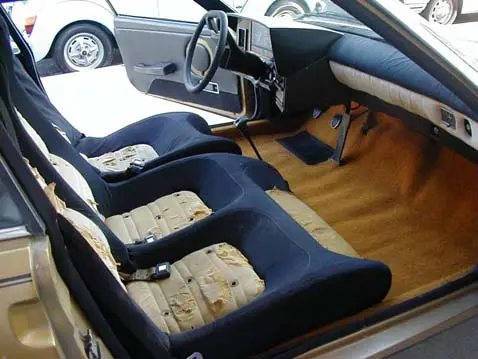
The rear hatch opened onto the engine and a rear luggage area. The signature three-abreast seating was carried over, now with three separate seats in one row and the middle seat folding down as an armrest. The front suspension was similar to the Bagheera’s, with upper and lower transverse A-arms, longitudinal torsion bars and an anti-roll bar; at the rear the torsion bars gave way to semi-trailing arms with coil springs.
Engines and the S
Two engines were offered: a 1.6-litre Poissy unit in the base model and a 2.2-litre Type 180 in the more powerful version. The 2.2 could be ordered with the “Préparation 142” package, raising output from 118 PS to 142 PS; at first a dealer-installed option, it was fitted at the factory to the last 480 cars, which were called the Murena S. The standard 2.2 used a single Solex down-draught carburettor, the S twin side-draught Solex units. All Murenas used the same five-speed transaxle, though final-drive ratios differed.
Design and features
- Galvanised chassis: the first production car with all chassis parts in galvanised steel.
- Three seats in a row: the middle seat folds into an armrest.
- Efficient shape: a drag coefficient of 0.328.
- Murena S: 142 PS from the 2.2-litre engine in the last 480 cars.
Matra Murena versions
- Murena 1.6 (1980–1983): the base model with the Poissy engine.
- Murena 2.2 (1981–1983): the Type 180 engine with 118 PS.
- Murena S (1983): factory-fitted 142 PS engine, the last 480 cars.
The Murena replaced the Matra Bagheera, and its designer also shaped the Matra Rancho. More cars are in the Matra collection.
Sources
- Matra Murena, English Wikipedia: development, chassis, body, engines