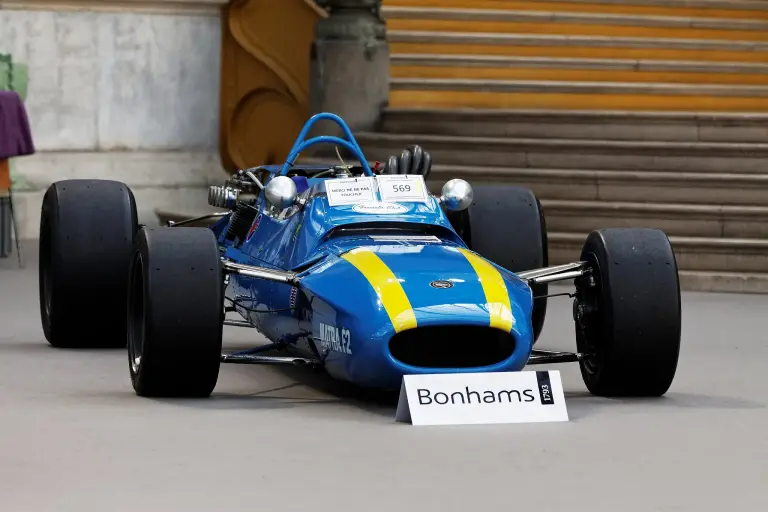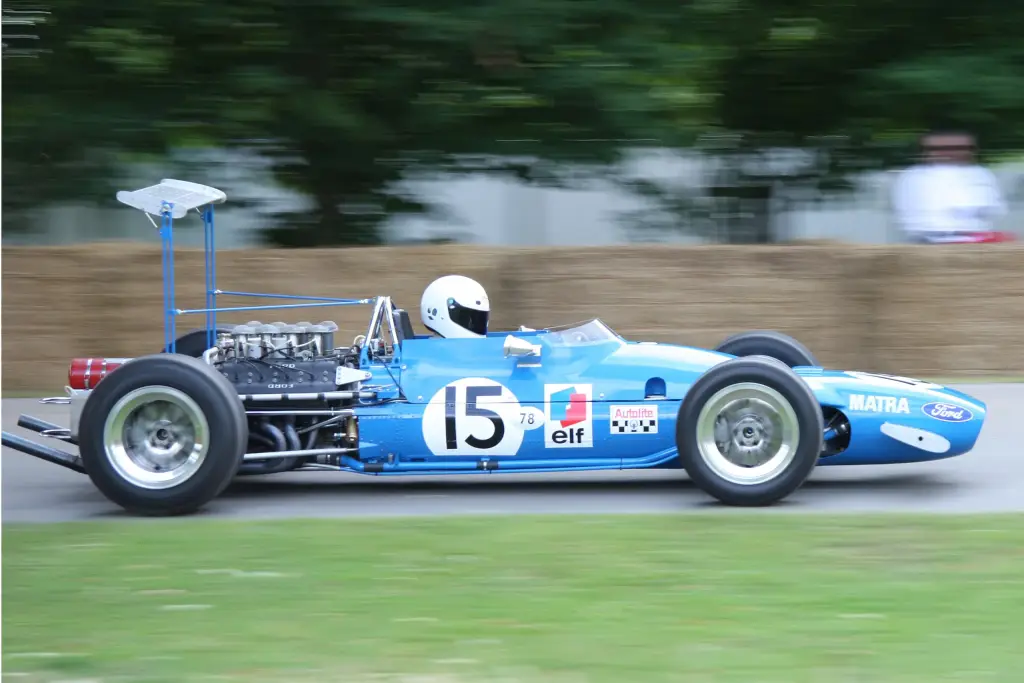
The Matra MS10 was a Formula One car entered by the Matra International team in 1968. Along with its V12-powered sibling, the MS11, it was Matra’s first purpose-built Formula One car. With Jackie Stewart it won three races, took him to second in the Drivers’ Championship and Matra International to third in the Constructors’ Championship.
Matra MS10 at a glance
| Type | Formula One car |
|---|---|
| Team | Matra International (Ken Tyrrell) |
| Season | 1968, plus the 1969 season opener |
| Engine | Cosworth DFV V8 |
| Key engineering | structural fuel tanks, about 15 kg lighter |
| Drivers | Jackie Stewart, Jean-Pierre Beltoise, Johnny Servoz-Gavin |
| Wins in 1968 | 3 |
| Championship | Stewart 2nd, Matra International 3rd |
| Replaced by | Matra MS80 |
| Notable | raced with high wings in 1968 and two wings in 1969 |
Based on the English Wikipedia article on the Matra MS10.
History of the Matra MS10
Origin
After success in Formula Two, Matra developed a Formula One car intended for its own V12 engine. Ken Tyrrell, who ran the Formula Two team, was impressed by the Cosworth DFV in 1967 and persuaded Matra to build a car for that engine. In the end Matra Sports ran the V12-engined MS11 as a works entry, while Tyrrell ran the V8-engined MS10 under the Matra International banner.
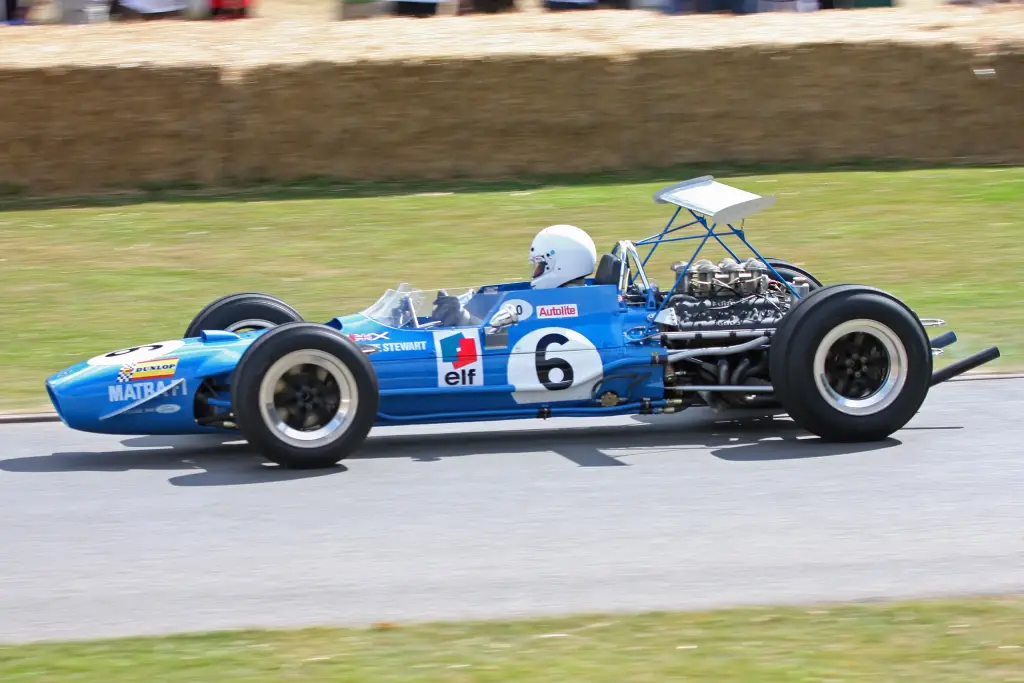
Structural fuel tanks
The MS10’s most innovative feature was the use of aviation-inspired structural fuel tanks, which made the chassis around 15 kg lighter while still stronger than its competitors’. The FIA considered the technology unsafe and banned it for 1970, insisting on rubber bag tanks.
1968 season
Jackie Stewart had raced for Tyrrell’s Formula Two Matra team and signed to drive for them in Formula One in 1968 after two fruitless years with BRM. At the season opener in South Africa he still raced the interim MS9, qualifying third but retiring with engine failure. Stewart then injured his wrist in a Formula Two race at Jarama, so Jean-Pierre Beltoise debuted the MS10 at the Spanish Grand Prix, setting fastest lap and finishing fifth. Beltoise then moved to the works MS11 and Johnny Servoz-Gavin raced the MS10 at Monaco before a recovered Stewart took over for the rest of the season.
Wings and wins
As the season went on the team experimented with aerofoil wings. At the Italian and United States Grands Prix Stewart raced the MS10 with a high suspension-mounted wing, the kind outlawed the following season after the Lotus drivers’ near-fatal accidents in Spain. At the 1969 South African Grand Prix the car was even raced with two high wings, one over the front and one over the rear suspension; at other races, such as Stewart’s dominant German Grand Prix win, it ran a lower wing. A second car was built and raced by Servoz-Gavin late in the season. Stewart won three World Championship races and the non-championship International Gold Cup and finished second in the World Championship.
The end
The MS10 raced and won once more at the start of 1969 in South Africa and finished third at the BRDC International Trophy, then was replaced by the championship-winning Matra MS80.
Design and features
- Structural fuel tanks: aviation-derived, about 15 kg lighter than conventional tanks.
- Cosworth DFV V8: the engine Tyrrell insisted on instead of Matra’s V12.
- Experimental wings: high suspension-mounted aerofoils in 1968, twin wings in 1969.
- Three 1968 wins: enough for second in the drivers’ championship.
Matra MS10 versions
- MS10 (1968): the Cosworth-engined car run by Matra International.
- MS11: the works car with Matra’s own V12.
- MS9: the interim car used at the start of 1968.
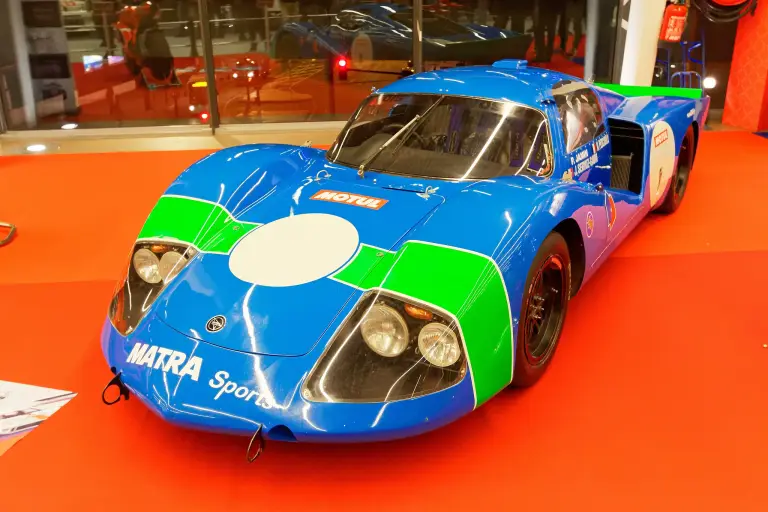
The MS10 was replaced by the Matra MS80, and its V12-engined sibling was the Matra MS120’s predecessor. More racing cars are in the Matra collection.
Sources
- Matra MS10, English Wikipedia: design, season, wings, results