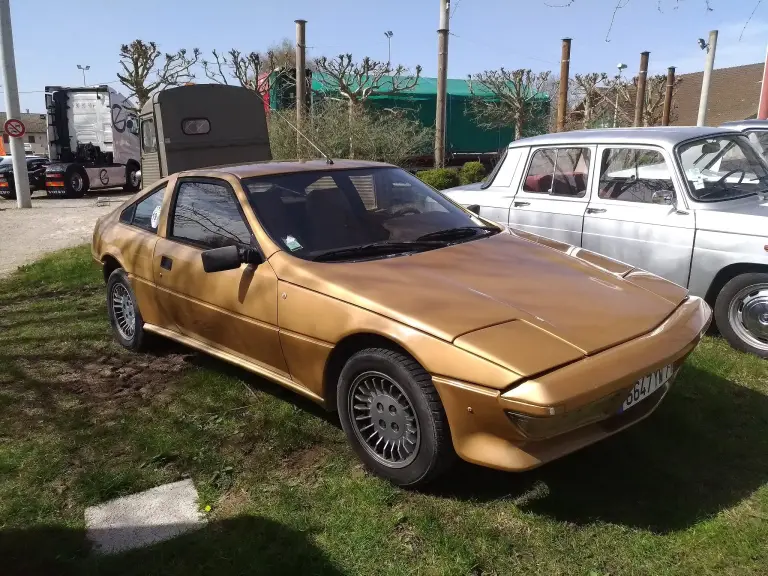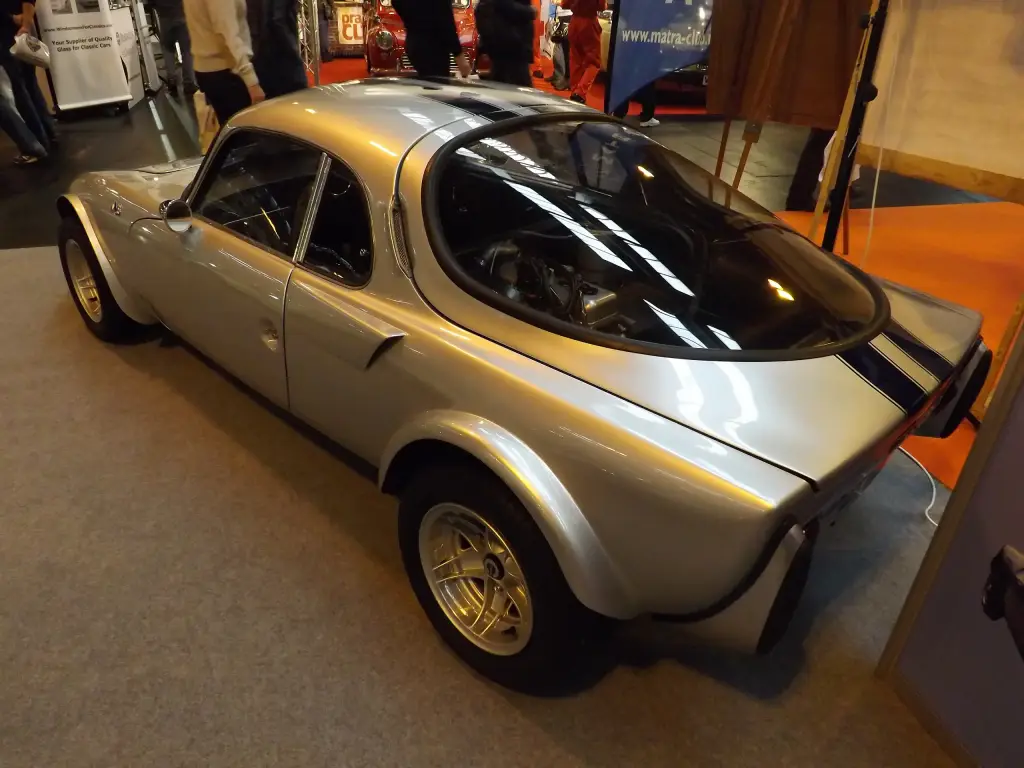
The Djet was a French sports coupé designed and sold by René Bonnet from 1962 and by Matra from 1965. It was the world’s first rear mid-engined production road car, and it was sold under several names: René Bonnet Djet, Matra-Bonnet Djet, Matra Sports Djet and finally Matra Sports Jet.
Matra Djet at a glance
| Designed by | René Bonnet |
|---|---|
| Production | 1962–1967 |
| Maker | René Bonnet, then Matra Sports |
| Layout | rear mid-engine, rear-wheel drive |
| Engine | 1,108 cc Renault 8, later Renault Gordini |
| Power | 65–105 PS depending on version |
| Top speed | 165 km/h to 210 km/h |
| Body | fibreglass, bonded to a steel chassis |
| Weight | 600 kg (Djet I), 660 kg (Matra version) |
| Built | 198 Bonnet Djets and 1,495 Matra (D)Jets |
Based on the English Wikipedia article on the Matra Djet.
History of the Matra Djet
René Bonnet Djet
The car started as the René Bonnet Djet in June 1962, later known as the Djet I. Bonnet chose the spelling so French speakers would pronounce it like the English word “jet”. It was powered by a 65 PS 1,108 cc Renault 8 engine in a mid-engine position, mated to a gearbox from the Renault Estafette van, giving 165 km/h. A fibreglass body was chosen for lightness, ease of repair and low tooling cost; it was made by Matra’s Générale d’Applications Plastiques subsidiary in Romorantin and bonded directly to a steel chassis built at Bonnet’s factory in Champigny-sur-Marne.
The suspension was advanced for its time, fully independent with upper and lower A-arms, coil springs and disc brakes all round. Only two people could be carried, as the engine took the rear-seat space. The Djet I measured 3,800 mm long, 1,400 mm wide and 1,150 mm high and weighed 600 kg. Announced in 1962, it beat the De Tomaso Vallelunga to the title of first mid-engined production road car, even though the first production Djets did not leave the factory until July 1963. In two years 198 Bonnet Djets were built, all but 19 to Djet I specification.
Matra takes control
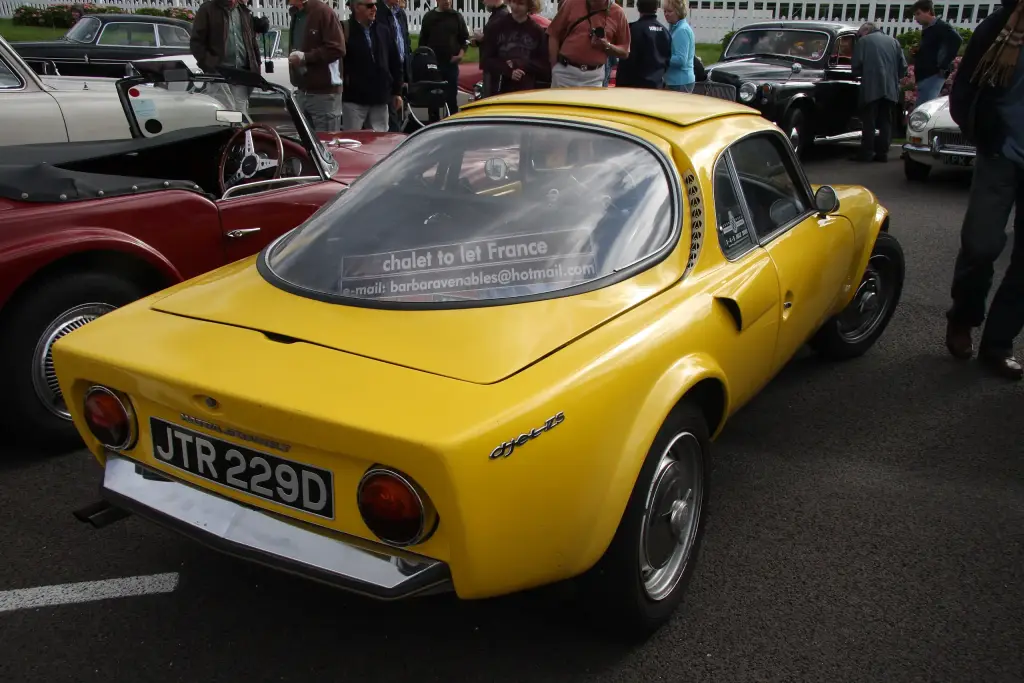
When Bonnet ran into financial trouble, Matra — which already supplied the bodyshells and the factory — took over René Bonnet Automobiles and its debts in October 1964. Production of the original Djet stopped in December. Matra’s president Marcel Chassagny saw the car as a way into the car market and hired Jean-Luc Lagardère to run the new Matra Sports division; former Simca designer Philippe Guédon was hired to modify the Bonnet design. The car grew to 4,220 mm long, 1,500 mm wide and 1,200 mm high, weighing 660 kg.
Djet V and Jet
Production resumed in April 1965 with the Matra-Bonnet Djet V and the Djet V S, the latter with a Gordini-tuned engine. On his 1965 tour of France Yuri Gagarin was presented with a Matra-Bonnet Djet V S by the French government, later photographed on Soviet plates. After the 1965 Paris Motor Show the Roman numerals and the Bonnet name were dropped: the car became the Matra Sports Djet 5. In 1966 a bigger Gordini engine arrived and the name changed to Jet: Jet 5 with the 1,108 cc Renault 8 Major engine, Jet 5 S with the Renault 8 Gordini unit and Jet 6 with a 1,255 cc Gordini engine.
The end
Production of the Jet ended in 1967 with a total of 1,495 Matra (D)Jets. The car was replaced by the Matra 530, and although expensive and noisy, the Djet had established Matra as a maker of serious sports cars.
Design and features
- Mid-mounted engine: the first production road car with this layout.
- Fibreglass body bonded to a steel chassis: light and easy to repair.
- Independent suspension and disc brakes: advanced for a small 1960s coupé.
- Renault mechanicals: the engine and gearbox came from Renault models and were easy to service.
Matra Djet versions
- Djet I: 1,108 cc Renault 8 Major, 72 PS, 165 km/h.
- Djet II: 1,108 cc Renault 8 Gordini, 80 PS, 190 km/h.
- Djet V / Djet 5: Matra-built, 70 PS, 170 km/h.
- Djet V S / Djet 5 S: Gordini engine, 90 PS, 190 km/h.
- Jet 6: 1,255 cc Gordini, 105 PS, 210 km/h.
The Djet was replaced by the Matra 530, and the line continued with the Matra Bagheera. More cars are in the Matra collection.
Sources
- Matra Djet, English Wikipedia: history, versions, dimensions, production