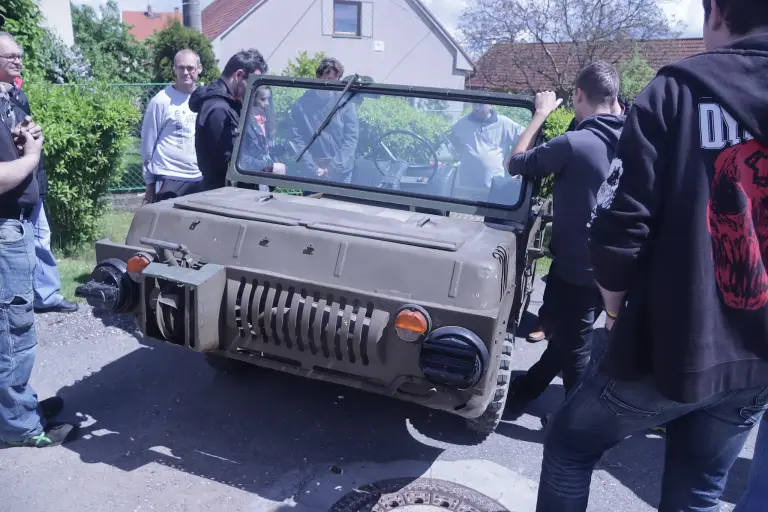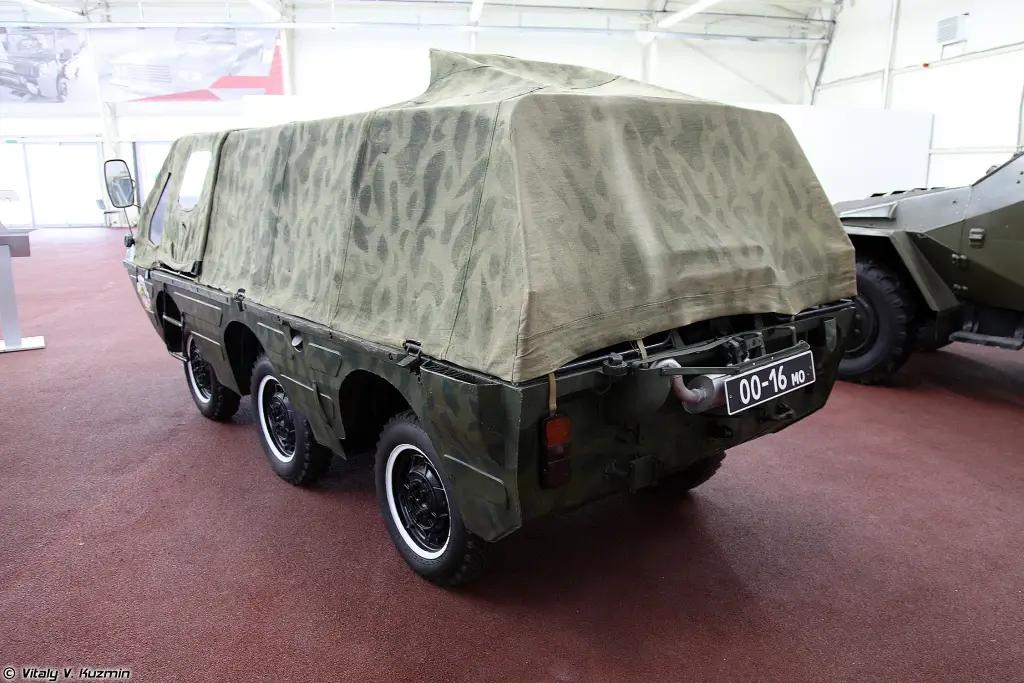
The LuAZ-1901 Geolog was a six-wheeled amphibious off-roader developed at the Lutsk automobile plant and first shown at the SIA motor show in Kyiv in 1999. It was offered to the Ukrainian armed forces but never ordered, and only about eight examples were built: seven were destroyed during testing and one survives in private hands.
LuAZ-1901 at a glance
| Maker | Lutsk automobile plant (LuAZ) |
|---|---|
| Name | LuAZ-1901 Geolog |
| Layout | 6×6 amphibious |
| First shown | SIA’99 motor show, Kyiv |
| Built | about 8 |
| Engine | 1.5-litre three-cylinder diesel 3DTN, 51 hp |
| Engine maker | Malyshev plant, Kharkiv |
| Transmission | 4 speeds plus low range; permanent drive to middle and rear axles |
| Payload | 660 kg |
| Water speed | up to 5 km/h |
| Gradient | 58 per cent |
| Price at the time | $6,500–8,000 |
There is no English Wikipedia article on the LuAZ-1901; this page is based on the short Russian and Ukrainian articles, which differ slightly on the date of the first public showing.
History of the LuAZ-1901
A six-wheeled amphibian
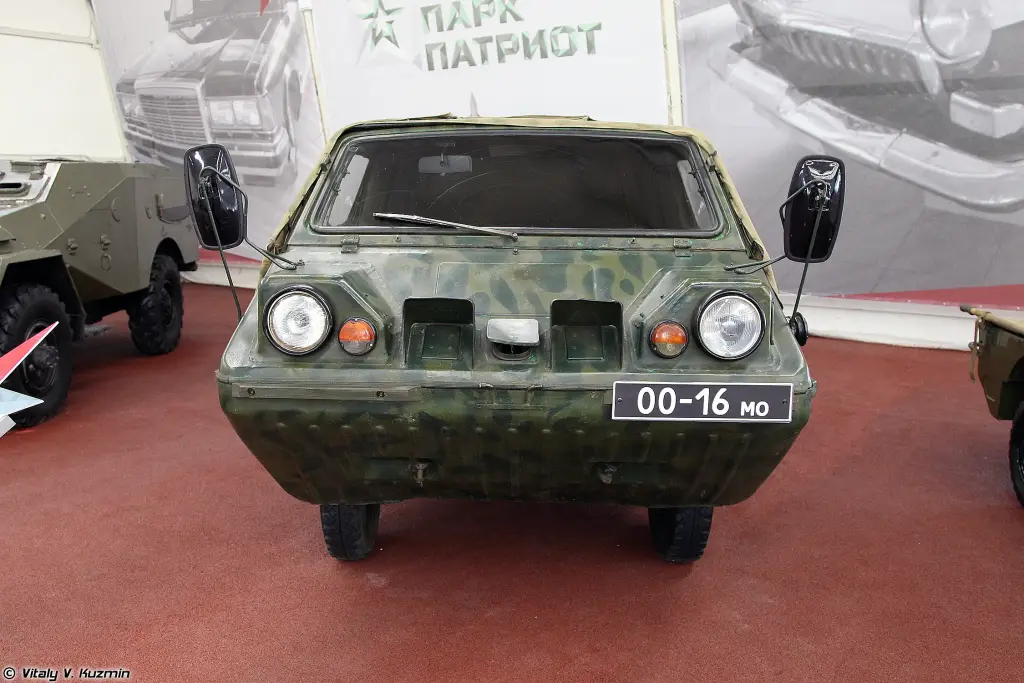
The LuAZ-1901 was built on units and assemblies of an earlier Soviet prototype and was proposed to the armed forces of Ukraine, but it was not wanted and in 1998 it was presented as a civilian cross-country vehicle. It made its public debut at the SIA’99 motor show in Kyiv. Economic difficulties at the time meant that it never reached series production: only about eight vehicles were made, seven of them were destroyed in testing, and by 2012 the remaining one was in private ownership.
Engine and transmission
The engine was a 1.5-litre three-cylinder diesel of 51 hp from the Malyshev design bureau in Kharkiv. That engine had been developed over nine years in ten versions, and LuAZ used the seventh, the most reliable of them, though it was still noisy, prone to vibration and thirsty. The transmission was fundamentally different from the classic LuAZ layout: drive was permanent to the middle and rear axles, with the front axle connectable when needed. Each axle had a self-locking differential, there was no inter-axle lock, and the gearbox offered four forward speeds plus front and rear low ranges. The front and middle axles steered.
On land and water
The Geolog could carry 660 kg. In the water it was driven by a water jet and reached up to 5 km/h, and according to its specification it could cross a stretch of water up to 3 km wide under favourable conditions. On land it climbed gradients of 58 per cent and could hold a 40 per cent side slope. Its price at the time was estimated at $6,500 to $8,000.
Design and features
- Six-wheel drive: permanent drive to the middle and rear axles, with the front axle engaged when needed.
- Amphibious: a water jet gave a speed of up to 5 km/h and a theoretical water crossing of 3 km.
- Self-locking differentials: one in each axle, though there was no lock between the axles.
- Steering on two axles: the front and middle axles steered, which helped the long vehicle turn.
- Useful load: 660 kg, with a 58 per cent climbing ability and a 40 per cent side-slope limit.
LuAZ-1901 versions
- LuAZ-1901 Geolog: the only version, built in about eight examples in the late 1990s.
- Test vehicles: seven of the eight were destroyed during testing.
- Surviving car: one example remained, in private ownership, by 2012.
The Geolog was a much larger successor in spirit to the LuAZ-967 transporter, and it shared its maker with the civilian LuAZ-969 Volyn. More vehicles are in the LuAZ collection.
Sources
- ЛуАЗ-1901, Russian Wikipedia: history, engine, payload, water crossing
- ЛуАЗ-1901, Ukrainian Wikipedia: SIA’99 debut, testing, transmission, performance