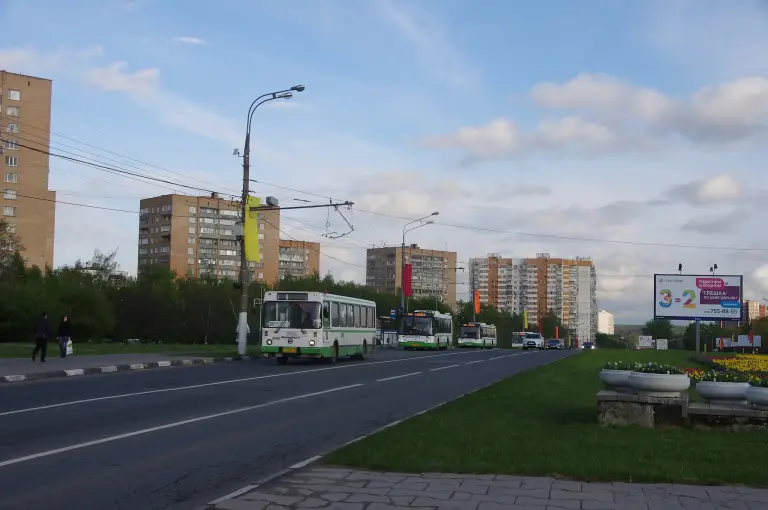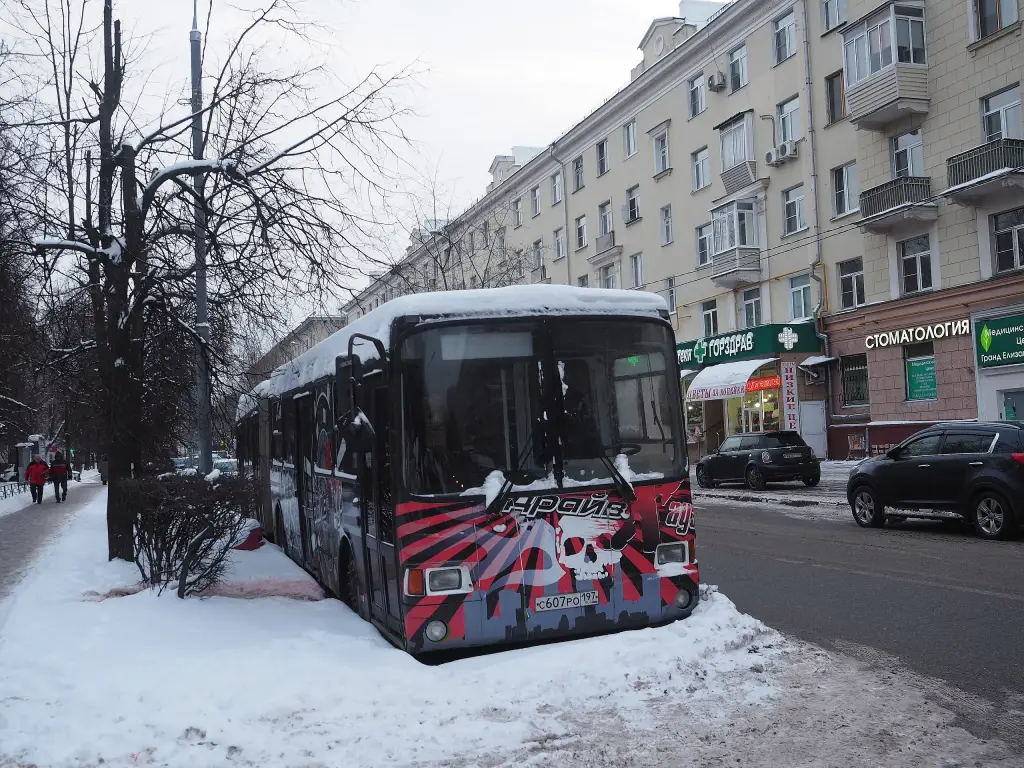
The LiAZ-6212 is a Russian city bus of the especially large class, built by the Likinsky Bus Plant from 2003 to 2014. It was the first articulated bus produced in series in Russia and was developed from the LiAZ-5256 for cities with very heavy passenger flows.
LiAZ-6212 at a glance
| Maker | Likinsky Bus Plant (LiAZ), Likino-Dulyovo |
|---|---|
| Production | 2003–2014 |
| Class | articulated especially large city bus |
| Based on | LiAZ-5256 |
| Engine | Caterpillar-3126, 300 hp |
| Gearbox | Voith Diwa 863/863.3E or Allison T-270R |
| Articulation | Hübner HF-485 |
| Doors | four, 1,282 mm openings |
| Suspension | pneumatic on all three axles |
| Body life | 12 years, declared by the plant |
| Main customers | Moscow (537) and the Moscow region (about 200) |
| Successor | LiAZ-6213 |
The English Wikipedia article on the model redirects to the article on the LiAZ plant, so the detail here comes from the Russian article and the model list in the English one.
History of the LiAZ-6212
Stretching the 5256
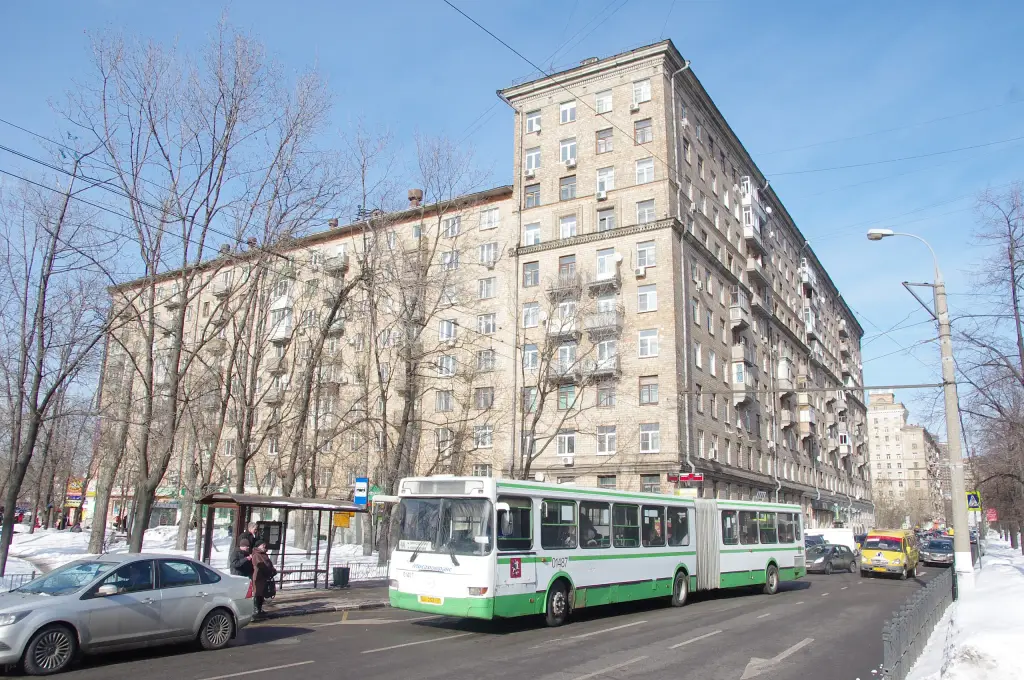
The 6212 grew out of the LiAZ-5256. Articulated buses on that base had been tried before: the SVaRZ-6240 of 1993 and the YaAZ-6211 of 1996 both carried their engines in the tail, while the underfloor-engined LiAZ-6220 never reached series production. The new bus received the index 6212.00 and a Caterpillar-3126 diesel of 300 hp, and the factory restarted its numbering from one, so the two yellow-grey prototypes became buses number 1 and 2. The second was shown at the Moscow motor show in Krasnaya Presnya in 2002.
Into series
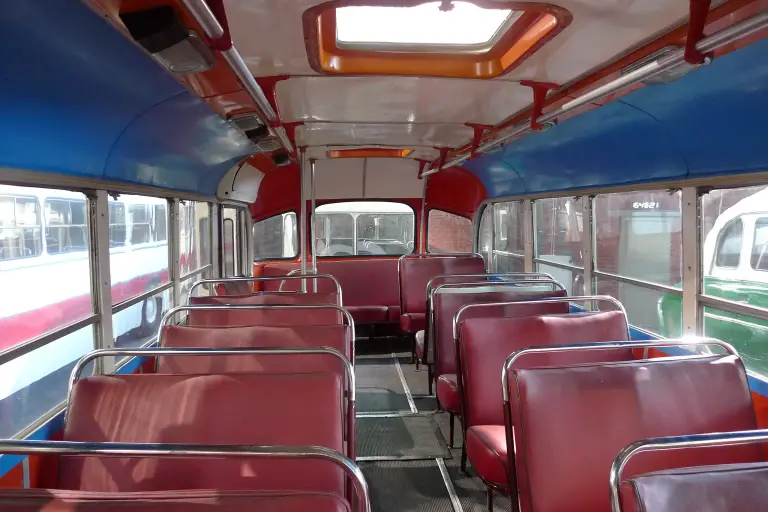
The two experimental buses looked like ordinary 5256s, with only a slightly different cab, and that body did not go into production. Series buses had plastic trims at front and rear hiding square headlights, and a narrow partition behind the driver with a door and a cash window. Four were built in this form, all for Moscow: two were trimmed at LiAZ as numbers 4 and 5, one went to the FATP depot as 08317, and the other two received burgundy seats at the TMZ repair plant as numbers 3 and 6. Later Moscow buses arrived without an interior and were finished at TMZ with the same partition and Strizh seats in burgundy or sand.
Cooling troubles
The first five buses were assembled in winter and never went through full factory testing. In summer the cooling system could not cope with the 300 hp engine: drivers had to stay below 50 km/h or stop to let the engine cool, and reaching the radiator for repair meant opening the body. Other faults were inherited from the 5256. Even so, the 6212 was the first Russian articulated bus in series production. Moscow took 537 examples, 40 per cent of output, and the Moscow region about 200, 15 per cent. Production ran from 2003 to 2014, and the low-floor LiAZ-6213 was developed from it.
Design and features
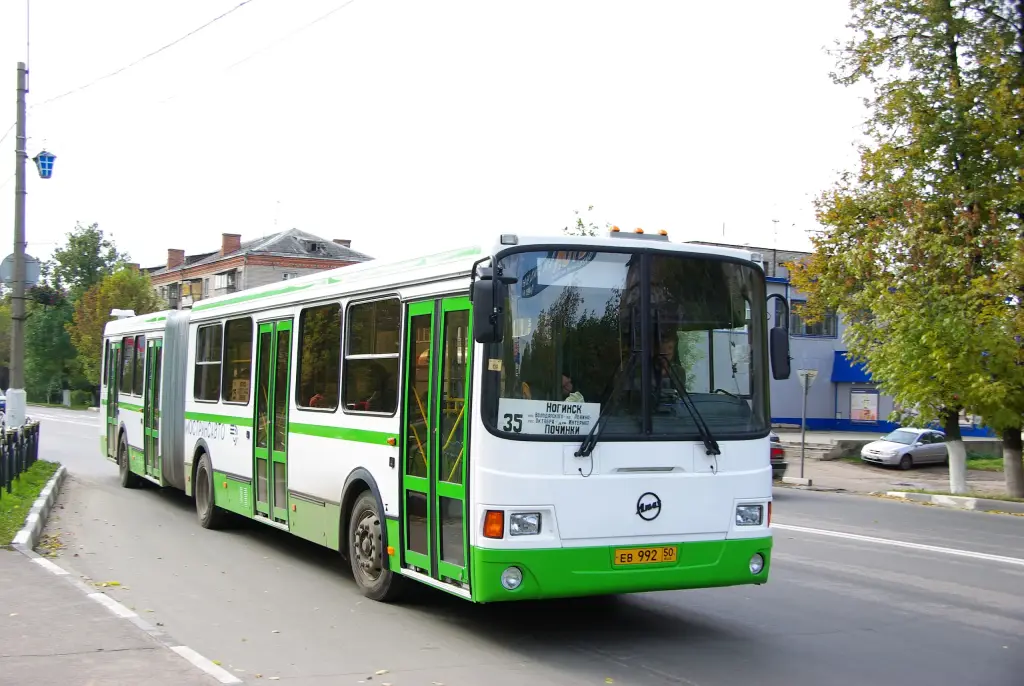
- First of its kind: the first articulated bus built in series in Russia.
- Hübner joint: the HF-485 articulation, used here with a pushing rear section.
- Four doors: 1,282 mm openings with anti-pinch systems and emergency release from inside and outside.
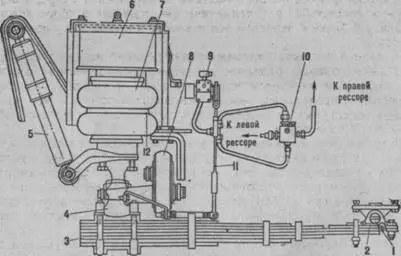
- Pneumatic suspension: dependent air suspension on all three axles with body-height regulators.
- Hard-wearing body: galvanised steel side panels, cataphoretic paint and a declared 12-year body life.
LiAZ-6212 versions
- LiAZ-6212.00: the base version with the Caterpillar-3126E and Voith Diwa 863/863.3E.
- Allison version: the same bus with an Allison T-270R gearbox.
- Early Moscow buses (numbers 3–6): finished at the TMZ plant with Strizh seats.
- Later Moscow buses: delivered without an interior and trimmed at TMZ.
- LiAZ-6213: the low-floor articulated successor developed from the 6212.
The 6212 was the articulated version of the LiAZ-5256, itself the successor of the LiAZ-677; more buses are in the LiAZ collection.
Sources
- ЛиАЗ-6212, Russian Wikipedia: history, prototypes, Moscow fleet, technical data
- LiAZ (Russia), English Wikipedia: place in the model range, production dates