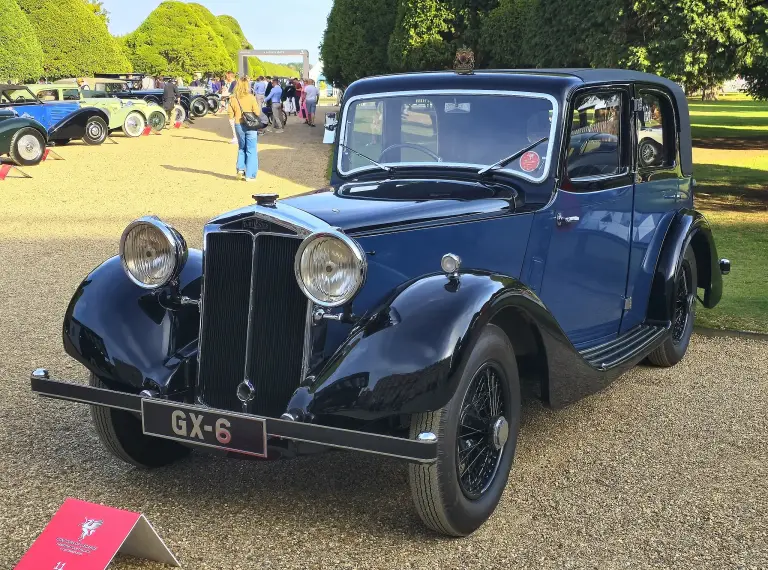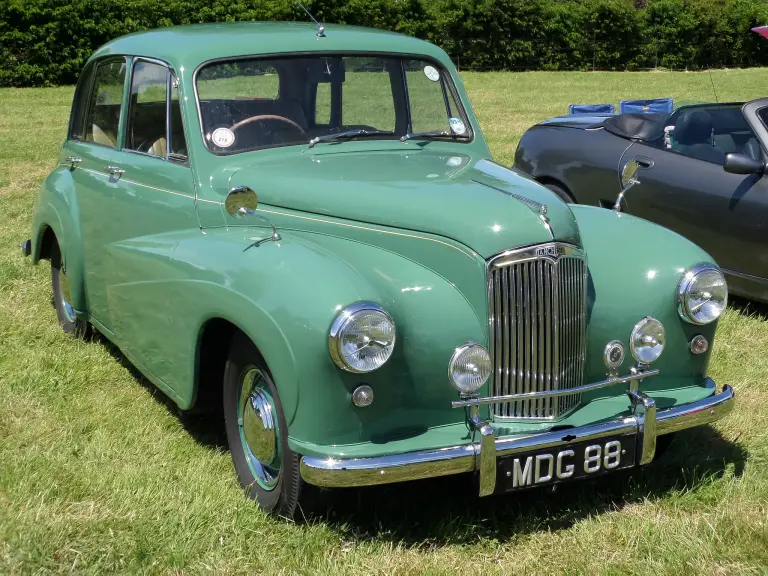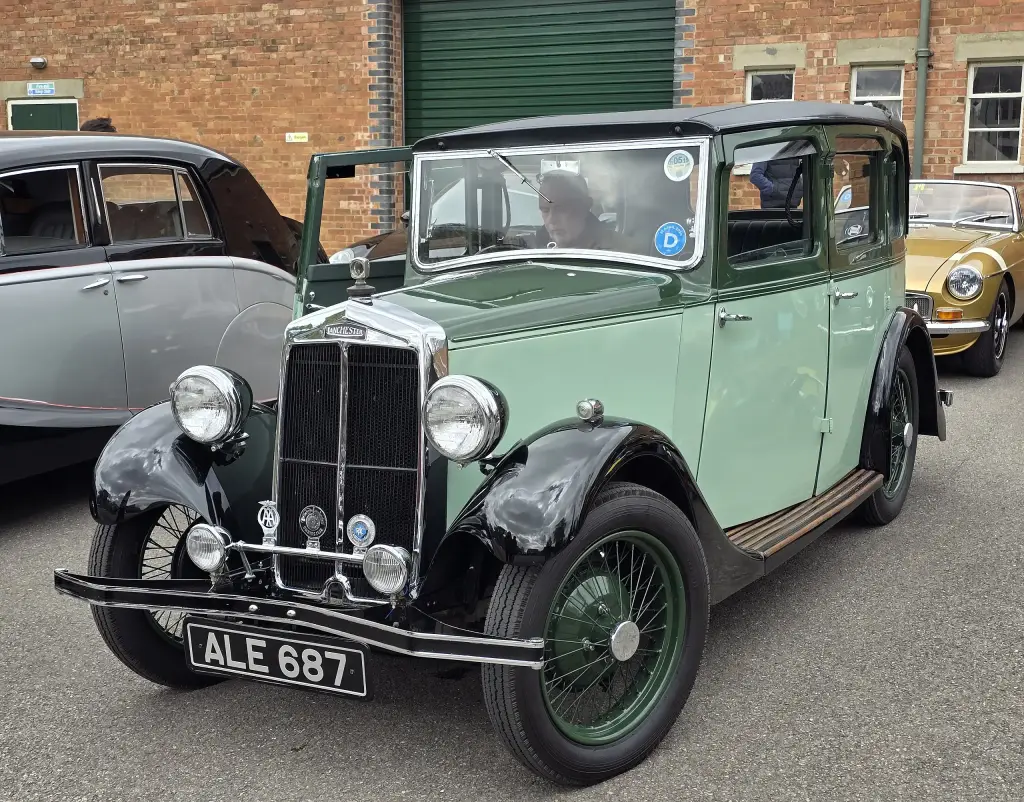
The Lanchester Ten was announced in September 1932 as the smallest car the company had ever built, and it became the one produced in the greatest numbers. Sold alongside the Eleven and, after the war, as the Ten LD10, the family remained in the catalogue until 1951.
Lanchester Ten at a glance
| Maker | The Lanchester Motor Company Limited |
|---|---|
| Announced | September 1932 |
| Production | 1932–1951 |
| Also sold as | Lanchester Eleven; post-war Ten LD10 |
| Engine, 1932 | 1,203 cc four-cylinder, three main bearings |
| Engine, late 1936 | 1,444 cc four-cylinder, 11 hp rating |
| Post-war engine | 1,287 cc, 40 bhp at 4,000 rpm |
| Transmission | Daimler fluid flywheel, Wilson four-speed preselective |
| Brakes | Lockheed hydraulic; mechanical from 1934 |
| Chassis | X-braced frame, half-elliptical springs |
| Top speed | about 60 mph (The Times) |
| Built | about 12,250 Tens |
The Ten, Eleven and post-war LD10 are described together in the English Wikipedia article on the Lanchester Ten.
History of the Lanchester Ten
The Ten arrived in September 1932, twenty months after BSA had taken over The Lanchester Motor Company, and it was the second model of the new Daimler-linked Lanchester range after the 15/18. Its basic chassis was shared with the BSA Ten, which was announced the following month. The four-cylinder engine followed the general lines of the six-cylinder Lanchester 15/18, but with a much reduced bore and stroke: swept volume came down from 2,504 cc to 1,203 cc, and the crankshaft ran in three main bearings. The smallest Lanchester ever produced, it was also the most numerous, with approximately 12,250 sold.
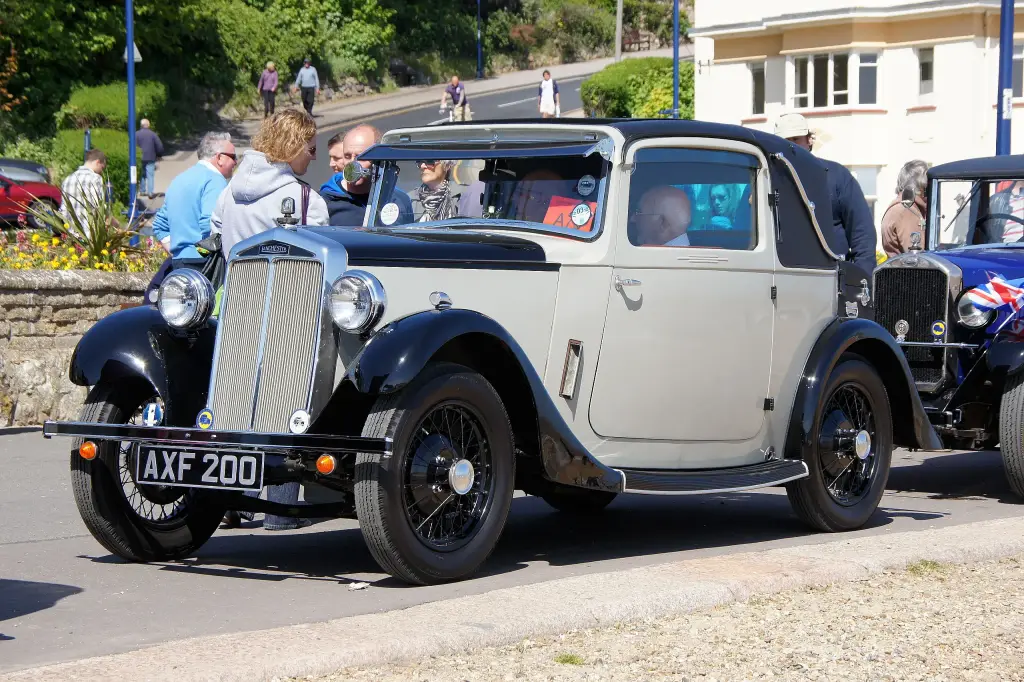
The Ten was the first small car to have the Daimler fluid flywheel transmission. Power passed through the fluid flywheel and a Wilson four-speed preselective self-changing gearbox to an open propeller shaft with mechanical joints and a half-floating underslung worm-drive back axle. The preselection finger-and-thumb lever sat under the steering wheel on the near side and was worked by the left hand, with a stop for reverse. The frame had cruciform bracing; wide-set half-elliptical springs were fitted with hydraulic shock absorbers, and steering was by cam and lever. The four-wheel brakes were initially Lockheed hydraulic, the handbrake working on the back wheels by cables.
Before the October 1934 Motor Show the specification was revised. The preselector lever moved to the offside, where the driver could work it with the right hand; a pull-up handbrake was placed on the offside of the driver’s seat; larger 4.75-section tyres went onto smaller 18-inch wheels; and the brakes changed from hydraulic to mechanical operation. Transmission complaints were addressed with a fifth mounting point for the engine and gearbox assembly at the back of the gearbox, supported by an extra cross-member, and with a modified top-gear mechanism that reduced pedal pressure and the humming noise in neutral.
The name Eleven, like Ten, referred to the engine’s rating for the annual tax and had nothing to do with its power output. A 1,444 cc enlarged version of the 1,203 cc design was used from late 1936 to 1939, and the LA10 of that period carried the 11 hp engine. The Times motoring correspondent found that the six-light saloon “will keep up 50 easily, even under load, and will do about 60 on the level”, and described a body with full room for four, a level floor, a sliding roof and safety glass but no ash trays.
After the Second World War the same line continued as the Ten LD10. Its 1,287 cc engine, rated at 40 bhp at 4,000 rpm, shared no components with the pre-war unit and had a 7.4:1 compression ratio with maximum torque of 60 lb ft at 2,000 rpm. Ultimately the smallest Lanchester had become far too expensive for the size of car it was, few were sold, and production ended in 1951.
Design and features
- Fluid flywheel transmission: the first small car to use the Daimler fluid flywheel, coupled to a Wilson four-speed preselective gearbox.
- Smallest and most numerous: the smallest Lanchester ever built and the one made in the greatest numbers, about 12,250 cars.
- Shared engineering: chassis common with the BSA Ten, engine derived from the six-cylinder 15/18.
- Six-light saloon: room for four with a level floor, sliding roof and safety glass, and no gear lever on the floor.
- 1934 revisions: right-hand preselector, pull-up handbrake, 18-inch wheels and mechanical brakes.
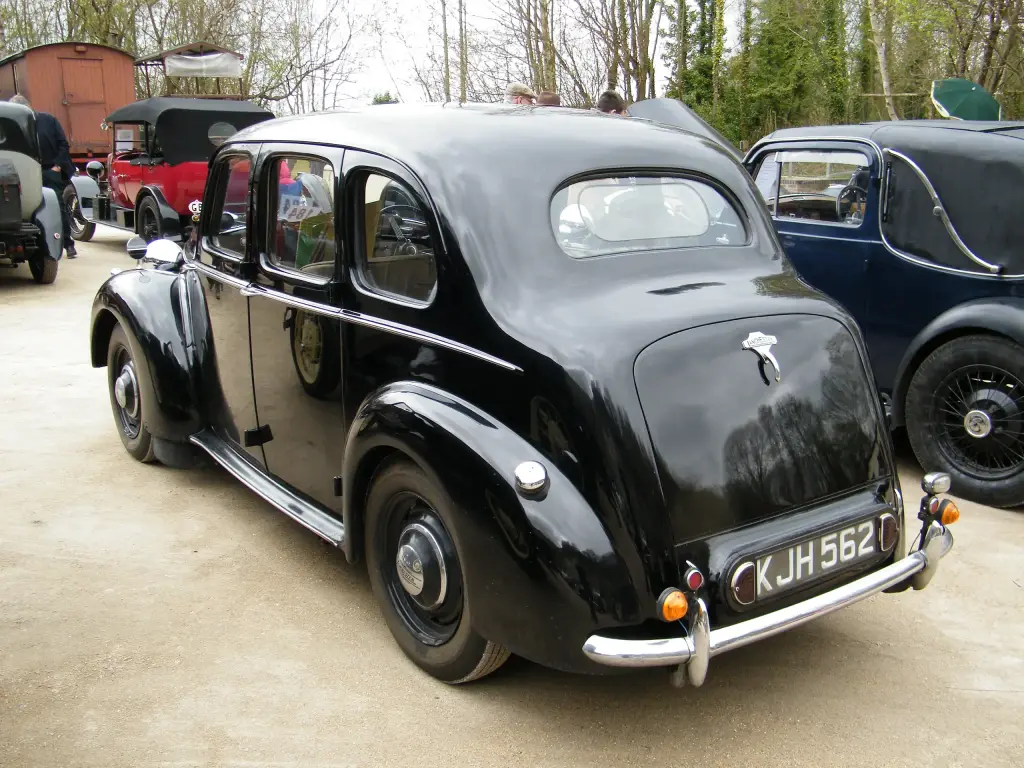
Lanchester Ten versions
- Ten (1932–1936): 1,203 cc four-cylinder on the BSA Ten chassis.
- Eleven and LA10 (late 1936–1939): enlarged 1,444 cc engine with the 11 hp tax rating.
- Ten LD10 (post-war): new 1,287 cc engine of 40 bhp.
- Six-light four-door saloon: the standard body described by The Times.
- 1934 specification: right-hand preselector, pull-up handbrake, mechanical brakes.
The Ten sat below the six-cylinder Lanchester Eighteen, and the larger Lanchester Fourteen later took over the middle of the range. More Lanchesters are in the Lanchester collection.
Video: LANCHESTER LD10 1287CC 01-49 BLACK
Video on YouTube.
Sources
- Lanchester Ten, English Wikipedia: history, engine, transmission, chassis, 1934 revisions, performance
- Lanchester 10, English Wikipedia: origins of the Ten name and tax horsepower