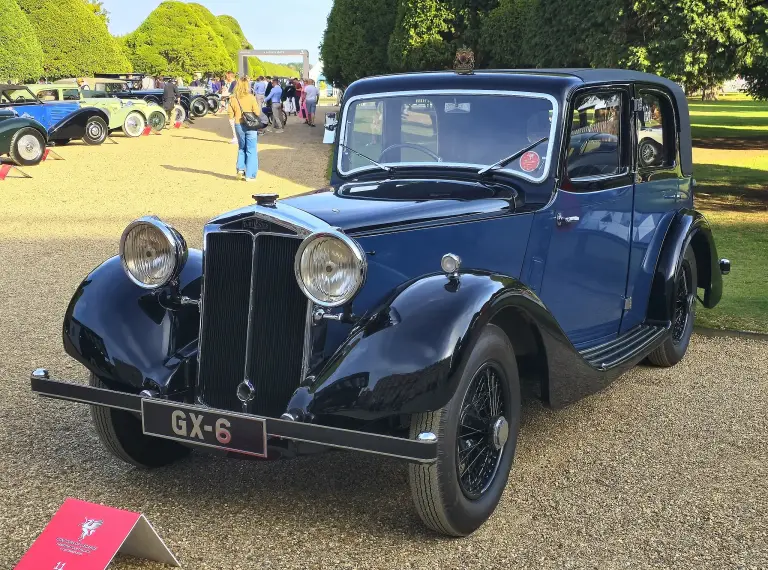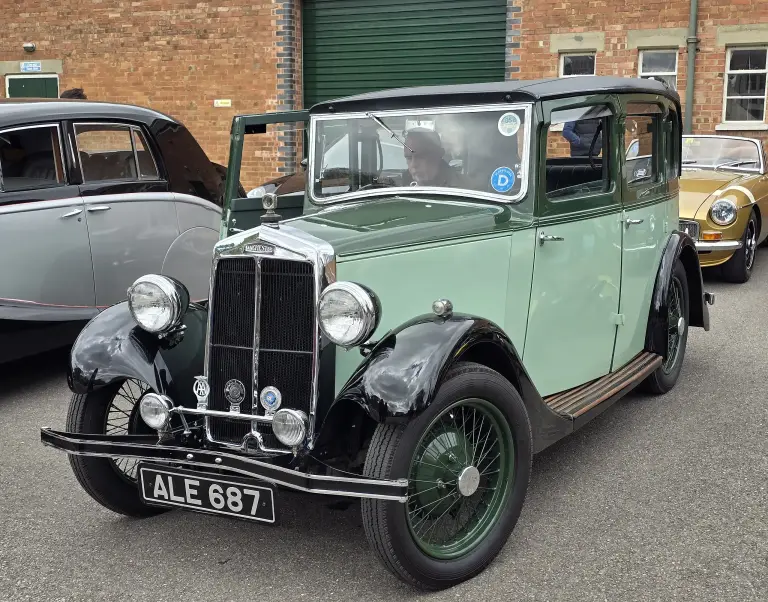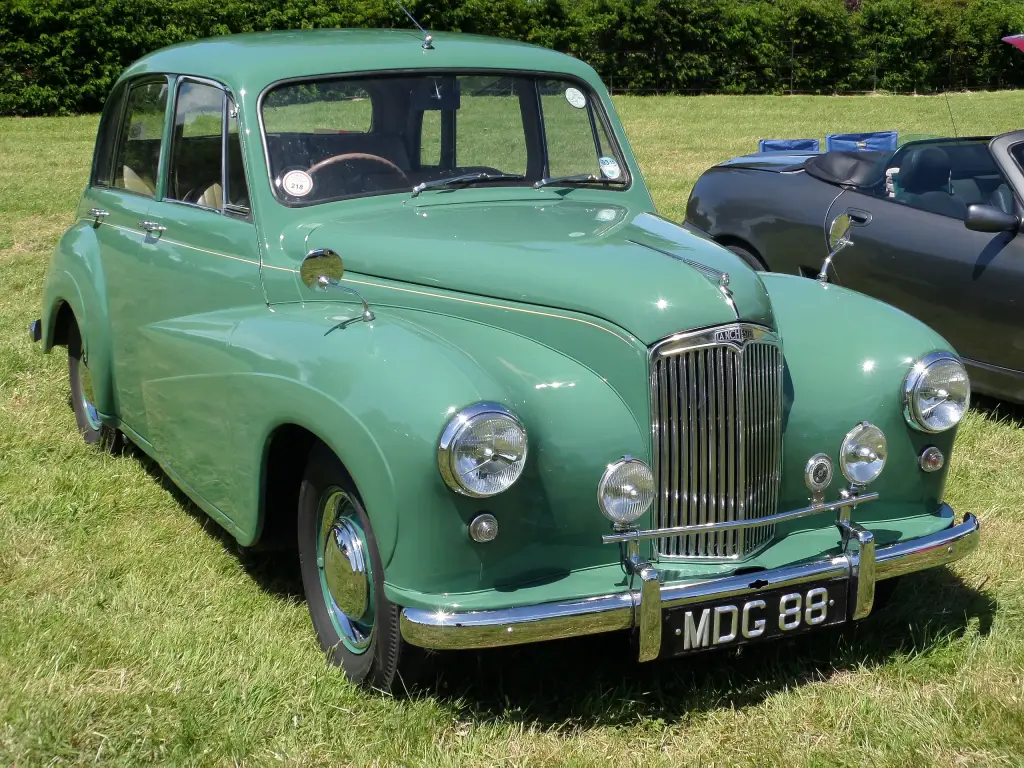
The Lanchester Fourteen Roadrider was introduced at the beginning of September 1936 as the lowest-priced six-cylinder Lanchester ever offered. It replaced the 12 hp Light Six and was built around the chassis and body of the Lanchester Eleven; after the war the name returned on a four-cylinder car, with the lighter all-steel Leda version for export.
Lanchester Fourteen at a glance
| Maker | The Lanchester Motor Company Limited |
|---|---|
| Announced | September 1936 |
| Also known as | Roadrider; Leda (export, post-war) |
| Engine, 1936 | six-cylinder, 14 hp tax rating |
| Engine, post-war | 1,968 cc four-cylinder |
| Transmission | Daimler fluid flywheel, preselective four-speed |
| Final drive | underslung worm; spiral bevel on the Mark II |
| Front suspension, 1937 | independent, parallel links and coil springs |
| Brakes, Mark II | Bendix mechanical, all four wheels |
| Top speed, Mark II | 70 mph |
| Fuel consumption, Mark II | 22 mpg |
| Price, 1936 | chassis £250; saloon from £325 |
Based on one source, the English Wikipedia article on the Lanchester Fourteen.
History of the Lanchester Fourteen
The Fourteen Roadrider was announced at the beginning of September 1936. Its name came from special suspension features, and the car was billed as the lowest-priced six-cylinder Lanchester ever offered. It replaced the 12 hp Light Six, using a larger six-cylinder engine of 14 hp tax rating in the chassis and body of the Lanchester Eleven. The four-light four-door sports saloon was given a new “razor edge” body, and within twelve months the entirely new Roadrider shape followed, similar in appearance. Chassis, engine and transmission followed customary Lanchester practice, with the Daimler fluid flywheel, the self-changing preselective four-speed gearbox and underslung worm final drive. Magna wire wheels and fully chromium-plated bumpers were standard, upholstery was all leather or a leather-and-cloth combination, and the windscreen had remote-motor dual wipers working from the bottom. Prices began at £250 for a chassis, £325 for a fabric-topped saloon, £330 for a panelled-top saloon or coupé and £340 for the sports saloon.
A new Lanchester Roadrider was announced at the beginning of October 1937. Engine, chassis and body were all different, the car was larger, and independent front suspension was now provided. An optional manual synchromesh gearbox with an ordinary clutch was available at reduced price. It was a simpler, less luxurious version of the Daimler New Fifteen, sharing the two standard bodies but using a smaller engine. The Mark II engine had a crankshaft in four bearings and bi-axial four-point rubber mountings. Independent front springing used parallel links with coil springs, radius arms and torsion bar damping, while the rear half-elliptical springs gained a torsion bar stabiliser and hydraulic shock absorbers. Wheelbase and track grew by 7.5 in (191 mm) and 4 in (102 mm), steering was by worm and double roller, tyres were 5.75 x 16 inches and Bendix mechanical brakes acted on all four wheels. Lanchester estimated 22 mpg and a maximum speed of 70 mph; the saloon and sports saloon cost £375, or £350 with the four-speed synchromesh gearbox and friction clutch.
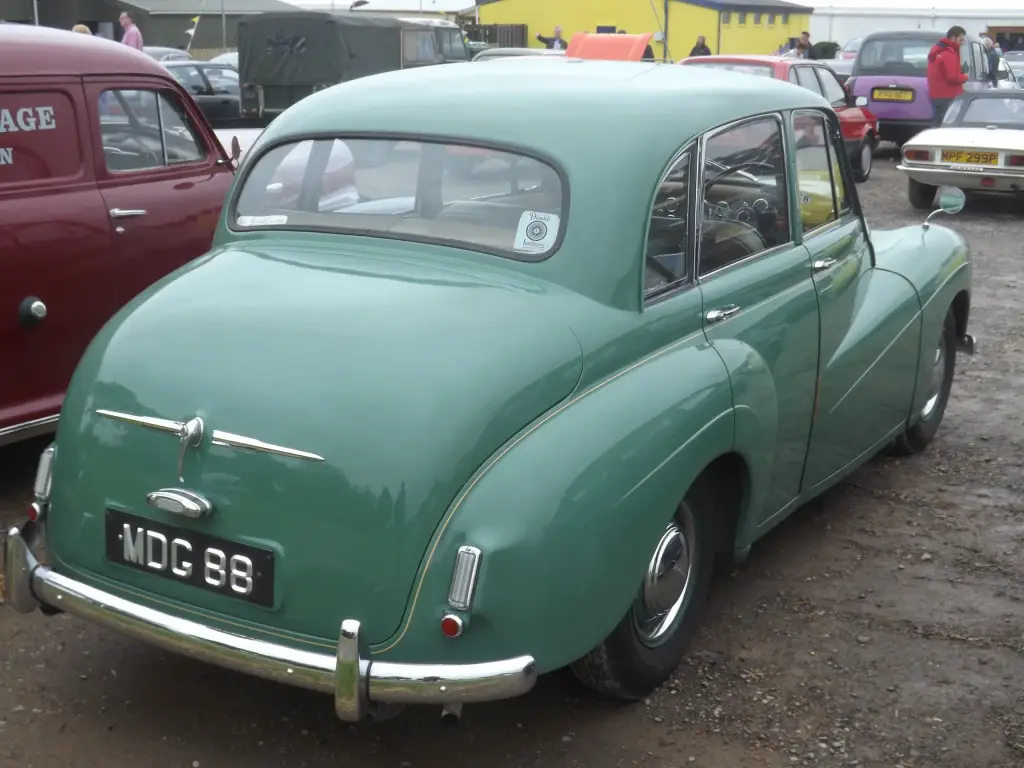
The post-war Fourteen was shown to the press on 9 October 1950, the day before its public announcement. The only familiar features were the fluid flywheel and preselective gearbox. A coachbuilt body was offered for the home market, with an all-steel body planned once factory space destroyed in the Coventry raids was rebuilt; that lighter body would cut weight, allow a lower price and permit shipment for assembly overseas. Aside from the front suspension, whose springing used laminated leaves, the new chassis differed little from the pre-war version, and the engine was a new 1,968 cc four replacing the 1,809 cc six. Automatic lubrication every time the car was started and warmed up was one of the few technical novelties The Times noted. For export the same car was sold as the Lanchester Leda, with a lighter all-steel body.
Design and features
- Roadrider name: taken from the car’s special suspension and applied to the lowest-priced six-cylinder Lanchester.
- Daimler transmission: fluid flywheel and preselective four-speed self-changing gearbox, with underslung worm final drive.
- Independent front suspension: added with the new Roadrider of October 1937, along with a wider track and longer wheelbase.
- Synchromesh option: a manual gearbox with an ordinary clutch could be ordered at reduced price from 1937.
- Two bodies after the war: a coachbuilt body for Britain and the lighter all-steel Leda for export.
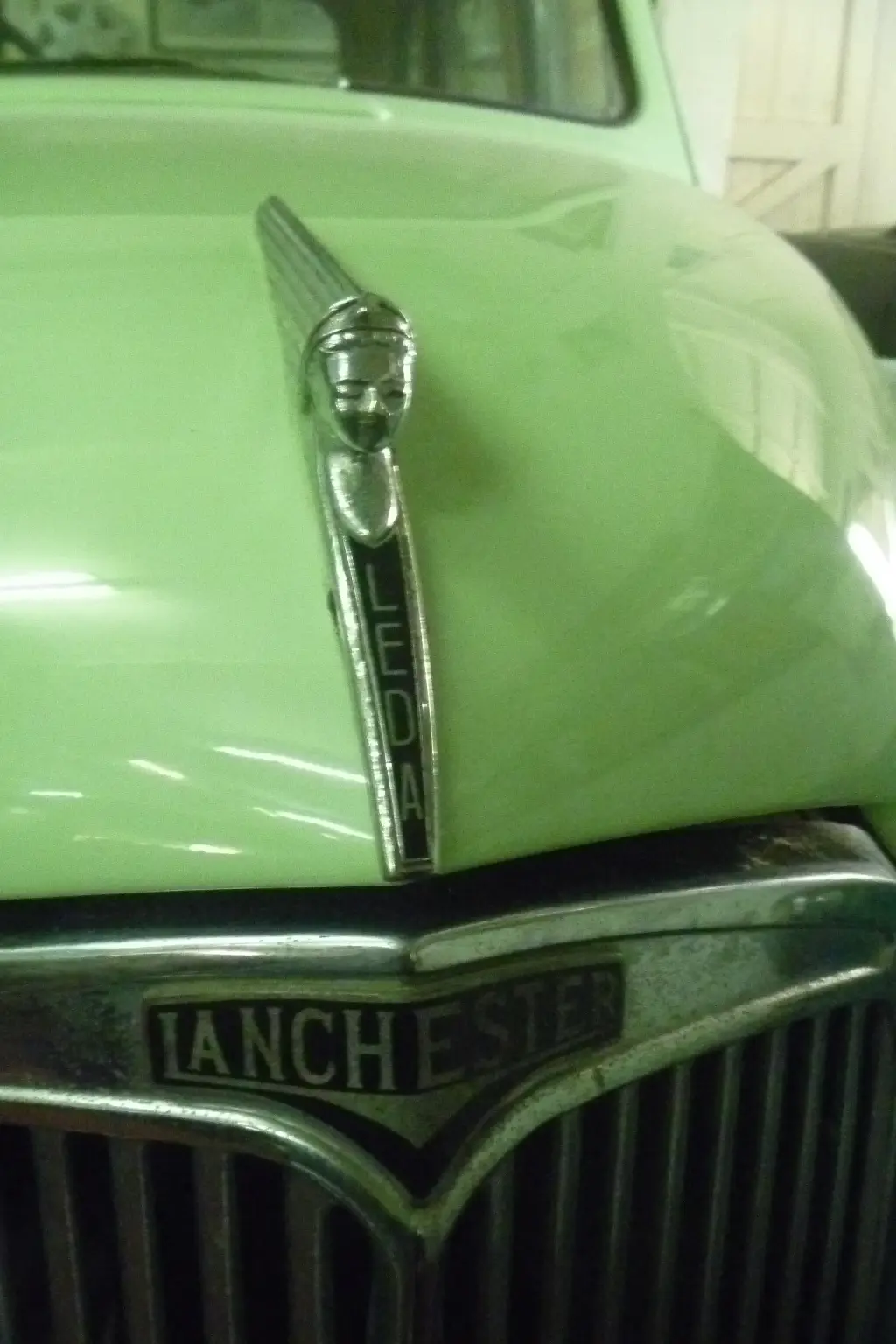
Lanchester Fourteen versions
- Fourteen Roadrider (1936): six-cylinder in the Eleven chassis, razor-edge four-light sports saloon.
- New Roadrider (October 1937): larger car with independent front suspension and optional synchromesh gearbox.
- Post-war Fourteen (1950): 1,968 cc four-cylinder with coachbuilt body for the home market.
- Lanchester Leda: export version of the post-war Fourteen with a lighter all-steel body.
- Body styles: fabric-topped saloon, panelled-top saloon, sports saloon and coupé.
The Fourteen was the six-cylinder alternative to the smaller Lanchester Ten and sat below the Lanchester Eighteen. More Lanchesters are in the Lanchester collection.
Sources
- Lanchester Fourteen, English Wikipedia: history, engines, chassis, prices, post-war Fourteen and Leda