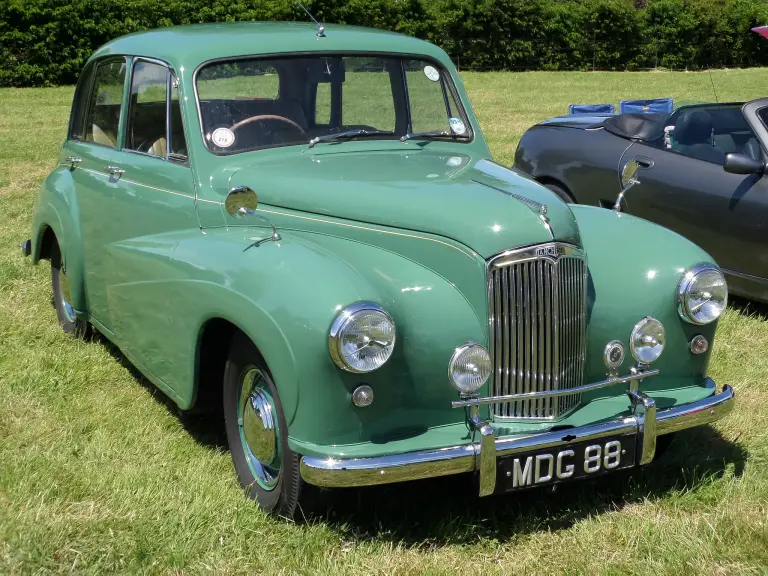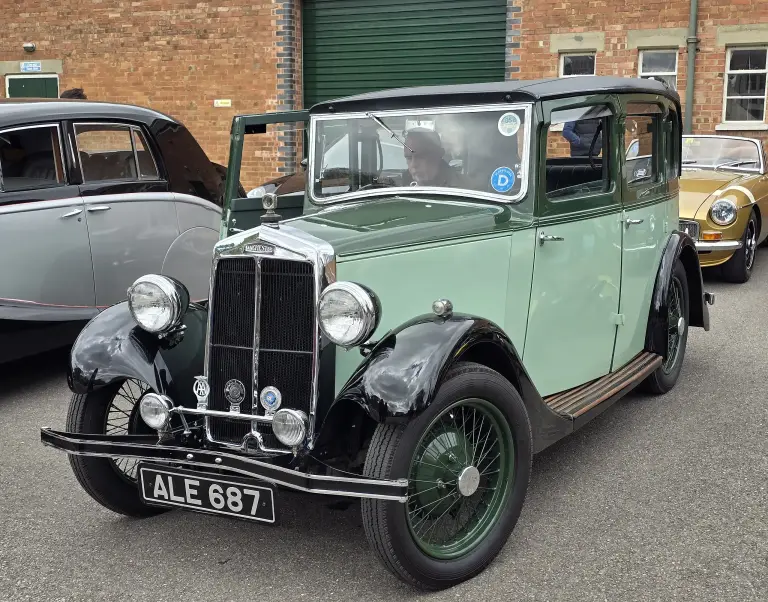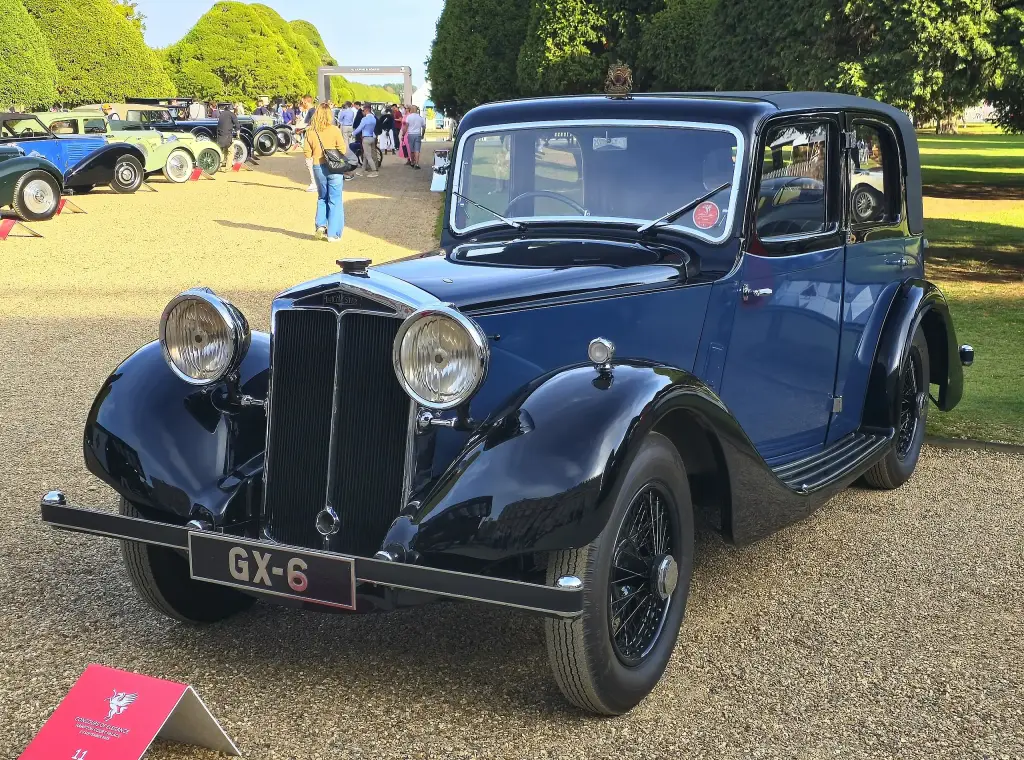
The Lanchester Eighteen was announced at the beginning of October 1931, at first under the name 15/18. It was the first new Lanchester after BSA’s takeover of the company in January 1931 and the first medium-sized car the firm had built, offered with the Daimler fluid flywheel and Wilson half-automatically changing gearbox.
Lanchester Eighteen at a glance
| Maker | The Lanchester Motor Company Limited |
|---|---|
| Announced | October 1931, as the 15/18 |
| Also known as | Lanchester 15/18 |
| Engine, 1931 | six-cylinder, 2,504 cc |
| Engine, 1934 | 2,390 cc, announced 21 September 1934 |
| Engine, 1935 | 2,565 cc, announced 14 August 1935 |
| Transmission | Daimler fluid flywheel, Wilson four-speed preselective |
| Brakes, 15/18 | Lockheed hydraulic with vacuum servo |
| Brakes, Eighteen | mechanical, pull-up hand lever on the rear wheels |
| Top speed | 71.43 mph (Autocar, April 1932) |
| Fuel consumption, 1937 | 18 mpg |
| Price, 1931 | chassis £435; six-light saloon £565 |
Based on one source, the English Wikipedia article on the Lanchester Eighteen 15/18.
History of the Lanchester Eighteen
The Eighteen was announced at the beginning of October 1931, at first as the 15/18. It was quite unlike any previous Lanchester and was the company’s first new car following BSA’s takeover in January 1931. A medium-sized car was a new departure for the marque: the intention was to extend the BSA group’s range into a new price level with a car of moderate size and price that still offered economies by virtue of design and workmanship. It was the first medium-sized car offered with the Daimler fluid flywheel and the Wilson half-automatically changing gearbox, which was separately mounted. George Lanchester played a considerable part in its development in collaboration with L H Pomeroy; their original concept was a fairly small car still redolent of Lanchester luxury selling for about £850, but the standard saloon was priced at £565. The clutch used to engage top gear gave considerable trouble in early production cars and twice had to be replaced with redesigned versions, while the advanced pushrod overhead valve gear proved a success and was used in later Daimlers beginning with the Fifteen.
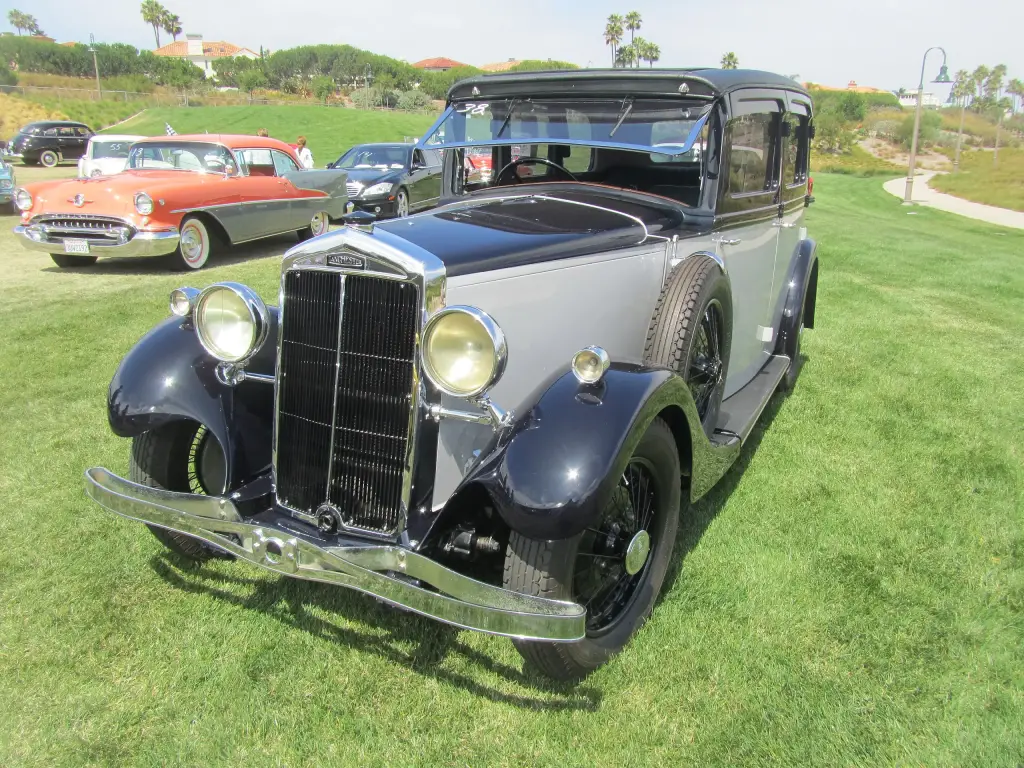
The engine had a crankshaft in seven bearings and a camshaft in six, with chain timing at the back of the engine, pushrods on the nearside and single valve springs. Lubrication was fully forced, all oil passing through a felt filter that could be detached externally, and the honeycomb radiator had a combined fan and impeller belt-driven from the front end of the camshaft. The fluid flywheel transmitted power through a short splined, universally jointed shaft to the separately mounted Wilson epicyclic gearbox with four forward speeds; the propeller shaft was open and the back axle had half-floating underslung worm drive. The frame had cruciform bracing in the middle and lattice stiffening inside the channel members, steering was by cam gear with an adjustable column, and Lockheed hydraulic brakes with a vacuum servo acted on all four wheels, with a handbrake on the transmission behind the gearbox. The electrical system was 12-volt. An Autocar road test published in April 1932 recorded a properly timed maximum speed of 71.43 mph.
A redesigned engine of 2,390 cc was announced on 21 September 1934 for the Olympia Show, and a further increase to 2,565 cc followed on 14 August 1935. On the Eighteen the front half-elliptical springs were of the low-periodicity type with a radius-rod-controlled front axle and a harmonic stabilising front bumper, and the four-wheel brakes became mechanical with a pull-up hand lever working the brakes at the back. The 1937 facelift brought the new frontal design used on the group’s other cars and, as an alternative to independent front suspension, a front beam axle controlled by parallel links. The wheelbase was reduced by one inch to 114 in (2,896 mm) and the track increased by four inches to 56 in (1,422 mm), and the maker now estimated fuel consumption at 18 mpg. For 1938 the engine and chassis were altered only in detail while completely new coachwork was announced in August 1937, including a luggage boot at the back whose lid formed a baggage platform.
The Times motoring correspondent described the four/five-seater standard saloon as having three armrests in the back seat, adjustable front bucket seats with recesses in their backs for rear passengers’ toe room, doors opening wide down to the running boards, a cupboard either side of the grouped instruments, a flap pocket in each rear door and traps in the back floorboard for the tools, battery and oil tank of the hydraulic braking system. The spare wheel sat in the well on the offside front wing, the windscreen opened fully, the wipers were electrically operated and safety glass was fitted throughout. Prices at the launch were £435 for a chassis, £565 for either the six-light or four-light saloon, £675 for the sports saloon and £795 for the town carriage.
Design and features
- First of the BSA era: the first new Lanchester after the January 1931 takeover and the marque’s first medium-sized car.
- Daimler transmission: the first medium-sized car with the Daimler fluid flywheel and a separately mounted Wilson preselective gearbox.
- Advanced engine: pushrod overhead valves, seven-bearing crankshaft and fully forced lubrication.
- Growing engine: 2,504 cc at launch, 2,390 cc from 1934 and 2,565 cc from 1935.
- Comfortable saloon: armrests, adjustable bucket seats, opening windscreen and safety glass throughout.
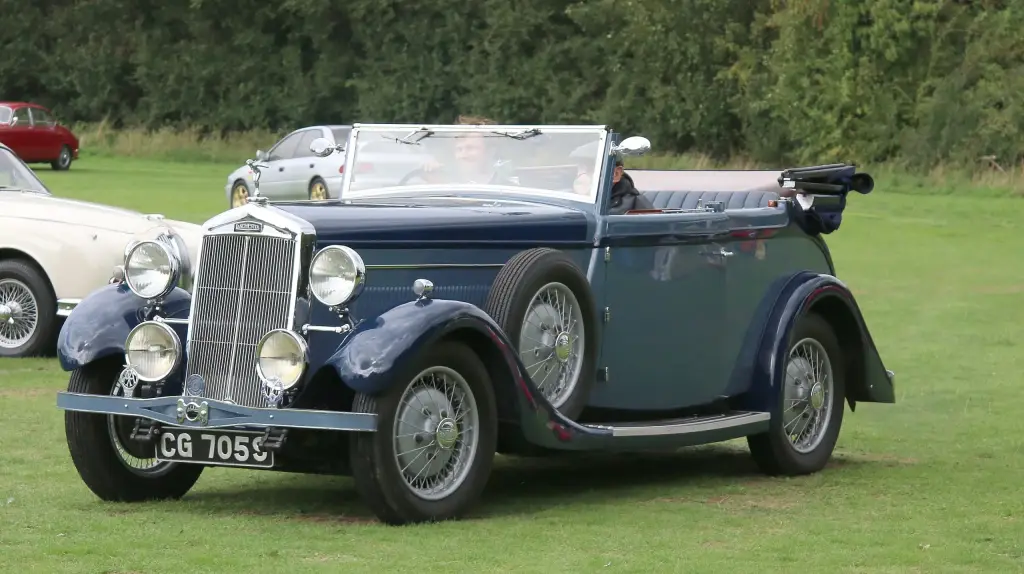
Lanchester Eighteen versions
- 15/18 (1931): the original name, with Lockheed hydraulic brakes and vacuum servo.
- Eighteen: renamed version with low-periodicity front springs, radius-rod front axle and mechanical brakes.
- 2,390 cc (1934): redesigned engine announced for the Olympia Show.
- 2,565 cc (1935): larger engine announced in August 1935.
- 1937 facelift: new frontal design, parallel-link front axle, 114 in wheelbase and wider track.
- 1938 coachwork: new body with a luggage boot and redesigned seating.
The Eighteen was the six-cylinder model above the Lanchester Ten and, later, the Lanchester Fourteen. More Lanchesters are in the Lanchester collection.
Video: 1932 Lanchester, Type 18, Saloon, Gorgeous Restoration, For Sale
Video on YouTube.
Sources
- Lanchester Eighteen 15/18, English Wikipedia: history, design, engine, chassis, performance, prices, updates