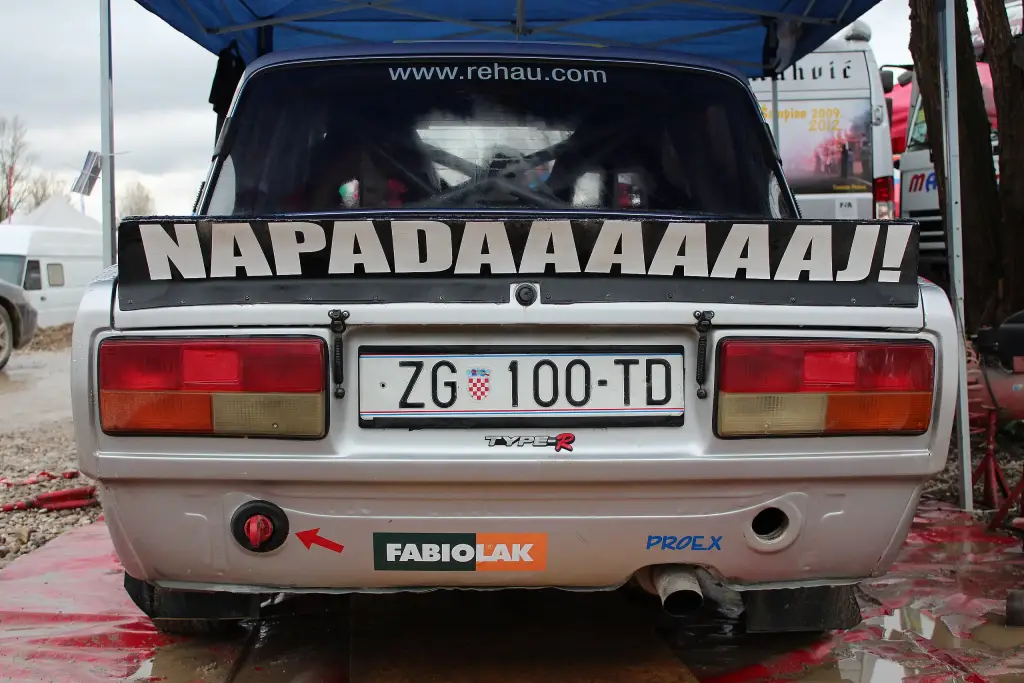
The LADA VFTS was a rally car based on the Lada 2105, prepared in Vilnius, Lithuania, by a factory that specialised in competition versions of Lada vehicles. It received FIA homologation on 1 October 1982 and is best known for its Group B rally version.
Lada VFTS at a glance
| Maker | Vilnius factory of vehicles (VFTS), Lithuania |
|---|---|
| Based on | Lada 2105 |
| Homologation | FIA, 1 October 1982 |
| Group | B |
| Engine | 1.6-litre four, about 160–180 hp |
| Fuel | 100 octane |
| Weight | 920–950 kg |
| Drive | rear-wheel drive |
| Brakes | front discs, rear drums |
| Cars exported | 30 |
| Renamed | EVA, Experimental Vilnius Auto-plant, in 1988 |
Based on one source: the English Wikipedia article on the Lada VFTS.
History of the Lada VFTS
VFTS stands for Vilniusskaja Fabrika Transportnych Sredstv, the Vilnius factory of vehicles. Preparation of rally cars began in 1970 in Vilnius, then part of the Soviet Union, in one of the halls of the Vilnius car repair factory. The first model produced there was the Lada 1300, with an engine enlarged to 1,600 cc and tuned to 130–150 hp. The company was founded and managed by the Lithuanian rally driver Stasys Brundza.
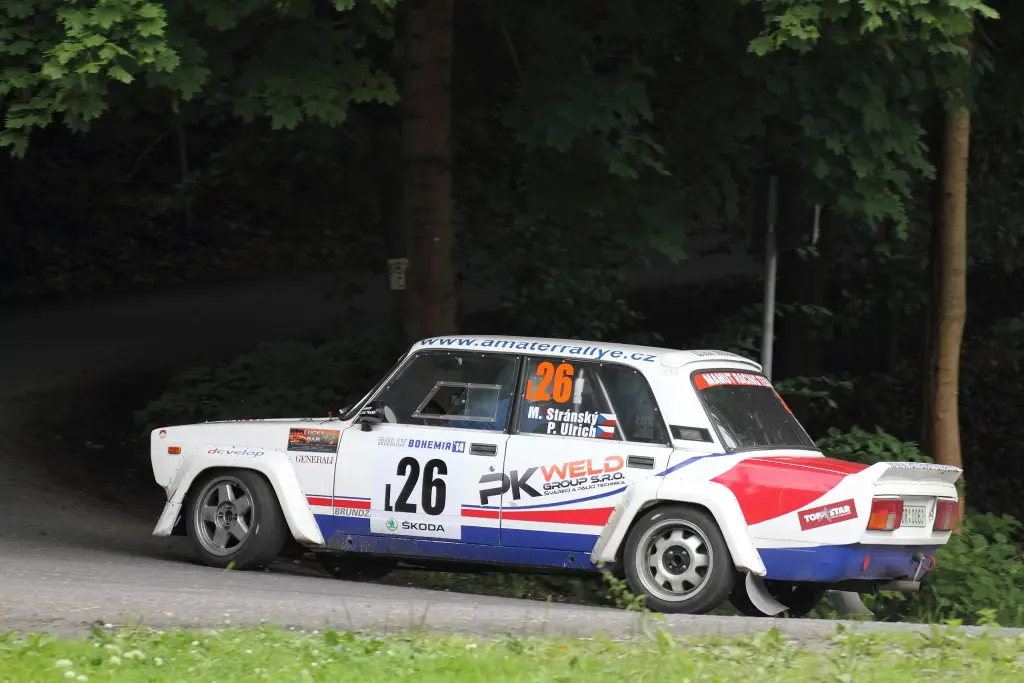
A Lada-1600 Rally model was presented in 1978, and on 1 October 1982 the LADA VFTS received FIA homologation. Between 1985 and 1988 VFTS developed the Lada-2108 EVA Turbo, a mid-engined rally car with an 1,860 cc sixteen-valve turbocharged engine producing 270–300 hp under Group B rules. The VFTS became popular with drivers and rally fans and was strongly advertised, with a leaflet even translated into English.
The factory exported 30 cars in total: two to Bulgaria in 1979; one each to Panama and Norway in 1980; one each to Norway and Canada in 1981; two to Cameroon in 1984; one each to Austria, Norway and Bulgaria in 1985; one to Panama, two to Jordan, one to Norway, two to Finland and two to Spain in 1986; one each to Finland, Panama and Hungary in 1987; and four to Czechoslovakia for Metalex plus one to Germany in 1990. The head engineers were Zbignevas Kivertas for engines and Henrikas Šilinis, Vygandas Ulickas and Ar&umacron;nas Volungevičius for the design of the Lada 2108 EVA.
After Group B
Production did not continue long after Group B was banned. As the Soviet Union ended production of these cars, rally drivers began to copy the VFTS design and technical solutions. LADA-VFTS became very popular in Hungary, where the cars reappeared in the H class of the national championship at the end of the 1990s. Today the car is popular with rally drivers in former Soviet and other European countries: Russian drivers use it in Club Rally and short Rally-Sprint series, building replicas that sometimes beat newer rally cars.
Construction
The most important factor in creating the VFTS was reducing total weight. To reach 920–950 kg the builders used materials such as plexiglass or polycarbonate instead of glass. The brakes and bodywork came from the Lada 2105, but many parts were strengthened to improve stability, cornering, grip and handling. The car remained rear-wheel drive, with disc brakes at the front and drums at the rear. Its high-efficiency engine used 100 octane fuel, and many parts were moved or removed from the engine bay to make repairs easier and to get rid of unnecessary items such as the air filter. The structural and electrical changes raised output to 160–180 hp, against only 75 hp in the standard 2105. The bodyshell was strengthened for competition and the axle housing heavily fortified. A single-row gearshift, different from the usual one, produced the car’s characteristic sound and changed the gear positions because of the lack of space. The cabin had a roll cage, two bucket seats with four-point belts and a reorganised dashboard for quicker repairs. The angularly widened mudguards, needed for the wider wheels, gave the car its characteristic appearance, and spoilers were also used.
Design and features
- Group B rally car: homologated in 1982 and built from the Lada 2105.
- Lightweight body: 920–950 kg with plexiglass or polycarbonate glazing.
- More power: 160–180 hp against 75 hp for the standard 2105.
- Reinforced shell: strengthened body, axle housing and roll cage.
Lada VFTS versions
- Lada 1300 rally: the first Vilnius model, with a 1.6-litre engine of 130–150 hp.
- Lada-1600 Rally (1978): the rally car presented before the VFTS.
- LADA VFTS (1982): the Group B car based on the 2105.
- Lada-2108 EVA Turbo (1985–1988): mid-engined, 270–300 hp.
- EVA (1988): the renamed Experimental Vilnius Auto-plant.
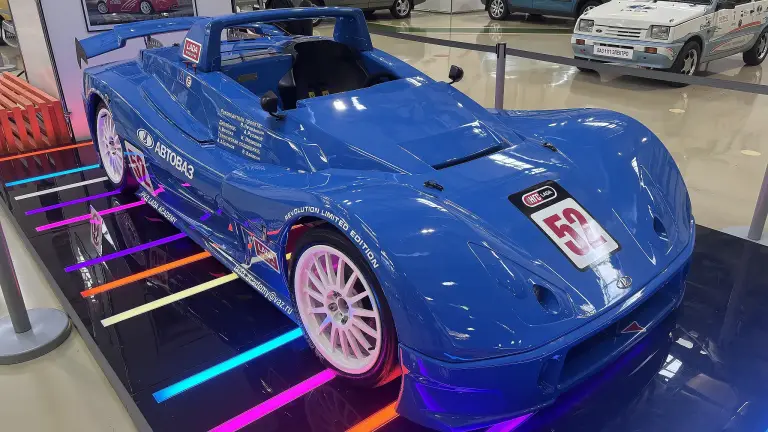
The VFTS was built from the Lada Riva family, specifically the 2105, and it was an earlier competition Lada than the Lada Revolution. More models are in the Lada collection.
Video: Japán – Lada VFTS – 20. Miskolc Rally 2014
Video by Premier Videó Stúdió on YouTube.
Sources
- Lada VFTS, English Wikipedia: history, exports, construction