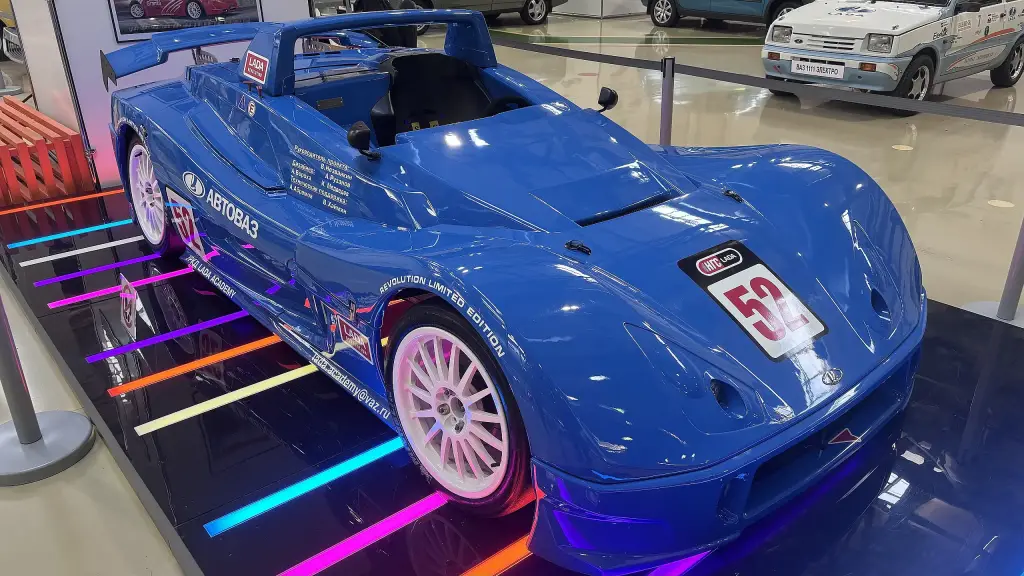
The Lada Revolution was a series of sports prototypes first presented in 2003 by the Russian brand Lada, part of AvtoVAZ. It was designed for a one-make racing series and later appeared in road-going concept form.
Lada Revolution at a glance
| Maker | Lada (AvtoVAZ) |
|---|---|
| Presented | 2003 Geneva Auto Show |
| Class | sports prototype |
| Engine | 1,596 cc naturally aspirated four, 16 valves |
| Power | 165 hp at 7,600 rpm |
| Torque | 160 N·m at 6,200 rpm |
| Weight | 670 kg |
| 0–100 km/h | 7.3 seconds |
| Top speed | 240 km/h |
| Racing series | National Racing Series LADA, 2004–2006 |
| Built | at least 48 |
Based on one source: the English Wikipedia article on the Lada Revolution.
History of the Lada Revolution
Lada began developing the Revolution in 2001, sharing many parts with older VAZ cars. The first running models were built in 2003 and tested by NAMI, at the Nürburgring and on the Moscow Ring before the car was unveiled at the 2003 Geneva Auto Show. It was well received by the public and won awards from the Union of Designers of Russia in 2003–2004 and from Russian car magazines.
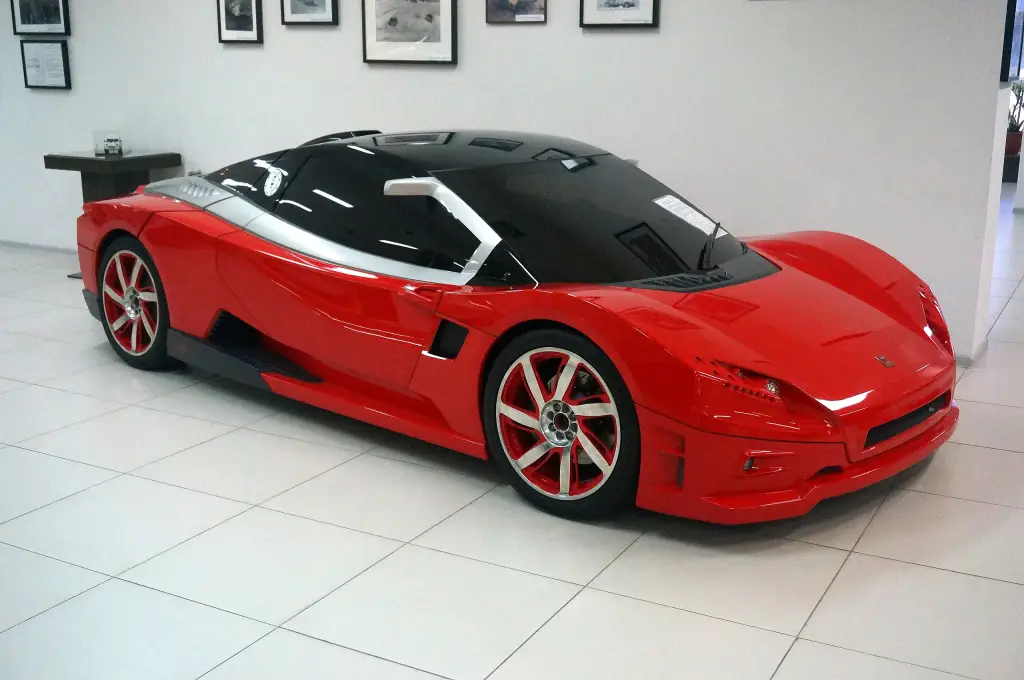
After the 2003 show season Lada created the National Racing Series LADA, the first national racing series in Russia since Formula Easter. It ran over seven rounds, starting in Moscow and finishing in St Petersburg, and began on 14 May 2004 at the Moscow Ring. All races in 2004, 2005 and 2006 went ahead as scheduled and were broadcast by Russia-2. The 2007 season was cancelled for financial reasons and did not resume in 2008 because of the financial crisis. At least 48 Revolutions were built, three of them written off in the series.
Revolution Sport and Super-Sport
The Revolution Sport, or Revolution I, was the standard racing version. Its naturally aspirated VAZ-21086-29 inline four displaced 1,596 cc and had a cast-iron block, aluminium head and a sixteen-valve design. It developed 165 hp at 7,600 rpm and 160 N·m at 6,200 rpm, weighed 670 kg with fluids but no driver, reached 100 km/h in 7.3 seconds and had a top speed of 240 km/h. It raced in 2004 and 2005.
The Revolution Super-Sport was a facelifted version of the earlier car with power raised to 215 hp at 8,500 rpm and torque to 170 N·m at 5,800 rpm. It reached 100 km/h in 6.5 seconds and 260 km/h, and raced in 2005 and 2006. A two-seater version could be ordered but was never taken up and remained a show car.
RS2 and Revolution III
For the 2006 season the ageing Revolution I was heavily facelifted as the Revolution RS2, or Revolution II. The suspension was overhauled and the diffuser and engine cooling were completely redesigned; the car raced for that season only. The Revolution III was a concept presented at the 2008 Paris Motor Show, intended as a road-going variant of the RS2. Production was planned for 2009 but did not happen because of the 2008 financial crisis.
Design and features
- Racing purpose: a lightweight sports prototype of 670 kg with no concessions to comfort.
- VAZ-based engine: a 1,596 cc sixteen-valve four derived from older VAZ designs.
- One-make series: the National Racing Series LADA gave the car its own championship.
- Road-car concept: the Revolution III of 2008 was meant for production.
Lada Revolution versions
- Revolution Sport (Revolution I): 165 hp, raced 2004–2005.
- Revolution Super-Sport: 215 hp, raced 2005–2006.
- Revolution RS2 (Revolution II): facelifted car for the 2006 season.
- Revolution III: road-going concept shown in Paris in 2008.
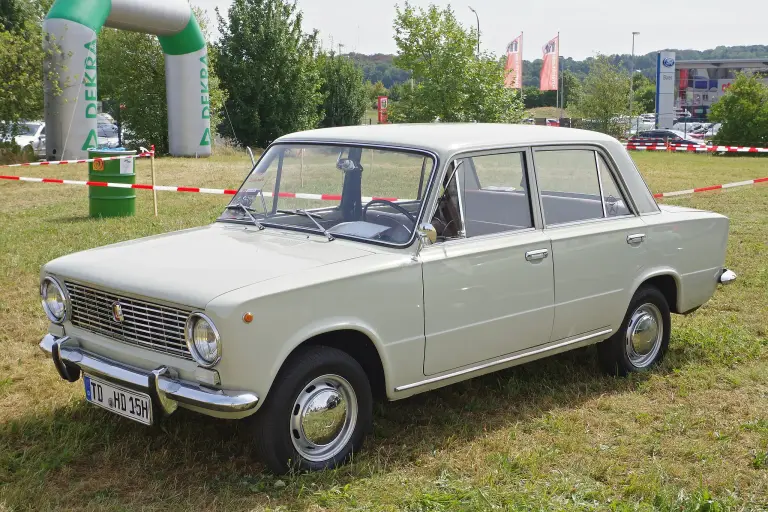
The Revolution shared parts with older VAZ cars such as the VAZ-2101, and it was the racing flagship of the Lada collection. The rally-derived Lada VFTS is another competition Lada.
Sources
- Lada Revolution, English Wikipedia: history, racing series, versions, technical data