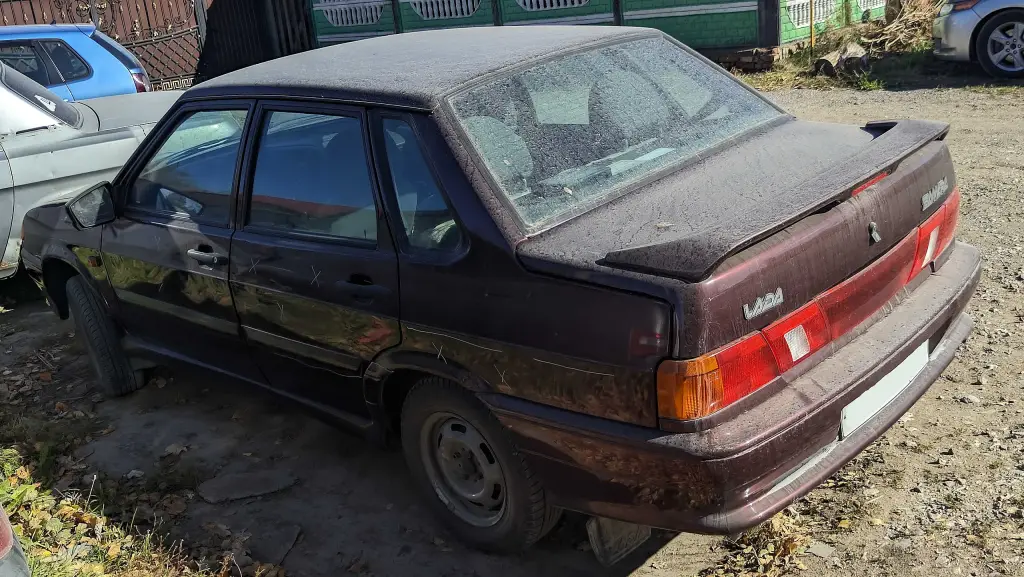
The Lada Samara, known at home as the VAZ-2108 and sold as the Sputnik until 1991, was a series of small family cars built by AvtoVAZ from 1984 to 2013. It was the first mass-produced front-wheel-drive car in the Soviet Union and the first Lada not based on the Fiat 124.
Lada Samara at a glance
| Maker | AvtoVAZ, Tolyatti, Russia |
|---|---|
| Production | 1984–2013 |
| Model codes | VAZ-2108, 2109, 21099 |
| Bodies | three-door, five-door hatchback, four-door saloon |
| Engines | 1,099, 1,288 and 1,499 cc fours |
| Power | 53–75 hp |
| Drive | front-wheel drive |
| Suspension | MacPherson struts front, torsion bar rear |
| First cars | 18 December 1984 |
| Export names | Samara; Diva, Sagona and Forma for the saloon |
Based on one source: the English Wikipedia article on the Lada Samara.
History of the Lada Samara
The Samara was the second autonomous design from VAZ after the Niva and the first model not based on the Fiat 124 mechanicals. It combined a robust build and ease of maintenance with a modern style, and VAZ hoped it would let the company compete for sales in the mainstream European market, where the traditional Zhiguli models were seen as increasingly outmoded.
Development
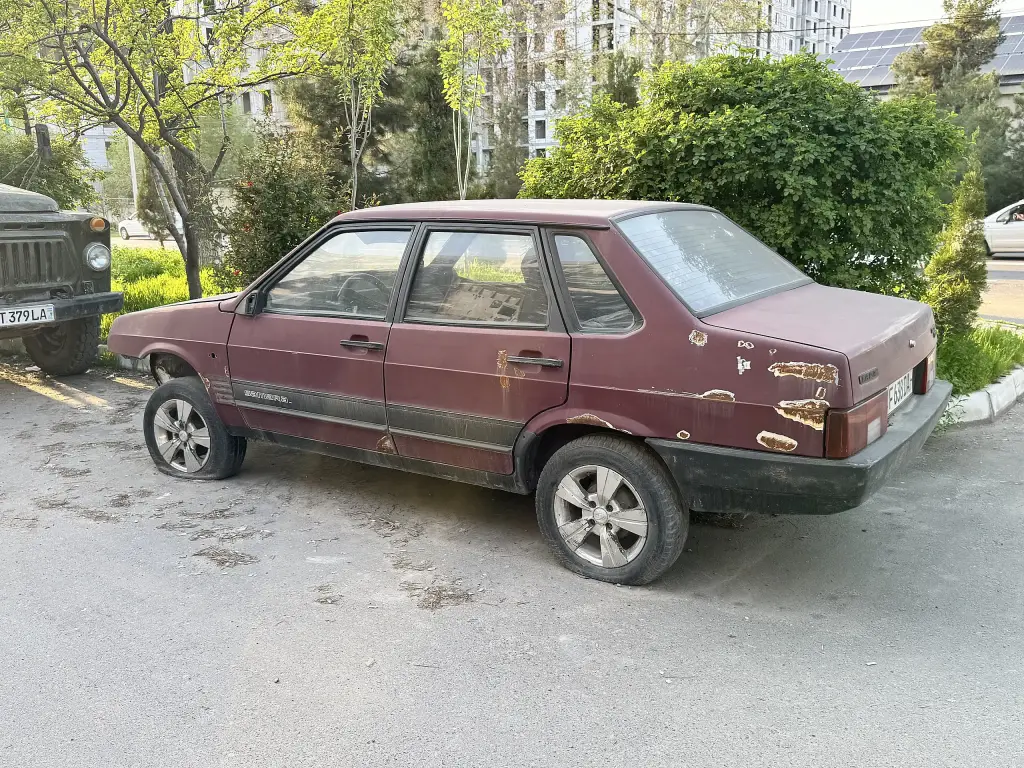
VAZ built its first front-wheel-drive prototype, the VAZ-1101, in the early 1970s with the engine from the Fiat 127. Further work led to the 900 cc Ladoga three-door hatchback prototype of 1976. The decision to build the Samara was taken on 16 September 1978, with the intention of selling strongly in Western Europe. A distinctive saloon, a four-door and three- and five-door hatchbacks were considered, but it was decided that the saloon should share the three-door’s sheetmetal forward of the C-pillar; design work on the four-door went towards the VAZ-2110 instead. The designers studied the Renault 9, Volkswagen Golf, Ford Escort Mark III, Opel Kadett and Volvo 340, which would be the new car’s main competitors. Front suspension used MacPherson struts and the rear a torsion bar, and the car had rack-and-pinion steering, another Soviet first.
The first VAZ-2108 prototype was completed on 31 December 1979 and strongly resembled the earlier Ladoga and the VAZ-1106 saloon. At home it was named Sputnik but was more commonly called Vosmerka, the eighth, after the last digit of its code; the export version was named after the Samara River, a tributary of the Volga. The first cars left the line on 18 December 1984. These were three-door hatchbacks powered by a belt-driven SOHC 1,288 cc four of 65 hp with a four-speed gearbox. They were joined by a five-door and by versions with 1,099 cc and 1,499 cc engines. The head was developed with Porsche and the carburettors with Solex; Porsche also helped with passive safety, controllability, easy gear shifting and interior ergonomics.
The range grows
In 1987 the range gained the VAZ-21083 with a 72 hp 1,499 cc engine and five-speed gearbox and the VAZ-21081 with a 53 hp 1,099 cc unit, the latter export-only. Top speeds were 140, 148 and 156 km/h, and fuel consumption 7.9, 9.3 and 9.5 litres per 100 km. VAZ also introduced the VAZ-2109 five-door hatchback that year and the VAZ-21099 saloon in 1989. The saloon had a new bonnet, grille and wings, a rear overhang 200 mm longer and an improved dashboard; its front-end styling was adopted on the 2109 in 1992 and on the 2108 in 1994. Full production of the 21099 began in December 1990 with the 210993 and 21099 models. In some export markets the saloon was branded Diva in Belgium, Sagona in France and Forma in Germany, and Belgium also offered a locally built convertible. The 1.1 and 1.3 were eventually dropped, while the 1.5’s power rose to 75 hp. Fuel injection arrived to meet export emissions rules.
Special models
A Wankel-engined three-door, the 2108-91, used a two-rotor VAZ-415 with two 654 cc rotors and was sold in Russia in very small numbers with a five-speed gearbox at 56,000 rubles. It was capable of 200 km/h and 0 to 100 km/h in eight seconds, but reliability problems kept it rare; a five-door 2109-91 used the same engine. There was also a rear-engined Samara 4×4 rally car, the NAMI 0290, built for the 1985 Soyuz Rally with permanent four-wheel drive and a 150 hp 1,568 cc engine over the rear axle. Nicknamed Appelsin for its paint, it used ZAZ-1102 doors and a mostly fibreglass body weighing 960 kg. The Samara was repeatedly modified and restyled before production ended in December 2013.
Design and features
- First front-drive Lada: the first mass-produced front-wheel-drive car built in the Soviet Union.
- Porsche input: the cylinder head, passive safety, gearshift and ergonomics were developed with Porsche help.
- Three body styles: three- and five-door hatchbacks and a four-door saloon.
- Modern chassis: MacPherson struts, a torsion-bar rear axle and rack-and-pinion steering.
Lada Samara versions
- VAZ-2108: the original three-door hatchback of 1984.
- VAZ-2109: the five-door hatchback, added in 1987.
- VAZ-21099: the four-door saloon of 1989, with a longer rear overhang.
- VAZ-21083: 1.5-litre version with 72 hp and a five-speed gearbox.
- VAZ-21081: 1.1-litre export version with 53 hp.
- 2108-91: Wankel-engined special for the Russian market.
The Samara was the front-wheel-drive alternative to the Lada Riva, and its engine was cut in half for the Lada Oka. It was replaced in the range by the Lada 110, and more models are in the Lada collection.
Video: Lada Samara 1992 Mod. 1.5 16v. 105 Hp../ Ankara
Video by sadi pınar on YouTube.
Sources
- Lada Samara, English Wikipedia: development, engines, versions, special models