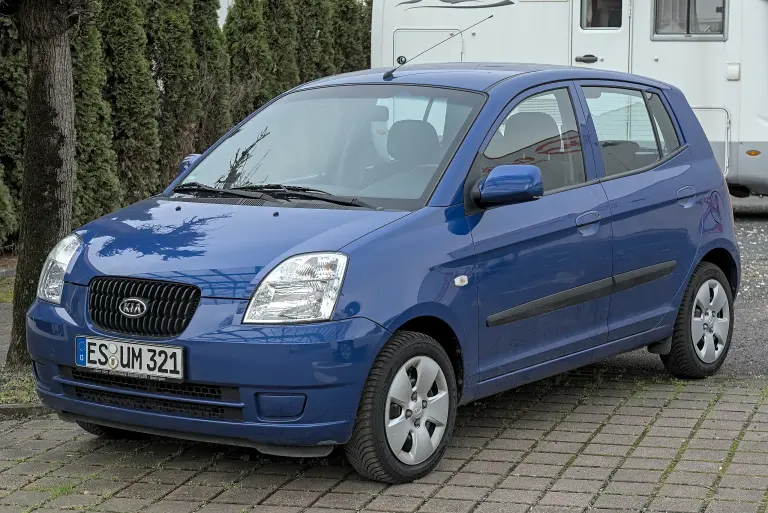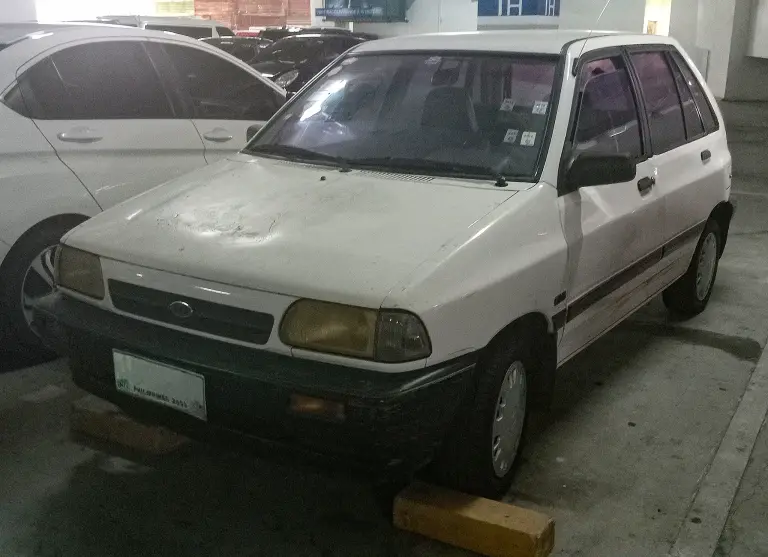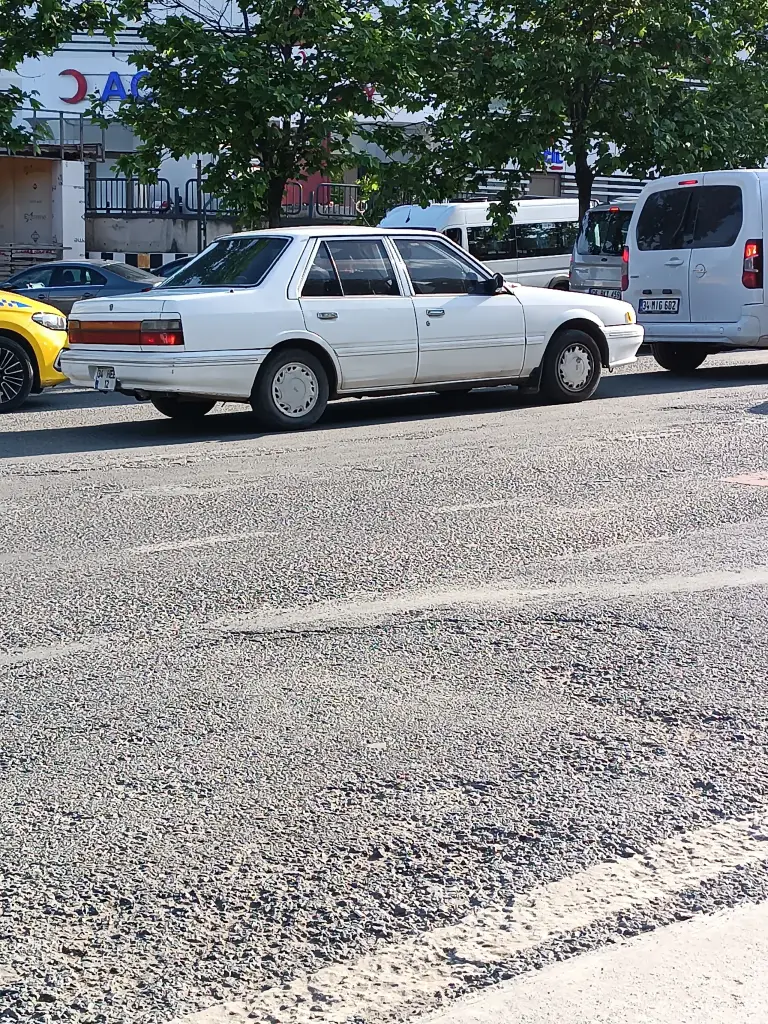
The Kia Capital was the low-priced saloon that sat under the Concord in Kia’s range from February 1989 to December 1996. Like the Concord it was a licensed version of a Mazda design, and it was the last of the old rear-driven-generation Kia saloons before the Sephia and Credos arrived.
Kia Capital at a glance
| Maker | Kia Motors |
|---|---|
| Production | February 1989–December 1996 |
| Model code | K930 |
| Related to | Kia Concord, licensed Mazda Capella |
| Engine at launch | 1.5-litre B5, carburettor, 80 PS |
| Injection option | 1.5 MPFi, 95 PS |
| From 1990 | 1.5 16-valve twin cam, 115 PS |
| Top speed | 170 km/h with the 16-valve |
| 0–100 km/h | 10.0 s (13.5 s with the injected 1.5) |
| Facelifts | November 1991 and June 1994 |
The Capital is described in a section of the English Wikipedia article on the Kia Concord, and this page uses that section alone.
History of the Kia Capital
The Capital joined the range in February 1989 as the lower end of the Concord family. The Concord itself had been introduced in April 1987 as a licence-built version of the 1982 Mazda Capella, and all versions used Mazda four-cylinder engines. The Capital was the cheaper alternative, with a smaller body and a smaller engine.
Engines
At launch the Capital used a carburetted two-valve SOHC version of Mazda’s 1.5-litre B5 engine with 80 PS (59 kW) at 6,000 rpm. A multi-point injection version was also offered with a claimed 95 PS (70 kW), the same output as the injected 1.8-litre Concord GLX. After a change in the tax rules, which now used engine displacement with a threshold at 1.5 litres, the Capital received a twin-cam 16-valve B5 in May 1990. That engine produced 115 PS (85 kW) at 6,500 rpm, gave a top speed of 170 km/h and cut the 0–100 km/h time from 13.5 to 10.0 seconds.
Facelifts
The Capital was facelifted in November 1991, after the Daewoo Espero and Hyundai Elantra had raised the standard in the class. The change was not deep: the most obvious difference was that the rear number plate moved from between the tail lamps to the bumper. The facelifted car offered the 1.5 and a detuned carburetted 1.8 of 82 PS (60 kW), the latter mainly for taxi work, and there was an export version with the carburetted two-valve 1.5 of 73 PS (54 kW).
A second facelift came in June 1994, with rounder headlights and a new grille carrying the new Kia logo in place of the old chimney design. Kia marketed it as the New Capital, although the badge on the car still read simply Capital. The New Capital was sold only with the 16-valve B5 engine in GS or higher LS trim.
Production ended in December 1996, a few years after the Sephia had arrived to replace it. The Concord had already stopped in 1995, and in 1996 Kia replaced the pair with the Credos, built on the Mazda GE platform. Kia then continued its line of mid-size saloons with the Credos, Optima, Lotze and K5.
Design and features
- Cheap entry model: a smaller, simpler alternative to the Concord.
- Mazda engines: the 1.5 B5 in carburetted, injected and 16-valve forms.
- 16-valve from 1990: 115 PS and a 10-second 0–100 km/h time.
- Long taxi life: the detuned 1.8 was aimed at taxi operators.
Kia Capital versions
- Capital 1.5 (1989–1991): carburetted 80 PS or injected 95 PS.
- Capital 16-valve (1990–1996): twin-cam B5 with 115 PS.
- 1991 facelift: rear plate moved to the bumper, detuned 1.8 for taxis.
- New Capital (1994–1996): rounder lights, new grille, 16-valve only.
The Capital sat below the Concord and was replaced in the range by the Kia Sephia, itself followed by the Kia Credos. More Kia models are in the Kia collection.
Sources
- Kia Concord, English Wikipedia: Capital section: engines, facelifts, end of production