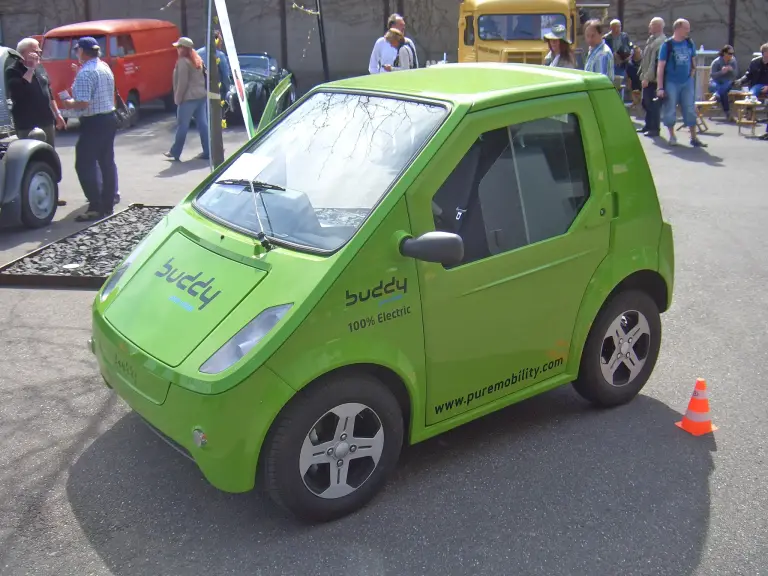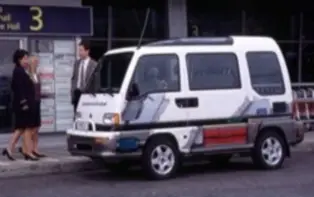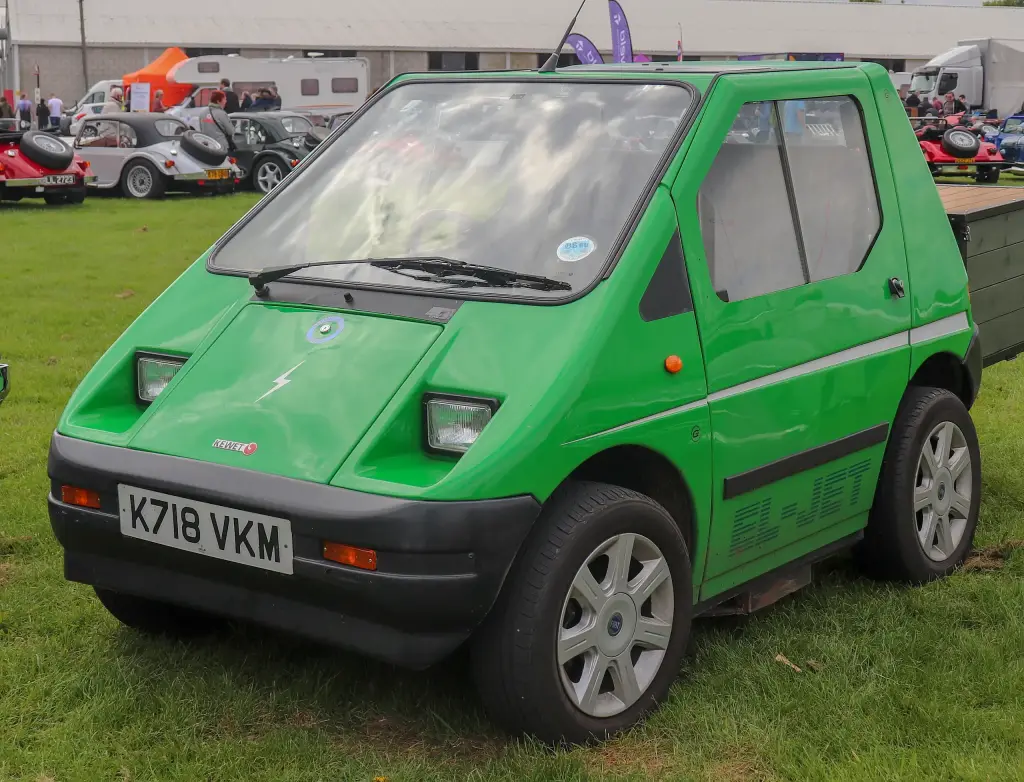
The Kewet EL-Jet was the first generation of the Kewet battery electric car, produced from 1991 by Knud Erik Westergaard’s company in Hadsund, Denmark. It was a small two-seater for local transport, with a galvanised steel chassis, a glassfibre shell and, in its first two versions, a four-speed manual gearbox. Cars of this generation were still registered in Norway two decades later.
Kewet EL-Jet at a glance
| Maker | Kewet (Knud Erik Westergaard Elektrisk Transport), Hadsund, Denmark |
|---|---|
| First cars | 1991 |
| Generations covered | EL-Jet models 1 to 4 |
| Motor, models 1 and 2 | 48 V, 5 kW |
| Gearbox, models 1 and 2 | four-speed manual |
| Motor, model 3 | 48 V, 7.5 kW, single-speed transmission |
| Motor, model 4 | 60 V, 10 kW |
| Seats | two |
| Top speed | 80 km/h |
| Range | typically 50 to 80 km between charges, about 150 km with lithium-ion batteries |
| Heater | 1.6 kW electric, or an optional paraffin heater |
| Construction | galvanised steel chassis, glassfibre-reinforced plastic shell |
The EL-Jet has no article of its own; this page is based on the English and Norwegian articles on the Kewet brand, which describe the first four generations together. Based on one source.
History of the Kewet EL-Jet
The company behind the car
In 1971 Knud Erik Westergaard started KEW Industries in Hadsund, Denmark, making industrial washing equipment and high-pressure cleaners. That company was sold in 1988, and Westergaard founded Kewet — Knud Erik Westergaard Elektrisk Transport — to build electric cars. The first cars left the factory in 1991. In 1995 production was moved to Nordhausen in the former East Germany, a move that proved unsuccessful, and Kewet went bankrupt in 1998. Kewet International was formed in August 1998, and shortly afterwards the rights to the vehicle passed to the Norwegian company Kollega Bil A/S, which later became Elbil Norge AS.
Four generations of EL-Jet
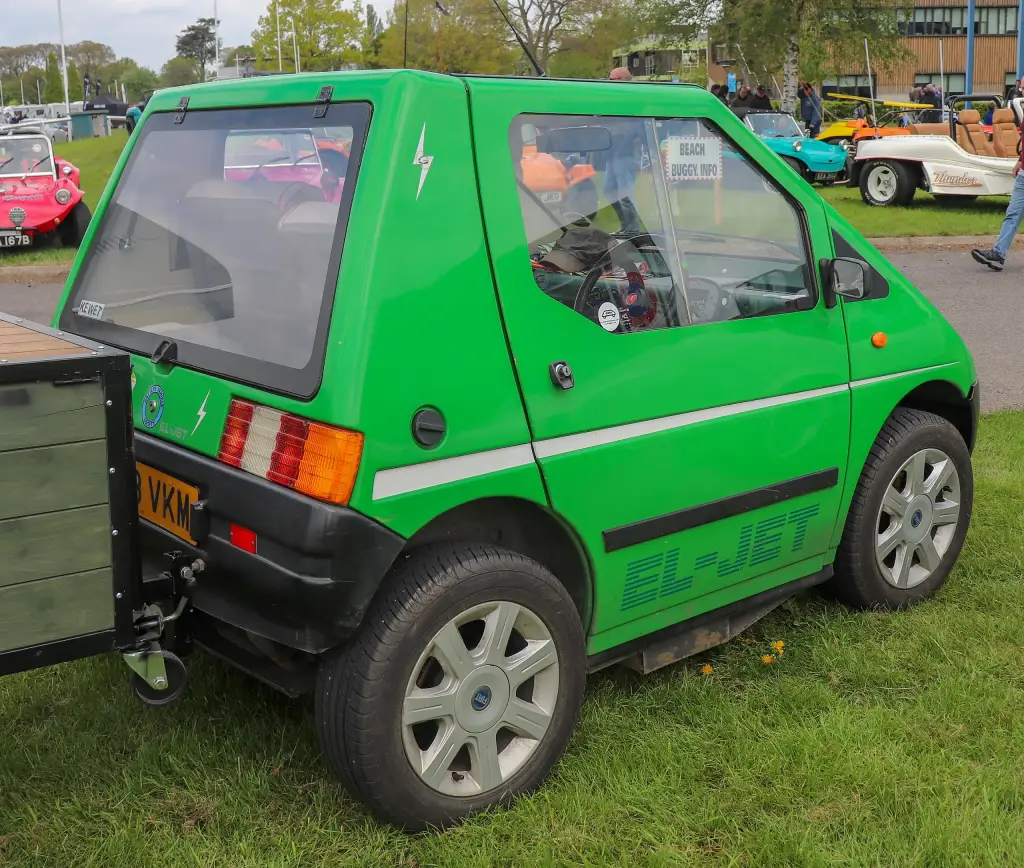
The first four Kewet generations were known as the EL-Jet, and the differences between them were mostly in the drive. Models 1 and 2 used 48-volt systems and 5 kW motors with a four-speed manual gearbox, an unusual arrangement for an electric car. Model 3 kept the 48-volt system but moved to a 7.5 kW motor and a single-speed transmission. Model 4 raised the system voltage to 60 volts and the motor output to 10 kW. All of the first five Kewet generations were two-seaters; only the sixth, the Buddy, was given a bench for three.
The car itself
The layout stayed the same through the generations: a galvanised steel chassis under a shell of glassfibre-reinforced plastic, a top speed of about 80 km/h and a range of typically 50 to 80 km between charges, or around 150 km when lithium-ion batteries were fitted. A 1.6 kW electric heater was standard, with a paraffin heater available as an option — a reminder of how little spare energy an early small electric car had. The Norwegian Wikipedia notes that the top speed could be limited further so that the car could be sold as a neighbourhood electric vehicle in the United States.
Survivors
The Kewet was never a mass-produced car: from 1991 to October 2013 combined sales of the Kewet and its successor, the Buddy, came to about 1,500 vehicles, mostly in Norway. By September 2013, 22 Kewet EL-Jet cars of models 1 to 4 were still registered in Norway, alongside 50 Citi Jet 5s and the much more numerous later cars.
Design and features
- Simple engineering: a light steel chassis and a glassfibre body, built for local journeys rather than speed.
- Manual gearbox: the first two models had a four-speed manual, with a single-speed transmission arriving with model 3.
- Two seats: a narrow cabin for driver and one passenger, a layout kept until the sixth generation.
- Rising voltage: 48 volts in models 1 to 3, 60 volts in model 4, and 72 volts from model 5 onwards.
- Optional paraffin heater: offered alongside the 1.6 kW electric heater to save battery power in cold weather.
Kewet EL-Jet versions
- Model 1 and model 2 (from 1991): 48-volt system, 5 kW motor, four-speed manual gearbox.
- Model 3: 48-volt system, 7.5 kW motor, single-speed transmission.
- Model 4: 60-volt system, 10 kW motor.
- Speed-limited export version: top speed reduced for sale as a neighbourhood electric vehicle in the United States.
The later cars are described in our pages on the Kewet City-Jet and the Kewet Buddy; more electric cars are in the Kewet collection.
Video: Thrige Titan motors used in Kewet El cars
Video on YouTube.
Sources
- Kewet, English Wikipedia: history, generations, specifications
- Kewet, Norwegian Wikipedia: Danish origins, seats, speed limiting, construction
- Buddy (electric car), English Wikipedia: survivors registered in Norway, combined sales