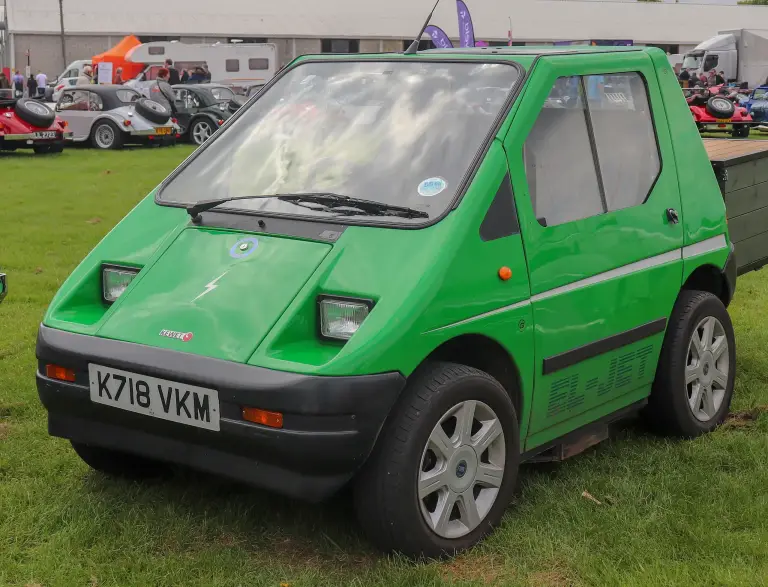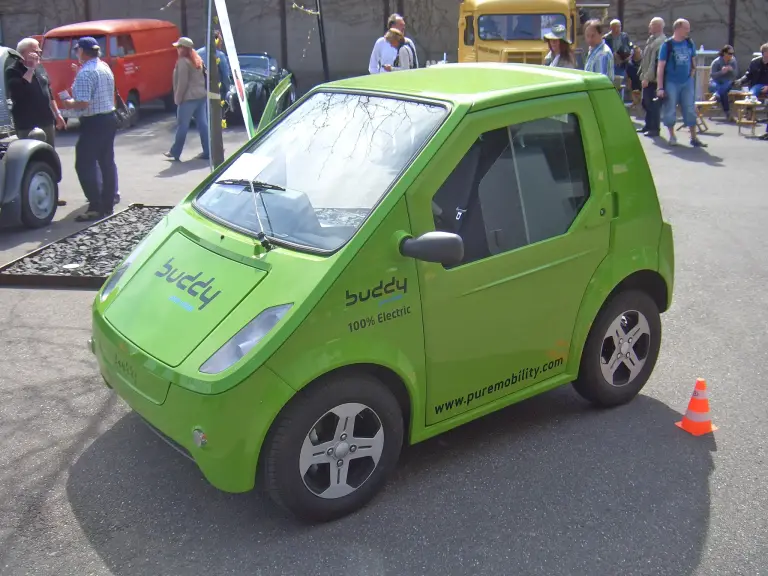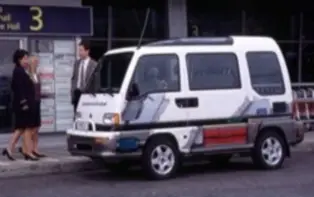
The Kewet City-Jet was the fifth generation of the Kewet electric car, the model that took the brand from a 60-volt to a 72-volt system and from a 10 kW to a 12 kW motor. It was the first Kewet that could be ordered as a van as well as a passenger car. The name survived the next change of model, and only in 2007 did the car lose the Kewet badge altogether and become the Buddy.
Kewet City-Jet at a glance
| Maker | Kewet, built in Hadsund, Denmark, and Nordhausen, Germany |
|---|---|
| Generation | fifth of six |
| Introduced | with the 1995 move of production to Nordhausen |
| Electrical system | 72 V |
| Motor | 12 kW |
| Bodies | passenger car and van |
| Seats | two |
| Top speed | 80 km/h |
| Range | typically 50 to 80 km between charges, about 150 km with lithium-ion batteries |
| Heater | 1.6 kW electric, or an optional paraffin heater |
| Construction | galvanised steel chassis, glassfibre-reinforced plastic shell |
| Registered in Norway, September 2013 | 50 Citi Jet 5 |
The City-Jet has no article of its own; this page is based on the English and Norwegian articles on the Kewet brand. Based on one source.
History of the Kewet City-Jet
The fifth generation
Kewet built six generations of its electric car between 1991 and 2013. The fifth was the City-Jet, which moved to a 72-volt electrical system and a 12 kW motor, up from the 60 volts and 10 kW of the fourth generation. It was also the first Kewet offered as a van, a body style that made sense for the kind of short local deliveries the car was designed for. The passenger version kept the two-seat cabin of the earlier cars.
The move to Germany and back
Production of the Kewet moved in 1995 from Hadsund in Denmark to Nordhausen in the former East Germany; the move was not a success, and the company went bankrupt in 1998. According to the Norwegian Wikipedia the cars were later built in Hadsund again before the rights passed to the Norwegian company Kollega Bil A/S, which became Elbil Norge AS. From 2005 the cars were assembled at Økern in Oslo, where annual production was estimated at between 100 and 500 cars.
The name that outlived the model
When Elbil Norge presented its new car in the autumn of 2005 it was first called the Kewet Buddy Citi-Jet 6, and the Citi-Jet name was dropped only later, when the car became known simply as the Buddy. The Kewet badge itself was no longer used after 2007. The two names can therefore be found side by side in registration statistics: the Citi Jet 5 and the Kewet Buddy Citi-Jet 6 are consecutive generations of the same car.
How many survive
The City-Jet was built in modest numbers. By September 2013, 50 Citi Jet 5 cars were registered in Norway, against 2 Citi Vans, 22 EL-Jet cars of models 1 to 4, 634 Kewet Buddy Citi-Jet 6s and 379 Buddy M9s. From 1991 to October 2013 the Kewet and Buddy together accounted for about 1,500 vehicles.
Design and features
- 72-volt system: a step up from the 60 volts of the fourth generation, with a 12 kW motor.
- Van body: the first Kewet that could be bought as a van as well as a two-seat passenger car.
- Same simple recipe: galvanised steel chassis, glassfibre body, no power steering or brake servo.
- Heating: a 1.6 kW electric heater, with a paraffin heater available as an option.
- Low running costs: a range of 50 to 80 km, or around 150 km with lithium-ion batteries.
Kewet City-Jet versions
- Citi Jet 5 passenger car: the standard two-seater.
- Citi Jet 5 van: a commercial version without the rear seats.
- Speed-limited version: top speed reduced for sale as a neighbourhood electric vehicle in the United States.
- Kewet Buddy Citi-Jet 6 (2005): the next generation, which kept the Citi-Jet name before becoming the Buddy.
The first generation is described in our page on the Kewet EL-Jet, and the last in the page on the Kewet Buddy. More electric cars are in the Kewet collection.
Video: Buddy Cab Citi-jet 6
Video on YouTube.
Sources
- Kewet, English Wikipedia: generations, motor and voltage, history
- Kewet, Norwegian Wikipedia: production in Hadsund and Nordhausen, Oslo output
- Buddy (electric car), English Wikipedia: registrations by model, Citi-Jet 6 name