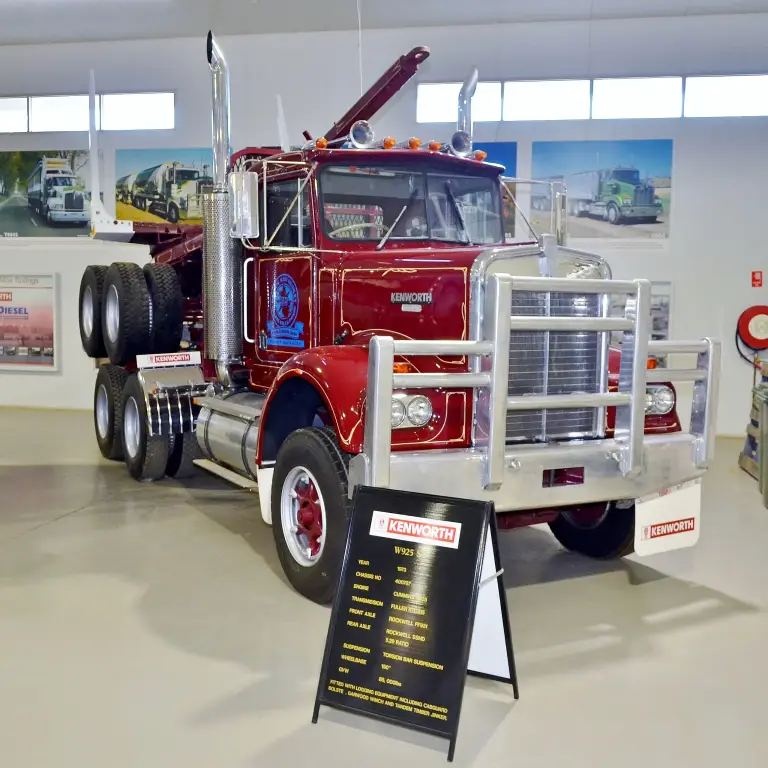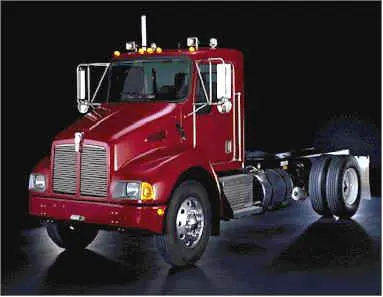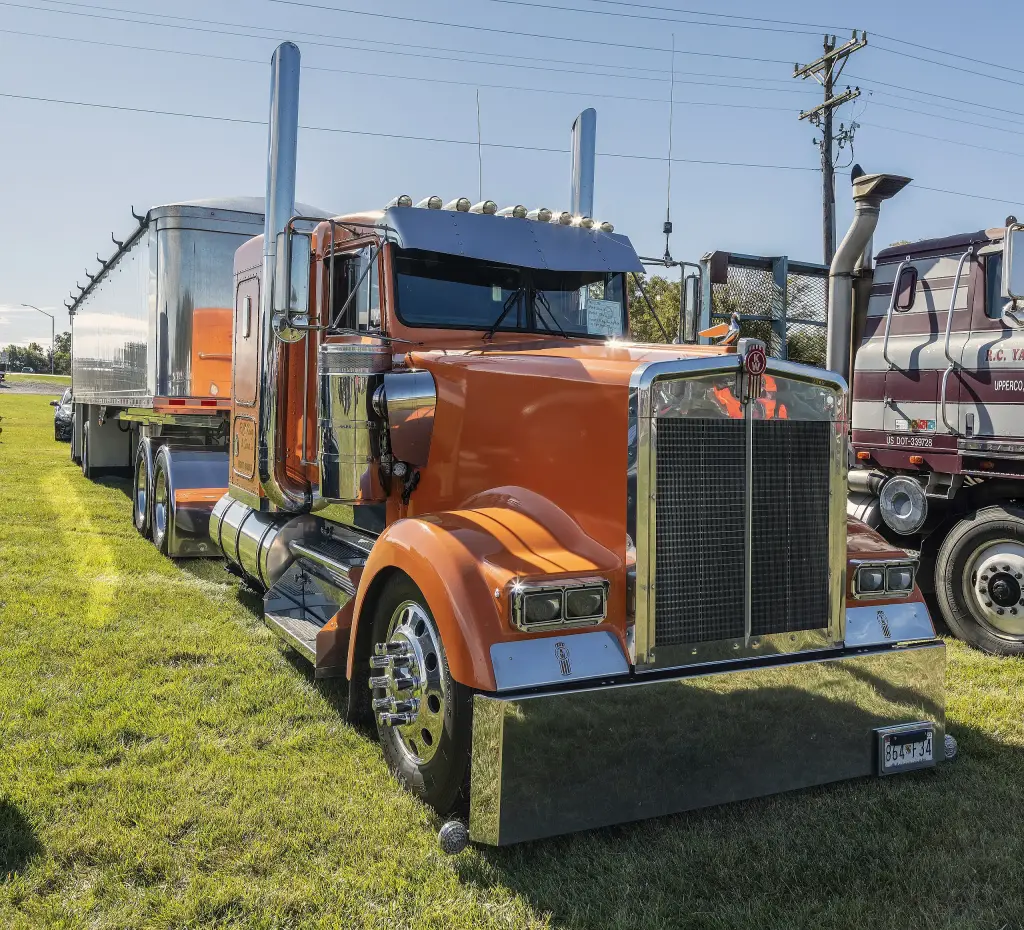
The W900 is the truck that defined Kenworth. Introduced in 1961 as the replacement for the 900-series conventional, it has been in production for more than six decades, with three distinct generations and a long list of variants, and it is one of the longest-lived vehicle designs in the world.
Kenworth W900 at a glance
| Introduced | 1961, replacing the 900-series conventional |
|---|---|
| Introduced alongside | the K100 cab-over |
| Generations | W900 (1961–1964), W900A (1965–1982), W900B (from late 1982) |
| First generation | bulkhead-style doors, fibreglass roof panel |
| W900A | longer hood, later larger door windows and pull-style handles |
| W900B | rectangular headlamps, higher hoodline, new cab and frame |
| W900S | 1987, severe-service conventional with a sloped hood |
| W900L | 1990, long-hood version with 10 inches added |
| Built at | Renton, Washington, since 1993 |
| Production ends | 2026, announced on 19 March 2025 |
History of the Kenworth W900
The W900 arrived in 1961 as the replacement for the 900-series conventional of 1956, and it was introduced alongside the K100 cab-over. The W in the name stands for Worthington, one of the two founders of Kenworth. The cab was completely redesigned: the roof and windows were raised, the two windscreen panes were mounted together, the radiator was widened for better engine cooling, and the tilting hood became standard.
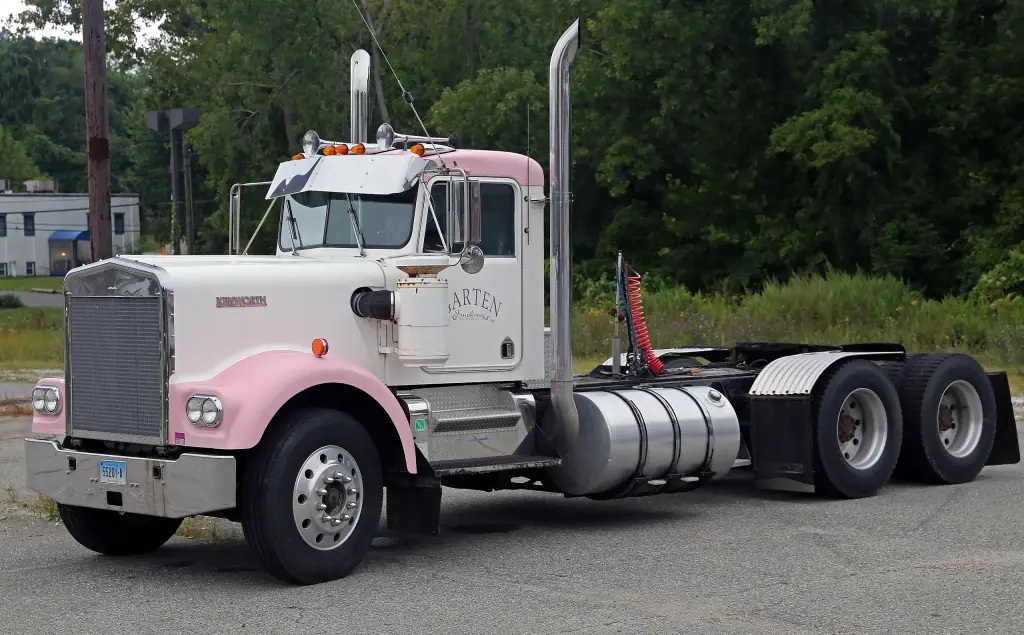
The first generation was built from 1961 to 1964 and introduced bulkhead-style doors with full-length hinges and a fibreglass roof panel. In 1965 the W900 became the W900A, with a hood lengthened by several inches to take a larger radiator and bigger diesel engines. The 1970s brought larger door windows and narrower vent windows in 1972, pull-style door handles, new badging in 1973, a 60-inch flattop double sleeper in 1974, and in 1976 the Aerodyne sleeper cab, the first factory sleeper with a raised roof and twin skylight windows. After 1982 the W900A carried on in Mexico, where it adopted the rectangular headlamps of the next model.
From late 1982 the third generation, the W900B, took over. It is recognised by its rectangular headlamps, though round lamps remained an option, and underneath it was substantially new: a raised hoodline, a higher-mounted cab, modular electrical components, a new cab, new sleepers and a new frame. The B was then expanded into a series. The W900S of 1987 was a severe-service conventional using the sloped hood of the T800 with a set-forward front axle and raised chassis, and in 1989 an extended-hood version took the bumper-to-back-of-cab length from 120 to 130 inches; that variant became the full-production W900L in 1990 and turned into one of Kenworth’s most popular models.
Later changes followed the times: in late 1994 the W900B and W900L could be ordered with the Aerocab and Aerodyne II sleepers shared with the T600B, offering a raised roof and a curved windscreen; the 86-inch Studio Sleeper arrived in 1998, one of the largest factory sleepers ever built; and in 2006 the W900S gained a curved windscreen as an option. Limited editions marked the milestones, among them the VIT of 1974, the Liberty Edition of 1985 for the Statue of Liberty centenary, the 007 package of 1989 for the truck’s appearance in Licence to Kill, the ICON900 of 2015 and a 900-unit Kenworth 100 edition for the centennial in 2023. In 2020 the W900S was dropped in favour of the W990 and T880S, and on 19 March 2025 Kenworth announced that W900 production would end in 2026, marked by a 1,000-unit Legacy Edition.
Design and features
- Three generations: the original W900, the W900A of 1965 and the W900B of 1982.
- Long hood, big engines: the W900A’s hood was lengthened to fit larger radiators and diesels.
- Aerodyne sleeper: the 1976 sleeper was the first factory cab with a raised roof.
- W900L: the long-hood model of 1990, built on the 130-inch extended hood.
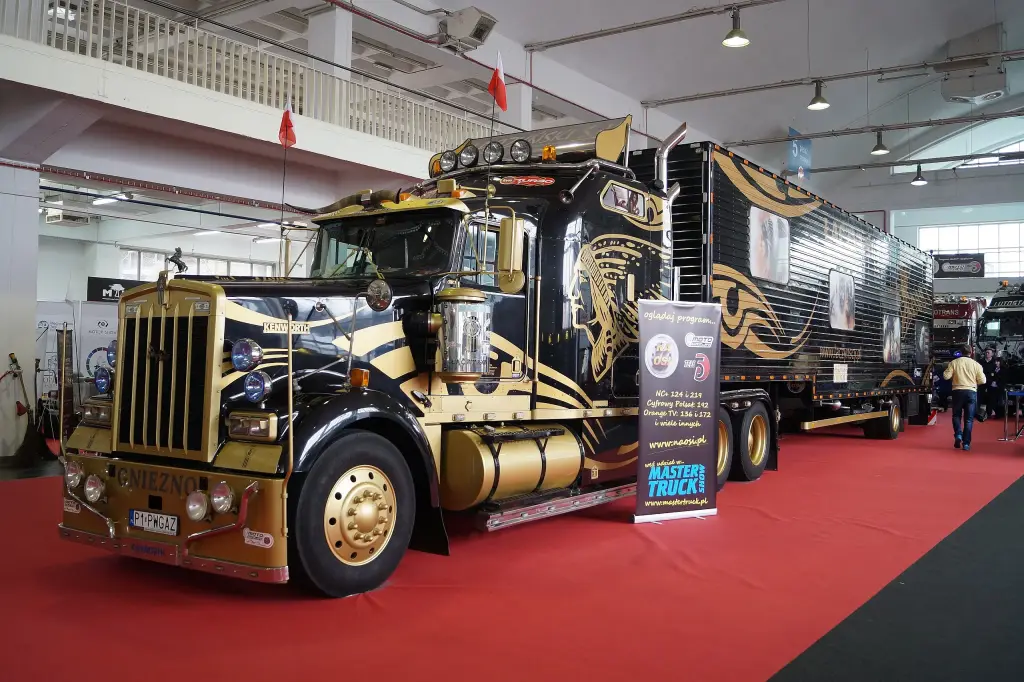
- Customiser’s favourite: owner-operators have long used the W900 as a basis for chrome, lighting and paint.
Kenworth W900 versions
- W900 (1961–1964): the first generation, with bulkhead doors and a fibreglass roof.
- W900A (1965–1982): the wider-hood second generation.
- W900B (1982–): rectangular headlamps and a new cab, frame and electrics.
- W900S (1987–2020): the severe-service version with the T800’s sloped hood.
- W900L (1990–): the long-hood model on a 130-inch BBC.
- Limited editions: VIT, Liberty, 007, ICON900, Kenworth 100 and Legacy.
The W900 was the conventional stablemate of the K100 cab-over and the starting point for the T600, whose cab and frame came from the W900B. Its predecessor was the 900 series. More trucks are in the Kenworth collection.
Video: Kenworth W900L Shifting and Jakebraking
Video by cat304C on YouTube.
Sources
- Kenworth W900, English Wikipedia: generations, variants, sleepers, limited editions, end of production
- Kenworth W900, Russian Wikipedia: the model line in Russian
- Kenworth, English Wikipedia: W900 and K100 of 1961, place of the W900 in the range