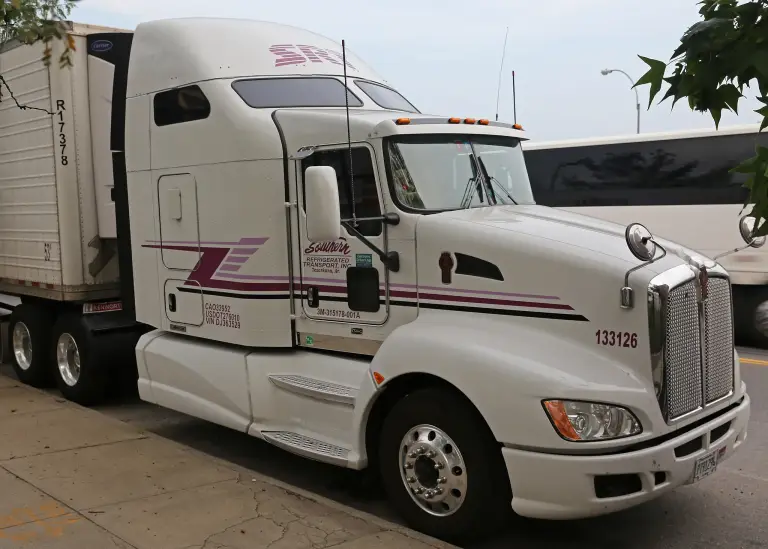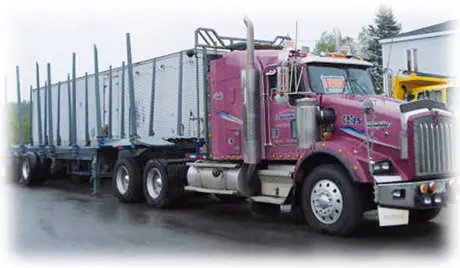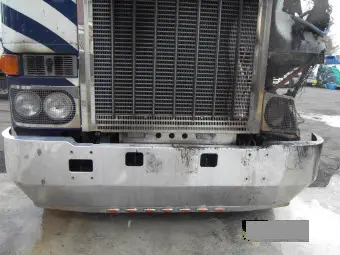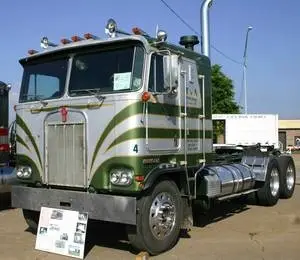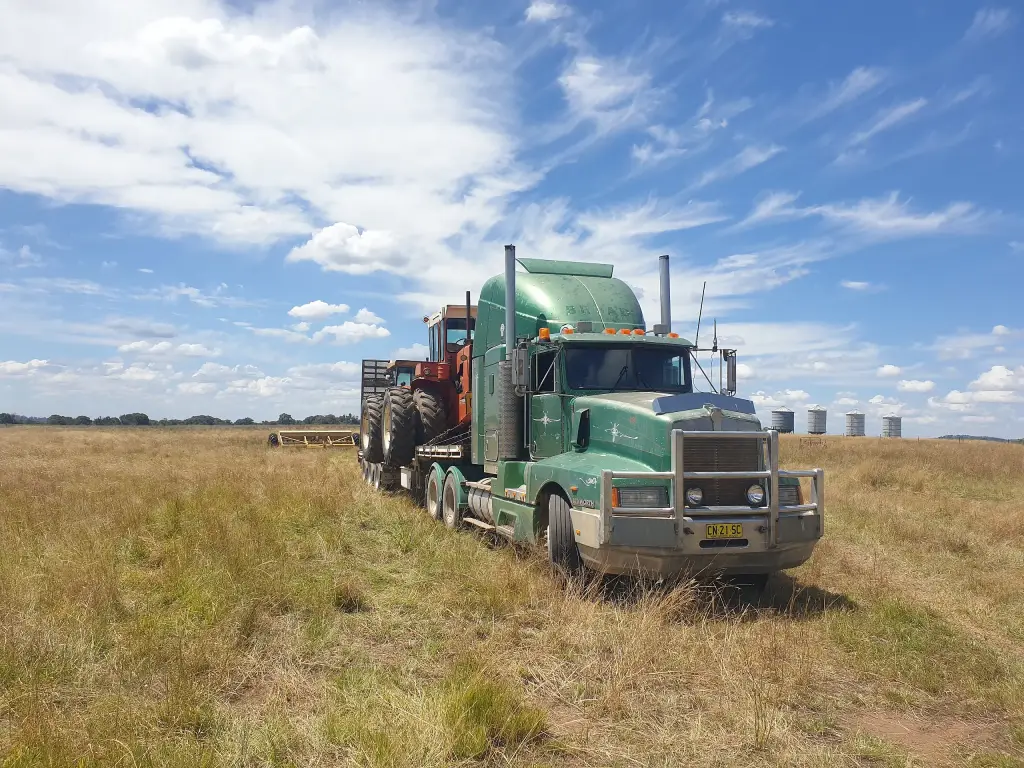
The T600 was the truck that brought aerodynamics to the American conventional. Introduced in 1985, it was the first semitractor in the United States designed from the ground up around drag and fuel economy, and its sloped hood earned it the nickname “Anteater”.
Kenworth T600 at a glance
| Production | 1984–2007 |
|---|---|
| Class | Class 8 conventional, usually a semitractor |
| Design work began | 1976, after the 1973 oil crisis |
| Wind tunnel | University of Washington |
| Fuel saving | over 20% against a W900 with a comparable powertrain |
| Nickname | “Anteater” |
| Share of 1985 sales | 40% of Kenworth semitractor sales by the end of the year |
| T600A | 1990–1994 |
| T600B | 1995–2007 |
| Replaced by | T660 for 2008 |
History of the Kenworth T600
The T600 began as an answer to the 1973 oil crisis, which pushed up diesel prices. Design work started in 1976 on a semitractor that could reduce aerodynamic drag and so use less fuel. Length restrictions at the time first pushed the project towards a cab-over tractor in the manner of the K100; when the rules changed in 1980, the engineers moved to the W900 base, which greatly reduced the frontal area.
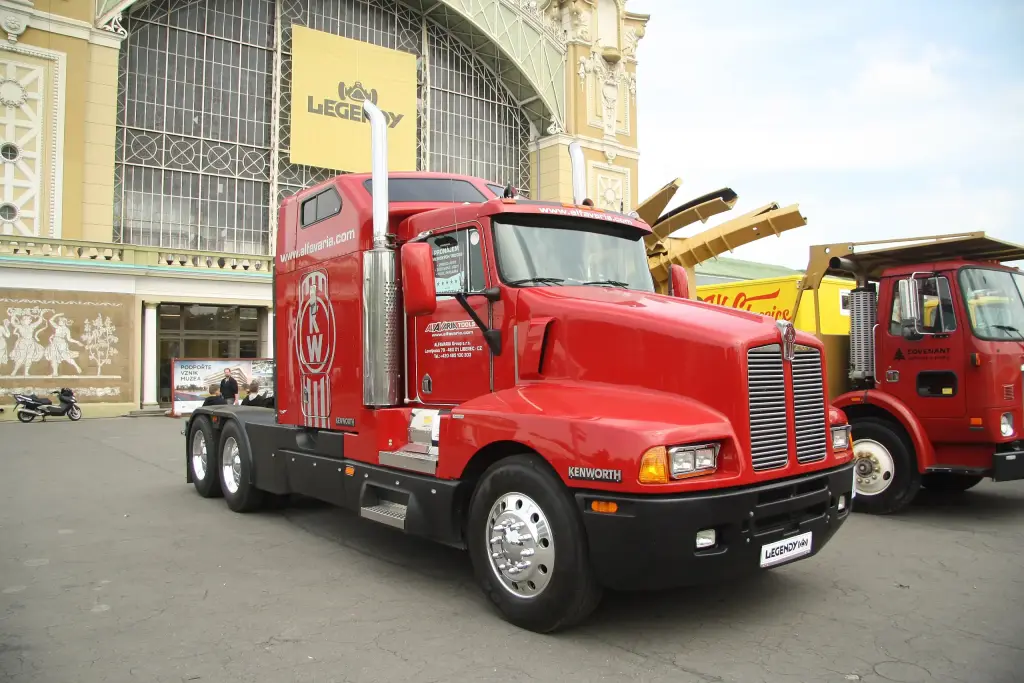
The shape was sorted in the wind tunnel of the University of Washington, and prototypes were built from W900 cabs and powertrains with a modified frame and front axle. Testing at the PACCAR Technical Center showed the T600 to be over 20% more fuel efficient than a W900 with a comparable powertrain; at highway speeds with the same payload it needed an engine of roughly 100 hp less. After the 1985 unveiling at a dealer meeting the reaction was divided, and drivers nicknamed the sloped hood the “Anteater”, but by the end of 1985 the T600 alone accounted for 40% of Kenworth semitractor sales.
The mechanical layout was as important as the shape. The T600 had the first set-back front axle on a Kenworth conventional, which cut the turning radius by nearly 25% and allowed longer front springs for better weight distribution and ride. The lower hood line improved forward visibility, and the front fenders were integrated into the bumper and the fuel-tank skirts to reduce drag. The T600A of 1990 brought integrated mirrors, a twin-segment grille, curved windscreens, the Aerodyne II sleeper and an optional digital dashboard developed with Boeing. The T600B of late 1994 introduced the Aerocab sleeper, a raised cab roof and fender turn-signal repeaters; in 1997 the hood became a three-piece design, and after the T2000 arrived the T600B was renamed simply T600. For 2008 the line was replaced by the T660, which kept the cab but redesigned the hood and lower bodywork.
Design and features
- Purpose-built aerodynamics: the first American semitractor designed around drag and fuel economy from the start.
- Set-back front axle: a first for a Kenworth conventional, with a turning circle nearly 25% smaller.
- Over 20% less fuel: measured against a W900 with a comparable powertrain.
- Integrated lower body: fenders blended into the bumper and fuel-tank skirts.
- Successive sleepers: Aerodyne II on the T600A, then the fully open Aerocab on the T600B.
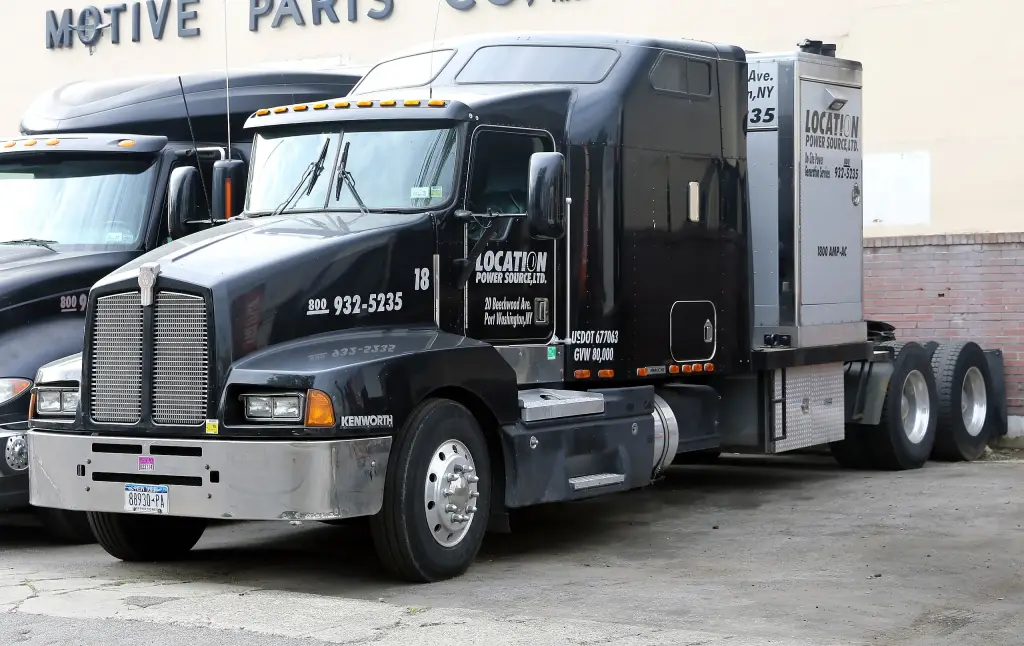
Kenworth T600 versions
- T600 (1984–1990): the original aerodynamic tractor.
- T600A (1990–1994): integrated mirrors, twin-segment grille, curved glass, Aerodyne II sleeper.
- T600B (1995–2007): Aerocab sleeper, raised roof, fender repeaters, three-piece hood from 1997.
- T604: the Australian member of the T600 series.
- T660 (2008–2017): the replacement, with redesigned hood and lower bodywork.
The T600 was the aerodynamic alternative to the W900, and it was developed into the T800 and the shorter T400. Its successor was the T660. More trucks are in the Kenworth collection.
Video: 2007 Kenworth T600
Video by Michael Maldonado on YouTube.
Sources
- Kenworth T600, English Wikipedia: development, wind tunnel, fuel saving, T600A and T600B, end of production
- Kenworth T600, Russian Wikipedia: the same history in Russian, used to check the figures