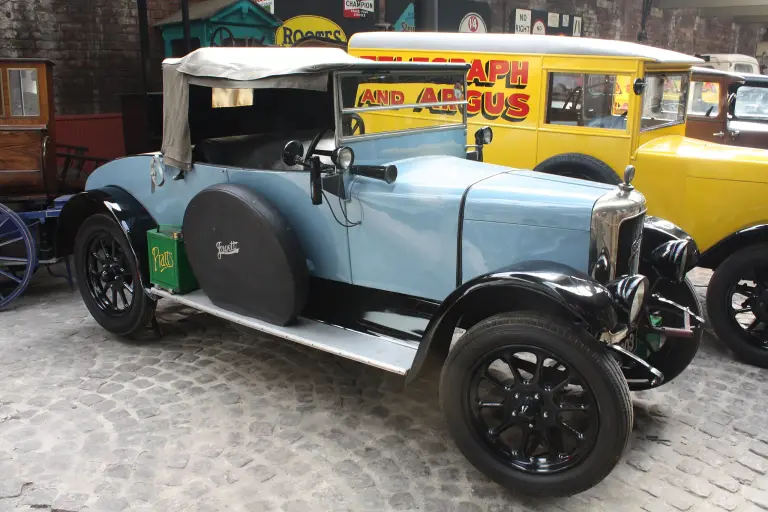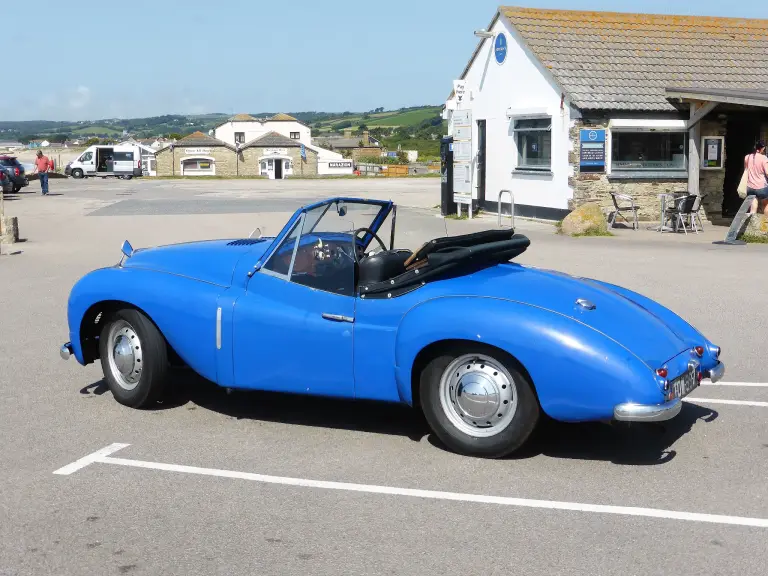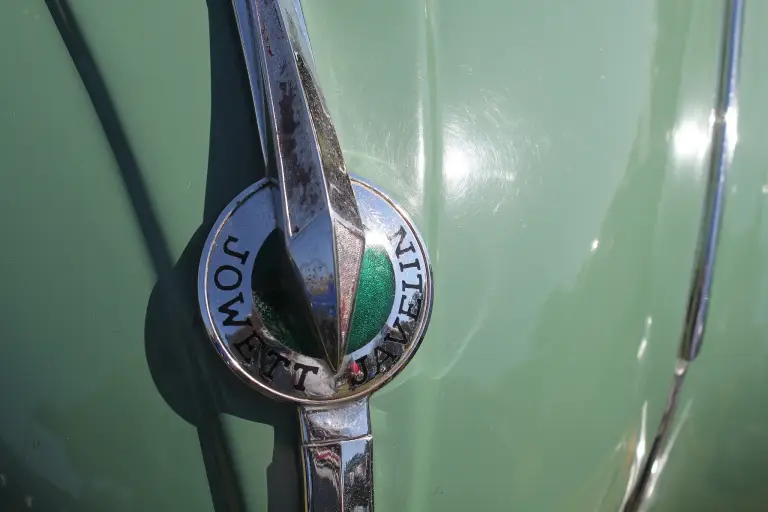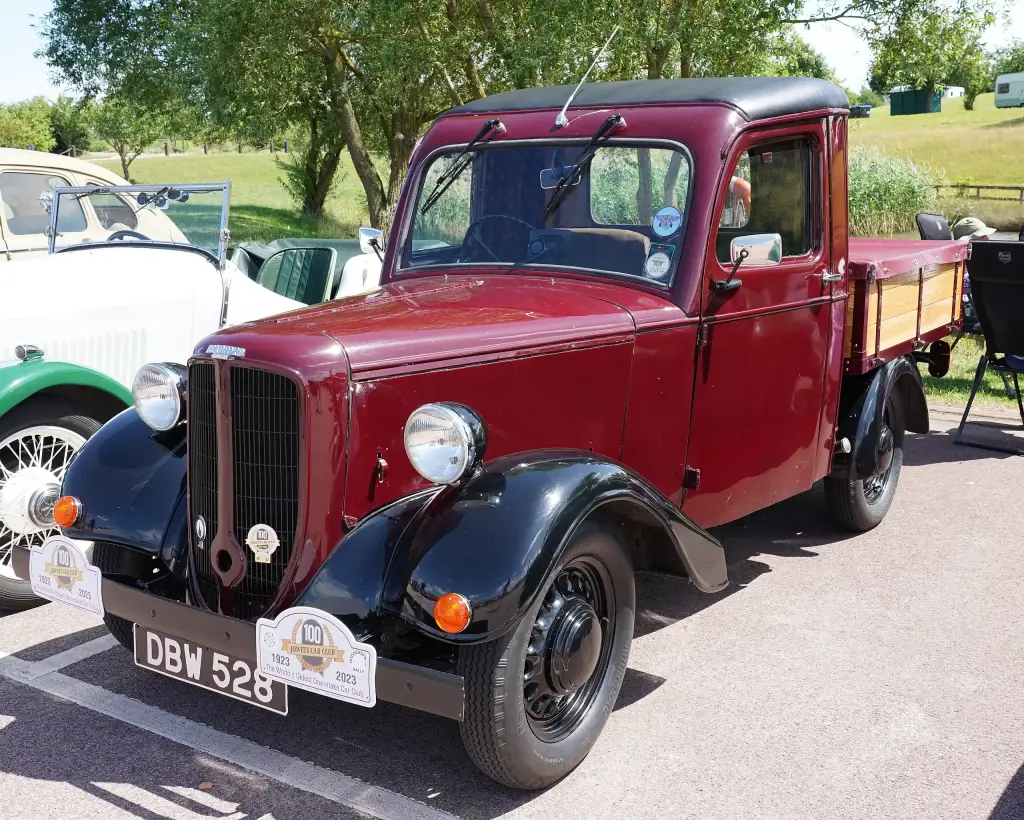
The Jowett Bradford was a light van that Jowett put back into production in 1946, before its new post-war saloon was ready. Based on the pre-war Jowett Eight, it was basic but economical, and it came as a van, a Utility estate and a light lorry; it stayed in production until 1953 and outlived the cars in commercial form.
Jowett Bradford at a glance
| Maker | Jowett Cars Ltd, Idle, Bradford |
|---|---|
| Production | 1946–1953 (estate from 1947) |
| Based on | the pre-war Jowett Eight |
| Engine | flat twin, front-mounted |
| Power | 19 bhp; 25 bhp from 1950 |
| Gearbox | three-speed, non-synchromesh; synchromesh on top from 1950 |
| Brakes | 10 in drums, mechanical Girling |
| Suspension | half-elliptic leaf springs, beam axles |
| Top speed | 53 mph after the 1950 update; 53.4 mph on a 1952 test |
| Fuel consumption | 34.5 mpg (imperial) on test |
| Test car price | £740 including taxes |
History of the Jowett Bradford
### Back to work
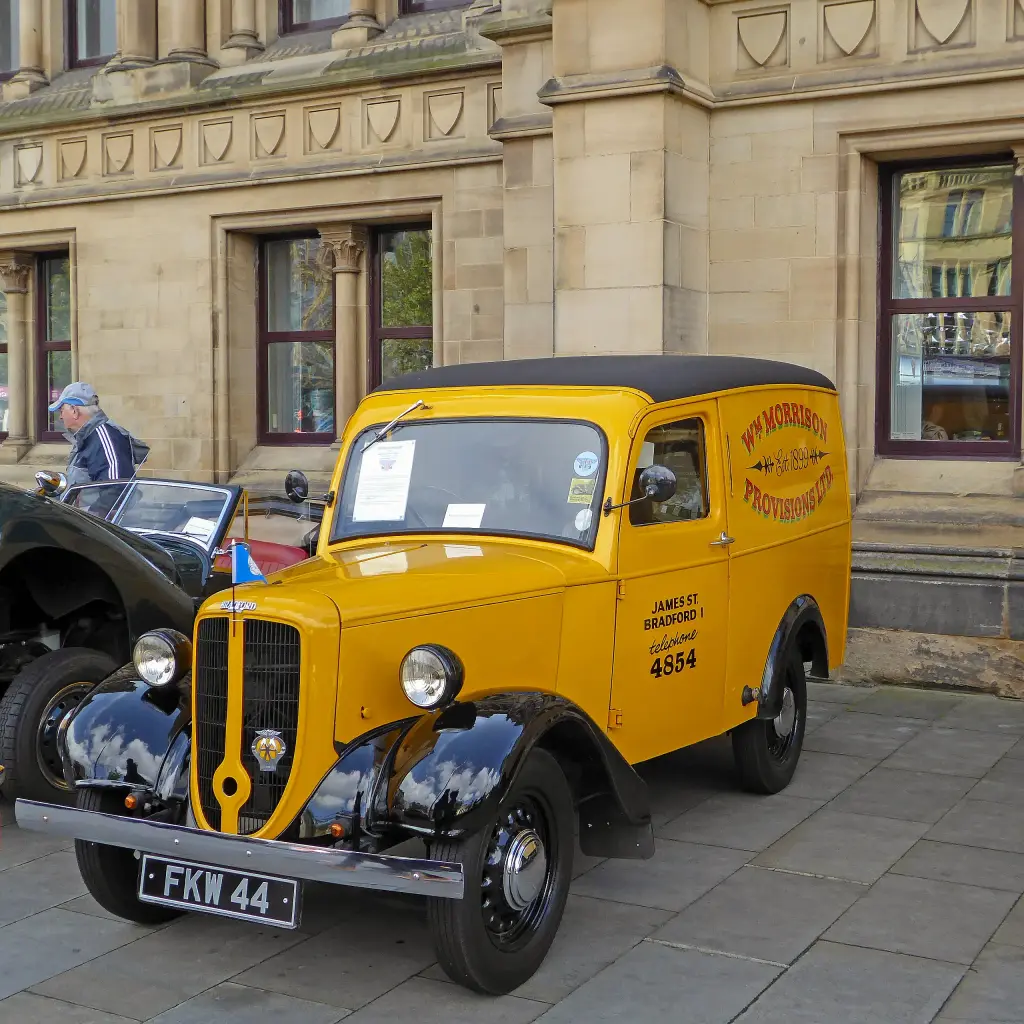
The Bradford was the first Jowett to be reintroduced after the Second World War. It was built on the chassis of the pre-war Jowett Eight and was deliberately simple: the post-war market wanted economy and availability more than novelty, and the little van could be made while the new Javelin was still being developed.
### Chassis and engine
The chassis had half-elliptic leaf springs front and rear with beam axles. The front-mounted flat twin produced 19 bhp and drove the rear wheels through a three-speed non-synchromesh gearbox, and the 10-inch drum brakes were worked mechanically by a Girling system. In 1950 the engine was updated to 25 bhp and synchromesh was fitted to top gear, which raised the top speed to 53 mph.
### Bodies
At first only a 10 cwt van was made. In 1947 it was joined by the Utility estate, little more than the van with side windows and rear seats. By 1951 the Utility came in two forms, Utility and Utility De Luxe, the latter with better trim, a rear bumper and side footsteps. Both were also sold as a four-light van — windows but no rear seats — to avoid the purchase tax on private cars. A light lorry was built too, effectively an early pickup.
### Coachbuilders and the end
Driveaway-chassis and cab-chassis versions were supplied to outside coachbuilders and sold in large numbers at home and abroad. A saloon and a pickup with inlet-over-exhaust cylinder heads were being developed when Jowett stopped making cars and vans. The flat twin continued in 1005 cc form in the Bradford and Utility until commercial vehicle production ended in 1954.
Design and features
- Flat-twin economy: 34.5 mpg on The Motor’s 1952 test, with a top speed of just over 53 mph.
- Simple chassis: leaf springs and beam axles, mechanical brakes and a three-speed gearbox.
- Tax-saving four-light van: windows without rear seats avoided purchase tax on private cars.
- Coachbuilt options: driveaway and cab-chassis versions for outside bodybuilders.
Jowett Bradford versions
- 10 cwt van (1946): the original closed van.
- Utility estate (1947): side windows and rear seats added to the van.
- Utility De Luxe (1951): better trim, rear bumper and side footsteps.
- Four-light van: glazed but seatless, for tax reasons.
- Light lorry: open-backed commercial version.
- Chassis for coachbuilders: driveaway and cab-chassis forms.
The Bradford’s flat twin came from the pre-war Jowett Seven, and it was sold alongside the Jowett Javelin and Jowett Jupiter. More cars are in the Jowett collection.
Video: Starting a Jowett Bradford
Video on YouTube.
Sources
- Jowett Bradford, English Wikipedia: design, bodies, performance, development