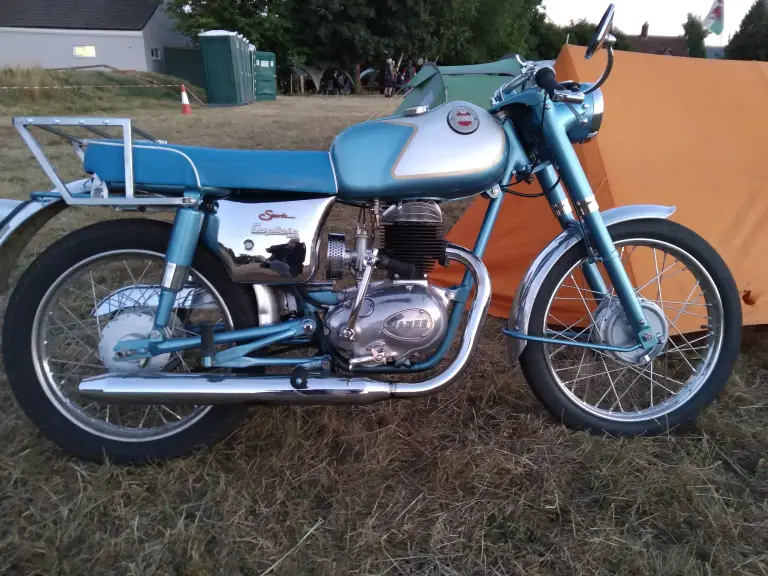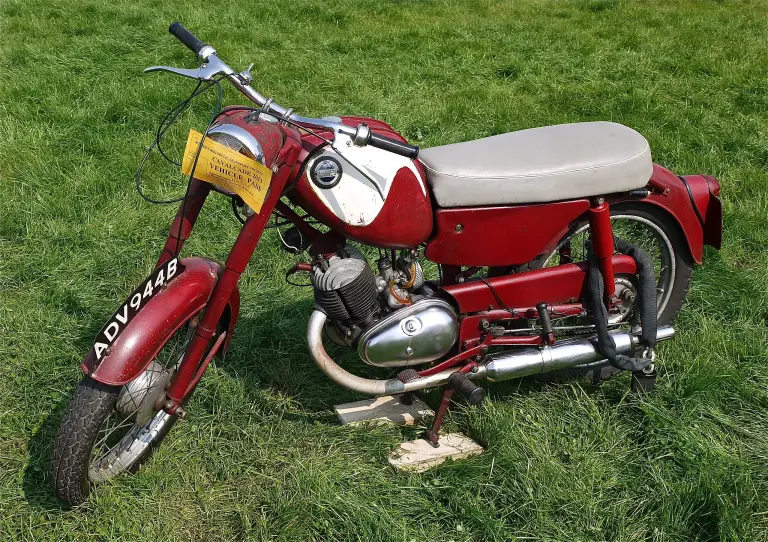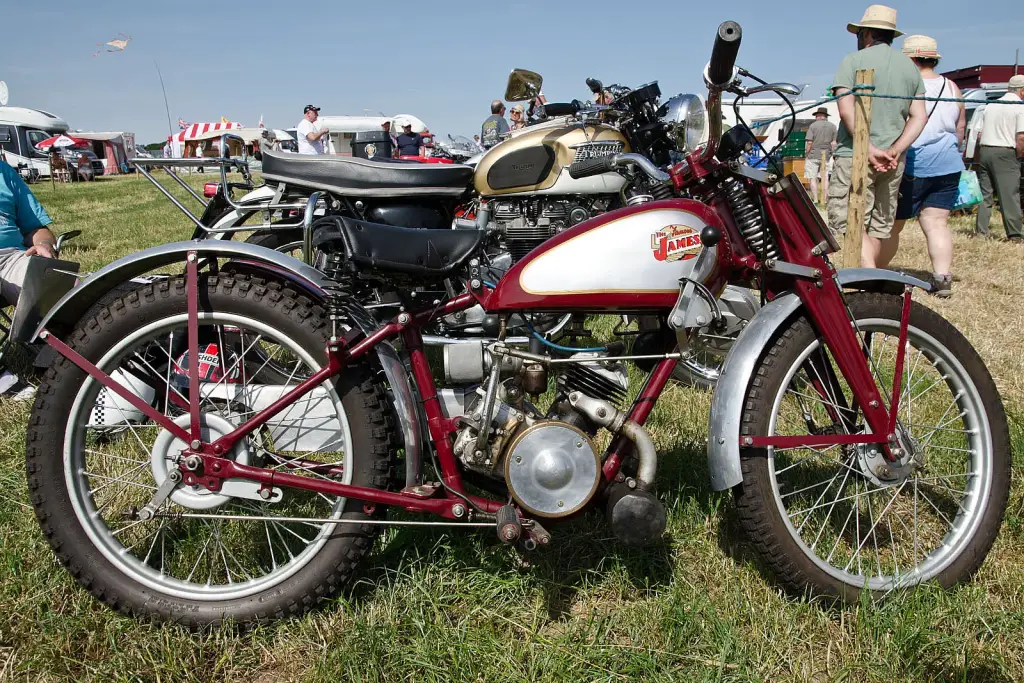
The ML was James’s 125 cc lightweight of the Second World War, known in service as the Military Lightweight. It was built for the British forces together with the smaller 98 cc Junior, and after 1945 the two models carried the James range back into civilian production.
James ML at a glance
| Maker | James Cycle Co Ltd, Greet, Birmingham |
|---|---|
| Production | 1945–1948 |
| Class | 125 cc military lightweight |
| Built for | the British Army, as the Military Lightweight |
| Stablemate | 98 cc Junior |
| Engines | Villiers two-stroke, as on most James lightweights |
| Wartime use | small, light machines, also used in the Normandy landings |
| Post-war role | one of the two models that restarted production in 1946 |
| Company owner from 1951 | Associated Motor Cycles |
| Company closed | 1966 |
There is no separate Wikipedia page for the ML; the article is based on the James Cycle Co pages in English and German and on the English list of James motorcycles.
History of the James ML
A Birmingham bicycle maker
Harry James set up his cycle business in Birmingham — the English Wikipedia dates the founding to 1884, the German article to 1880 — and motorcycles followed in 1902 under Fred Kimberley. The firm moved to Greet and grew into one of the Midlands makers that supplied Britain with light motorcycles. From the late 1920s it stopped designing its own two-strokes and fitted Villiers engines instead, keeping its own engines only for a short revival of a 150 cc two-stroke in 1932. By the 1930s the range had settled on small machines of 98 to 250 cc.
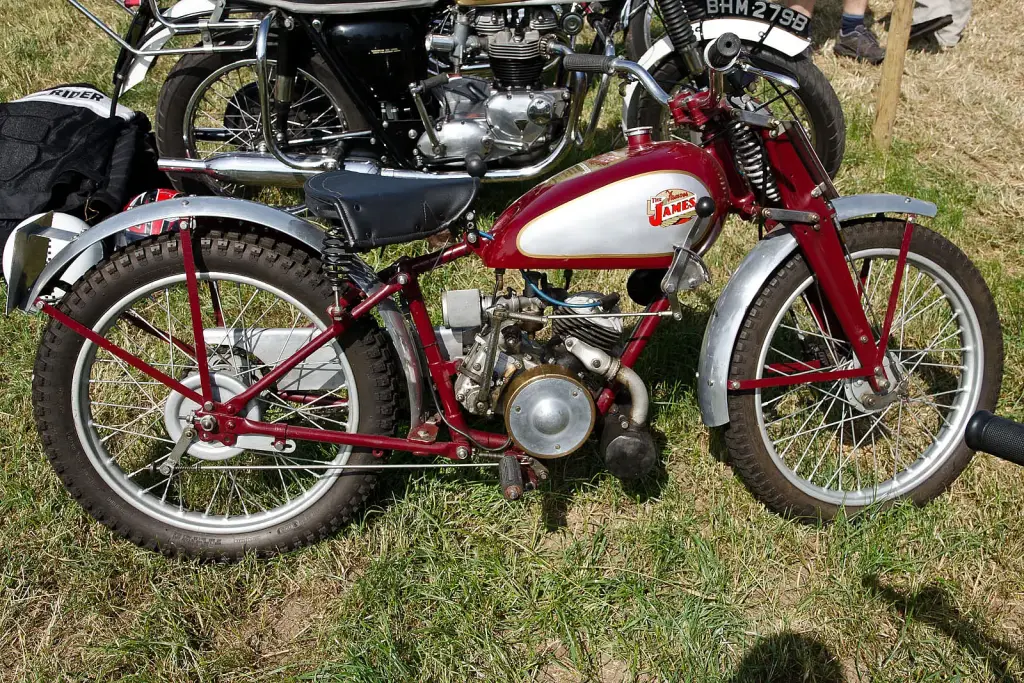
The Military Lightweight
In the Second World War James supplied the British military with two small machines, the 125 cc ML and the 98 cc Junior. Both were light enough to be handled easily and were used in the Normandy landings, where despatch riders needed motorcycles that could be moved quickly from landing craft. The ML name stood for Military Lightweight, and the model stayed in the catalogue after the war as a civilian lightweight.
After 1945
With the return of peace in 1945 James restarted production with the same two models, the ML and the Junior, and by 1946 both were being built again for civilian customers. The ML was listed as a 125 cc machine from 1945 to 1948, when the 125 cc Cadet with its J5 and J6 versions took over the bottom of the range. In 1951 the company was taken over by Associated Motor Cycles, which continued the James name until 1966, when the marque was closed down with the rest of AMC’s lightweight programme.
Design and features
- Military origin: designed as the Military Lightweight for the British Army in the Second World War.
- 125 cc Villiers two-stroke: the engine supply that James relied on for its light models.
- Light and simple: a small machine suited to despatch work and to riders moving between landing craft and roads.
- Post-war restart: with the 98 cc Junior it relaunched the James range in 1946.
James ML versions
- ML, military specification: the wartime Military Lightweight supplied to the British forces.
- ML, civilian version: the same 125 cc model offered from 1945 to 1948.
- Junior 98 cc: the smaller stablemate built alongside the ML.
- Trials conversions: ML machines later prepared for trials competitions.
The ML shared the showroom with the James Cadet, which replaced it at 125 cc, and with the bigger James Captain. More lightweights are in the James collection.
Video: 1945 James ML first run
Video on YouTube.
Sources
- James Cycle Co, English Wikipedia: company history, engines, wartime models
- List of James motorcycles, English Wikipedia: 125 cc class, ML production years
- James Cycle Company, German Wikipedia: wartime supply, Normandy, post-war restart