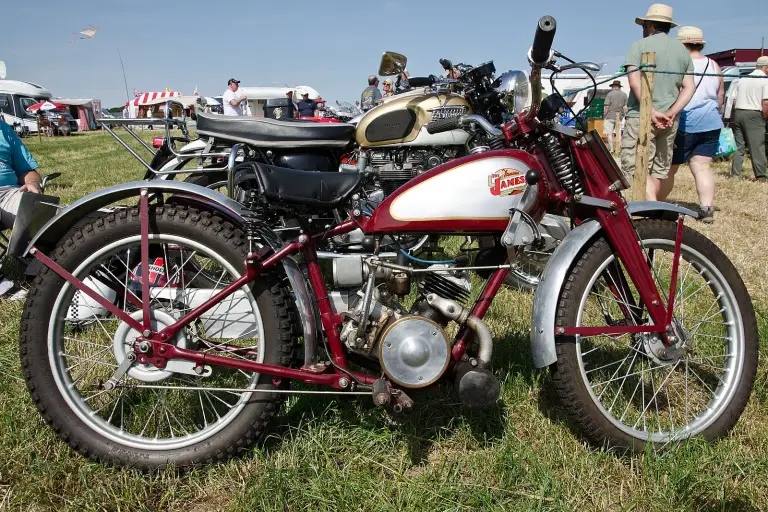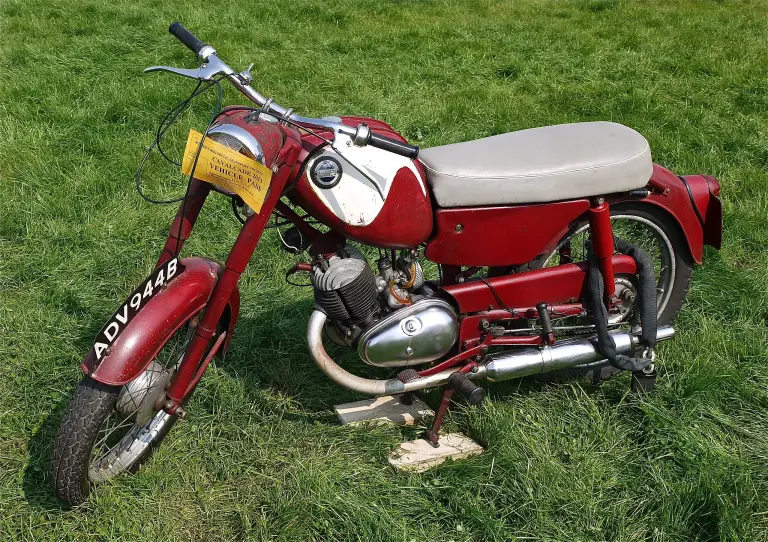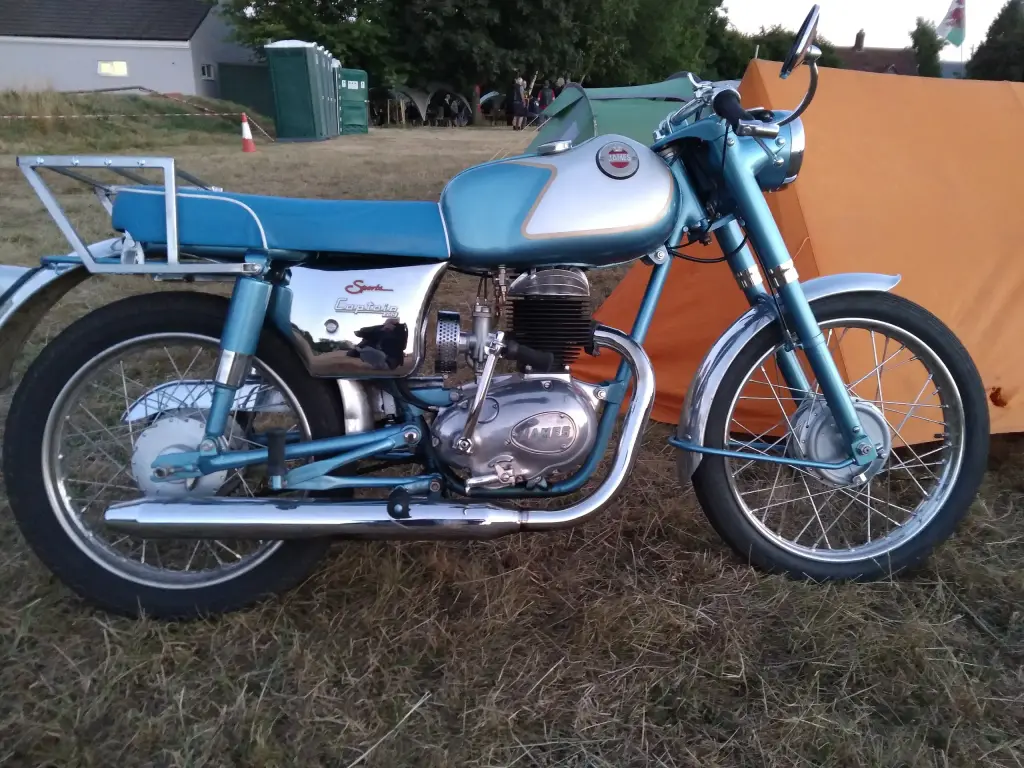
The Captain was the big lightweight in James’s post-war range: a 200 cc machine that grew from a rigid frame and a plunger-sprung J8 Deluxe into the K7, the L20 and the Sports Captain L20S. It was one of several Captains the Birmingham firm built, and it stayed close to the top of a catalogue otherwise made up of 98, 125 and 150 cc models.
James Captain at a glance
| Maker | James Cycle Co Ltd, Greet, Birmingham |
|---|---|
| Class | 200 cc light motorcycle |
| Versions | rigid-frame, J8 Deluxe “Plunger”, K7, L20, Sports Captain L20S |
| 1956 range | Captain 200 K7, Cotswold 200 K7C, Commando 200 K7T |
| Engine in 1956 | 197 cc, single cylinder |
| Engine make | Villiers two-stroke |
| Place in the range | the largest of the road lightweights below 250 cc |
| Part of AMC from | 1951 |
| Company closed | 1966 |
There is no separate Wikipedia page for the Captain; the article is based on the James Cycle Co pages in English and German and on the English list of James motorcycles.
History of the James Captain
James before the Captain
James of Greet had built bicycles since the 1880s and motorcycles since 1902, but the firm made its name in the 1930s with small machines of 98 to 250 cc on Villiers two-stroke engines. After the Second World War it restarted with the 125 cc ML and the 98 cc Junior, and by 1951 it could offer a 200 cc model again. That year Associated Motor Cycles took over the company, keeping James as one of its lightweight marques.
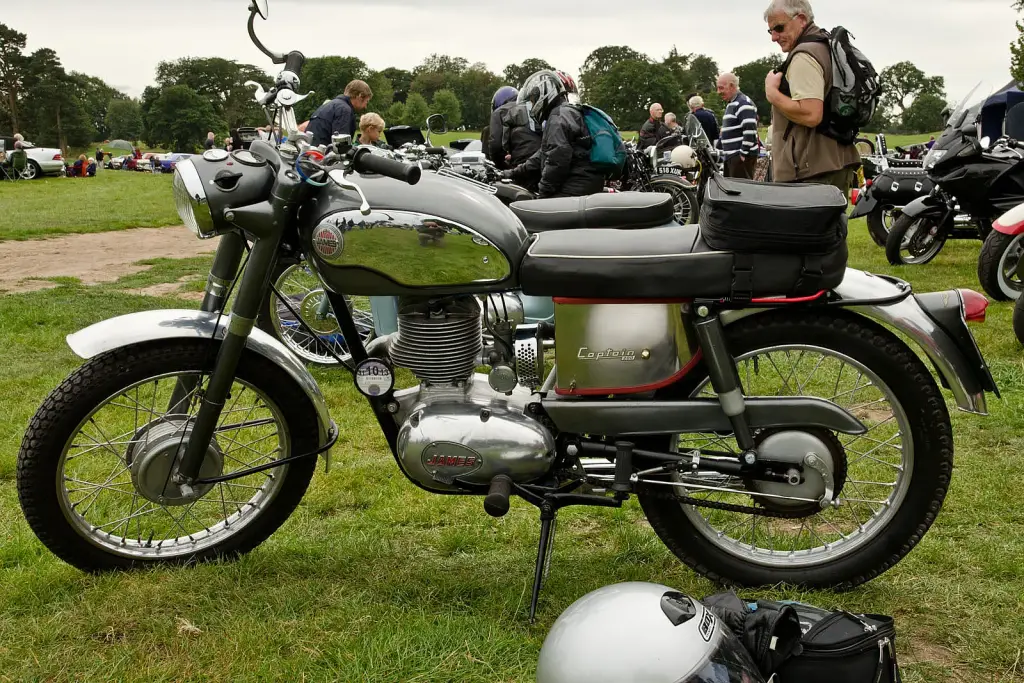
The Captain line
The Captain was the 200 cc model. The list of James motorcycles gives its versions as the rigid-frame Captain, the J8 Deluxe with plunger rear suspension, the K7, the L20 and the Sports Captain L20S. The line spanned the 1950s and the early 1960s, changing from a rigid frame to sprung rear ends and from sober touring trim to a sports version. The 1956 catalogue shows how James grouped its models: the Captain 200 K7 was joined by the Cotswold 200 K7C and the Commando 200 K7T, all three with 197 cc engines.
A crowded 200 cc class
The Captain sat between the smaller Cadet and the 225 cc Colonel and the 250 cc twins, and James built several Captains rather than one, each with its own frame and equipment. The 197 cc figure of 1956 shows the class being pushed towards the top of the 200 cc bracket, a common move among British makers who wanted more power without leaving the cheap tax and insurance class. The same years brought the AMC merger with Francis-Barnett in 1957 and, later, a short-lived joint venture with Suzuki housed in the old James works.
The end of the marque
The Captain disappeared with the rest of the big James lightweights as AMC concentrated on smaller machines and then ran into trouble. A new Cadet with an open tubular frame was the last model to carry the name, and in 1966 AMC went into receivership, ending James production after more than sixty years of motorcycles.
Design and features
- 200 cc class: the largest of the James road lightweights below the 250 cc twins.
- Five versions: rigid frame, J8 Deluxe plunger, K7, L20 and Sports Captain L20S.
- 197 cc engine in 1956: the Captain 200 K7 shared its capacity with the Cotswold K7C and Commando K7T.
- Villiers two-stroke: the engine supply used across the James range.
James Captain versions
- Captain, rigid frame: the original rigid-rear-end version.
- Captain J8 Deluxe “Plunger”: plunger rear suspension for more comfort.
- Captain K7: the 1956 model, listed as the Captain 200 with a 197 cc engine.
- Captain L20: the later 200 cc version.
- Sports Captain L20S: the sporting variant of the L20.
- Cotswold 200 K7C and Commando 200 K7T: stablemates sharing the 197 cc engine.
The Captain was sold alongside the smaller James Cadet and the wartime-derived James ML. More lightweights are in the James collection.
Video: james captain 197cc
Video on YouTube.
Sources
- List of James motorcycles, English Wikipedia: Captain versions and designations
- James Cycle Co, English Wikipedia: 1956 range, 197 cc engines, company history
- James Cycle Company, German Wikipedia: post-war 200 cc model, AMC period, end of the marque