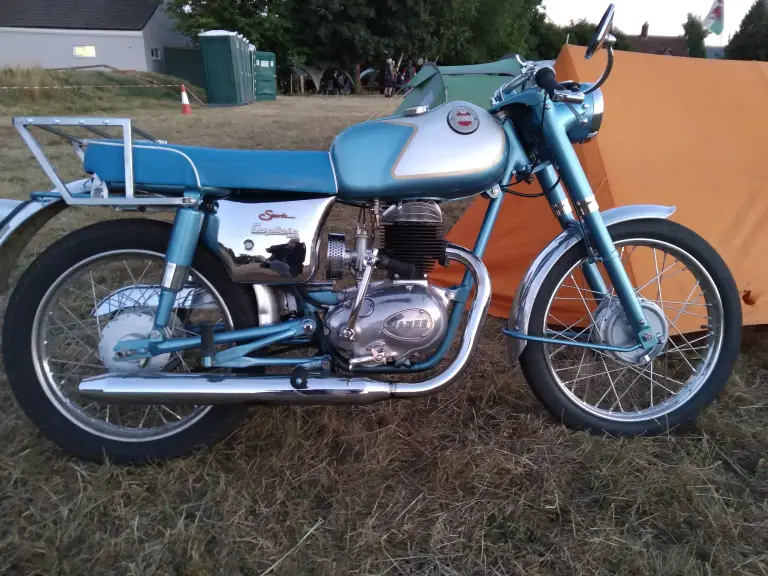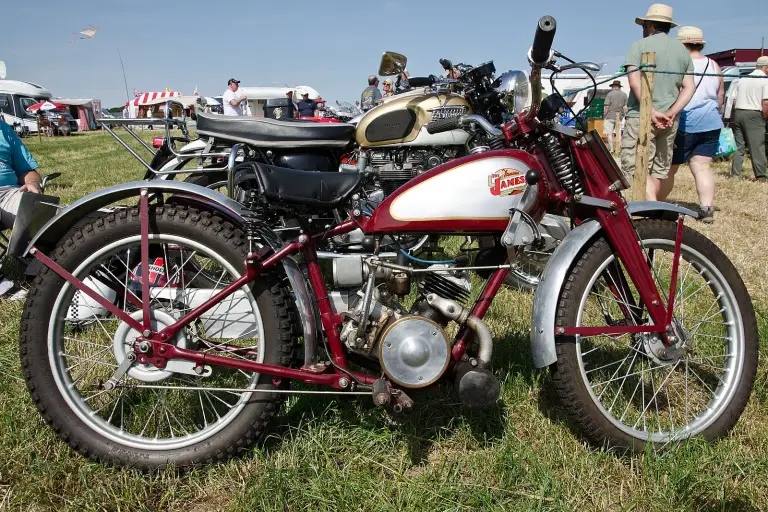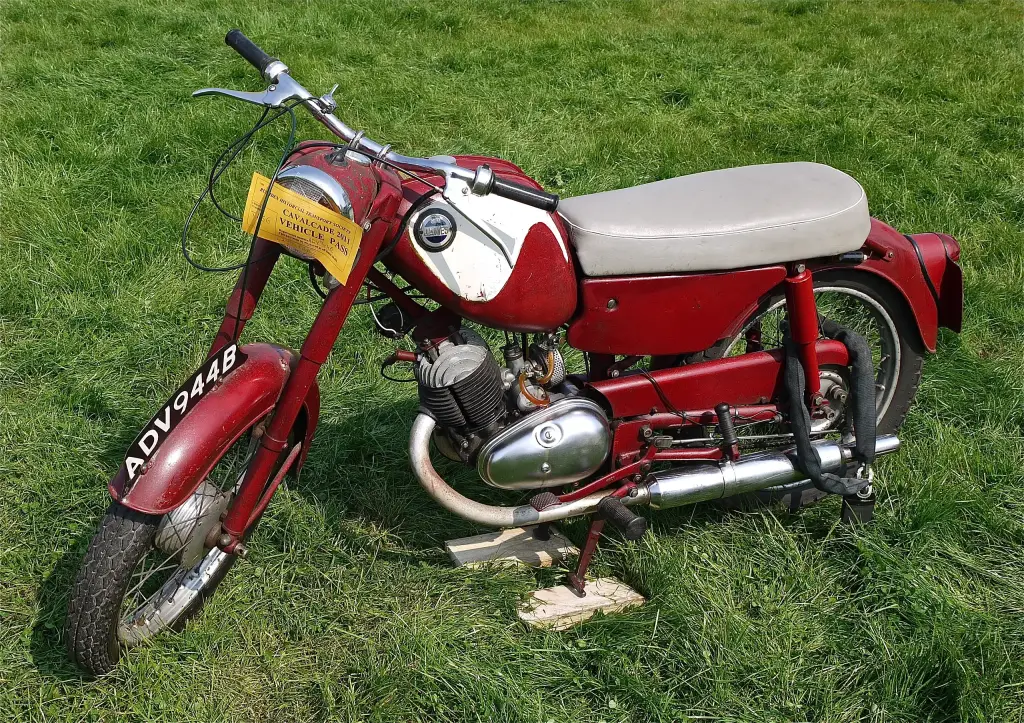
The Cadet was the most important of the small James motorcycles. It began as a 125 cc machine with rigid frame and the J5 and J6 designations, grew into the 150 cc J15, L15, Flying Cadet and M-series, and outlived the rest of the range: a new Cadet of the mid-1960s was the last model to be sold under the James name.
James Cadet at a glance
| Maker | James Cycle Co Ltd, Greet, Birmingham |
|---|---|
| First Cadet | 125 cc: rigid-frame, J5 and J6 |
| 150 cc Cadet | J15, L15, Flying Cadet L15a, M15, M16 |
| Engine | Villiers two-stroke |
| Position in the range | the most important James model |
| Part of AMC from | 1951 |
| Merged with Francis-Barnett | 1957 |
| Last version | mid-1960s Cadet with an open tubular frame |
| End of the marque | 1966 |
There is no separate Wikipedia page for the Cadet; the article is based on the James Cycle Co pages in English and German and on the English list of James motorcycles.
History of the James Cadet
The marque behind it
James had been building bicycles in Birmingham since the 1880s and motorcycles since 1902, and by the 1930s the firm concentrated on light machines of 98 to 250 cc with Villiers two-stroke engines. In 1932 James had briefly made its own 150 cc two-stroke, and that capacity class returned after the war as the heart of the range. Light James motorcycles were usually finished in the maroon colour that became a trademark of the make.
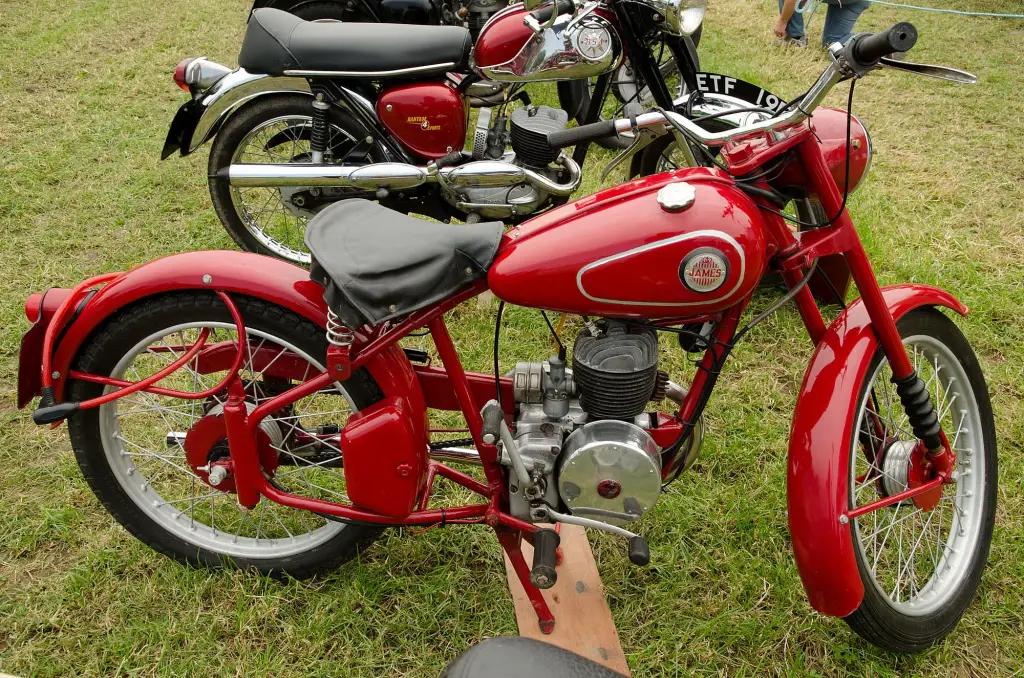
The 125 cc Cadet
The first Cadet appeared in the 125 cc class, listed with a rigid frame and the model codes J5 and J6. It followed the wartime ML of 1945–1948 and gave James a simple, cheap lightweight for riders stepping up from an autocycle. In 1951 the company was taken over by Associated Motor Cycles, which kept James as one of its lightweight marques and continued the Cadet alongside the Cavalier and the Commodore.
The 150 cc family
Most Cadets were 150 cc machines, listed as the J15, the L15, the Flying Cadet L15a and the Cadet M15 and M16. The German Wikipedia calls the Cadet with the 150 cc engine the most important model James built, and the family stayed in the catalogue through the 1950s and into the 1960s. Under AMC the James lightweights used Villiers two-stroke engines of 150, 175, 200 and 250 cc, and a 150 cc scooter was added to the range, though it came too late for the British market, which Vespa and Lambretta had already divided between them.
The last James
In 1957 James was merged with Francis-Barnett, and AMC even formed a short-lived joint venture with Suzuki, Suzuki (GB) Ltd, housed in the former James buildings. In the mid-1960s a new Cadet appeared with an open tubular frame. It was the last model to carry the James name: in 1966 AMC went into receivership and the marque disappeared with the rest of the group’s lightweights.
Design and features
- Two capacity classes: a 125 cc Cadet with J5 and J6 versions, and a 150 cc family with J15, L15, Flying Cadet and M-series models.
- Villiers power: the two-stroke engines that James fitted to its light motorcycles after abandoning its own designs.
- The maroon finish: the characteristic James colour of the period.
- Long life: from the early 1950s to a final open-frame Cadet in the mid-1960s, the longest-running James lightweight.
James Cadet versions
- Cadet 125, rigid frame: the original lightweight.
- Cadet 125 J5 and J6: the two 125 cc designations.
- Cadet 150 J15: the first of the 150 cc models.
- Cadet 150 L15 and Flying Cadet L15a: the L-series 150 cc versions.
- Cadet M15 and M16: the final 150 cc designations.
- Mid-1960s Cadet: open tubular frame, the last model sold as a James.
The Cadet replaced the James ML at 125 cc and was sold next to the James Captain. More lightweights are in the James collection.
Sources
- List of James motorcycles, English Wikipedia: Cadet versions and designations
- James Cycle Co, English Wikipedia: company history, engines, maroon finish
- James Cycle Company, German Wikipedia: importance of the 150 cc Cadet, AMC period, last Cadet