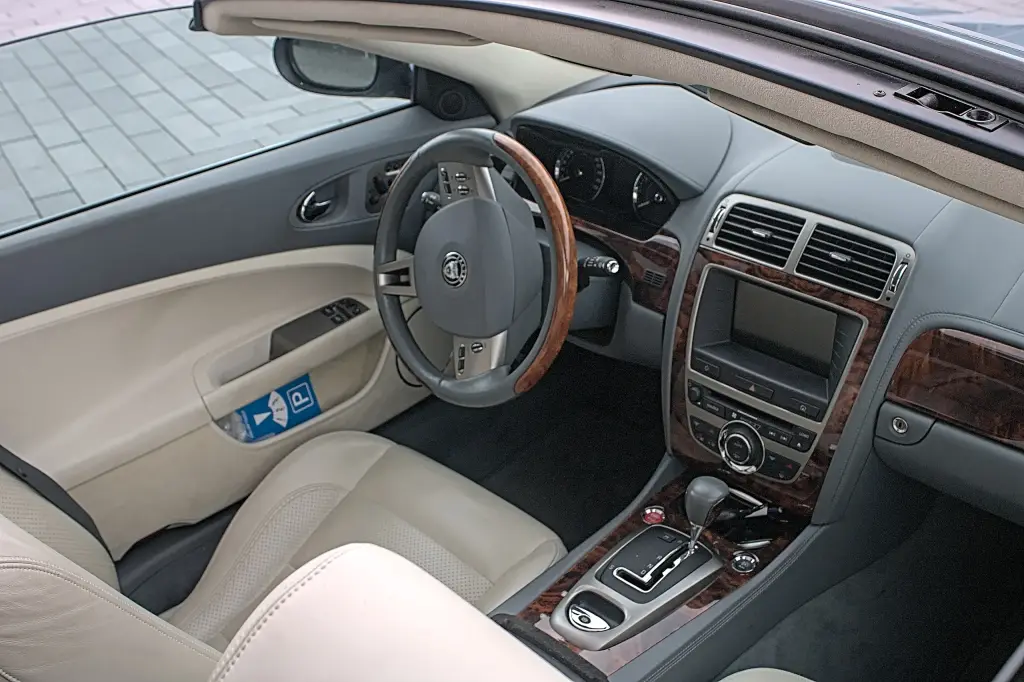
The Jaguar XK is a two-door 2+2 grand tourer made by Jaguar Cars from 1996 to 2012 and by Jaguar Land Rover from 2013 to 2014 in coupé and convertible bodies across two generations. The second generation, launched in 2006 for the 2007 model year, is noted for its aluminium monocoque chassis and construction.
Jaguar XK at a glance
| Generation | second, X150 |
|---|---|
| Production | 2006–2014 |
| Shown | Frankfurt Motor Show, 2005 |
| Designer | Ian Callum |
| Chassis | bonded and riveted aluminium, shared with the XJ |
| Bodies | hatchback coupé and convertible |
| Engines | 4.2-litre V8, 5.0-litre V8 from 2009 |
| Top speed | 254 km/h standard, 280 km/h XKR |
| XKR-S | 300 km/h and 0–60 mph in 4.4 seconds |
| End of production | July 2014 |
History of the Jaguar XK
A lighter XK
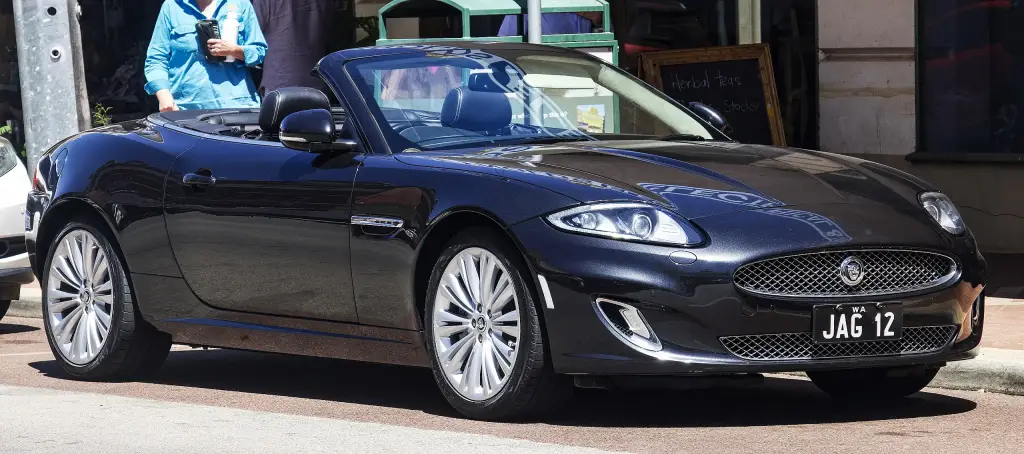
The second-generation XK, coded X150, debuted at the 2005 Frankfurt Motor Show styled by Jaguar’s chief designer Ian Callum, and its grille was designed to recall the 1961 E-Type. The car evolved from the Advanced Lightweight Coupé shown at the 2005 North American International Auto Show. It used a bonded and riveted aluminium chassis and body panels shared with the XJ, both firsts for a Jaguar grand tourer. Compared with the XK8, the XKR was 61 mm wider and 162.6 mm longer, yet 91 kg lighter, which improved both performance and fuel consumption. Unlike the earlier car, the X150 had no wood trim as standard and used steering-column-mounted shift paddles.
The range
The standard XK was limited to 254 km/h, while the supercharged XKR introduced in 2007 was limited to 280 km/h. A facelift in 2009 brought minor changes to the lights and bumpers and a new 5.0-litre V8 for both the naturally aspirated XK and the supercharged XKR, along with the XF-style rotary gear selector and a new ZF automatic. A second, smaller facelift in 2011 with a new front bumper and lights was presented at the New York Auto Show. The XKR-S arrived at the 2012 Geneva Motor Show with 40 hp more than the XKR, cutting 0–60 mph to 4.4 seconds and raising the top speed to 300 km/h; a convertible version followed in 2012.
Racing and the end
The Jaguar XKR GT2 was unveiled at the 2009 Petit Le Mans, built by RSR Racing to Group GT2 rules with the supercharged 5-litre V8 and much of the production aluminium frame, and it made its competition debut at Laguna Seca that year. Production of the XK ended in July 2014 without a replacement model: most of the tooling went to the XK-based F-Type, which shared the line with the XK from 2012 to 2014, though the F-Type is not a successor to the XK.
Design and features
- Aluminium chassis: bonded and riveted, shared with the XJ.
- Lighter than before: 91 kg less than the XK8 despite being larger.
- Ian Callum styling: a grille that recalls the E-Type.
- 5.0-litre V8: added across the range in the 2009 facelift.
- XKR-S: 300 km/h and 0–60 mph in 4.4 seconds.
Jaguar XK versions
- XK (2006 on): the naturally aspirated 4.2, then 5.0-litre V8.
- XKR (2007 on): supercharged version limited to 280 km/h.
- XKR-S (2012): 300 km/h and 4.4 seconds to 60 mph, also as a convertible.
- XKR GT2 (2009): the racing version built by RSR for the GT2 class.
The XK succeeded the Jaguar XK8 and shared its aluminium construction with the Jaguar XJ8. More cars are in the Jaguar collection.
Sources
- Jaguar XK, English Wikipedia: generations, chassis, range, motorsport