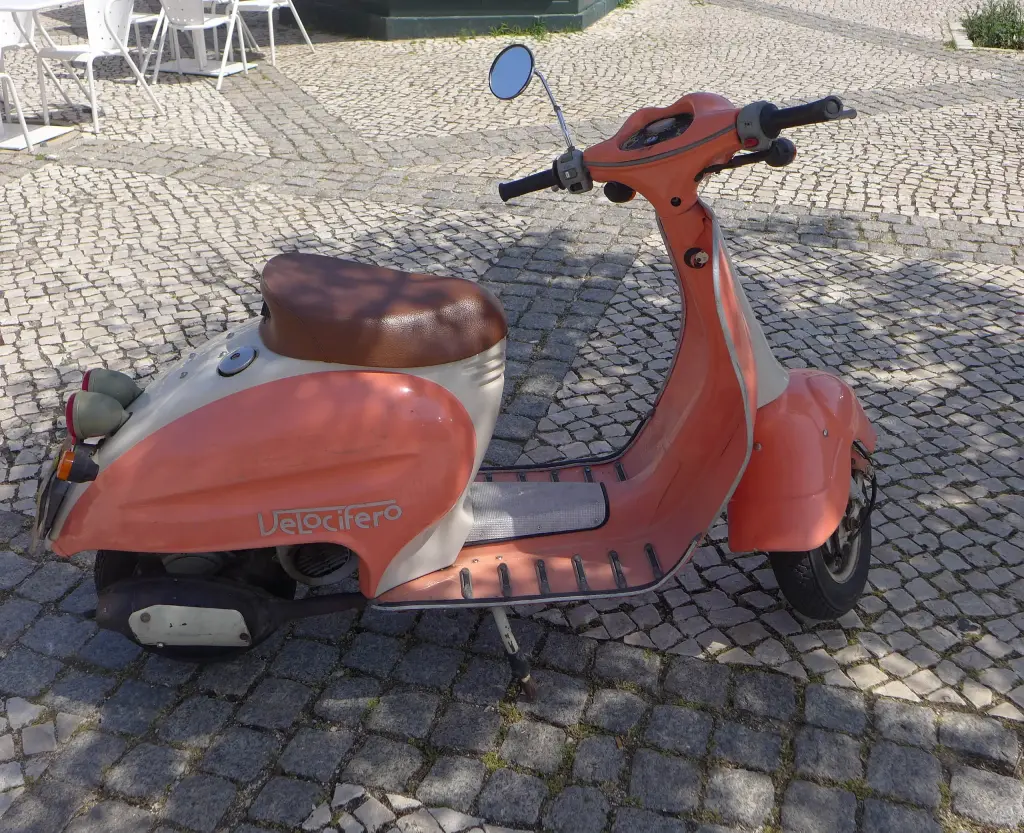
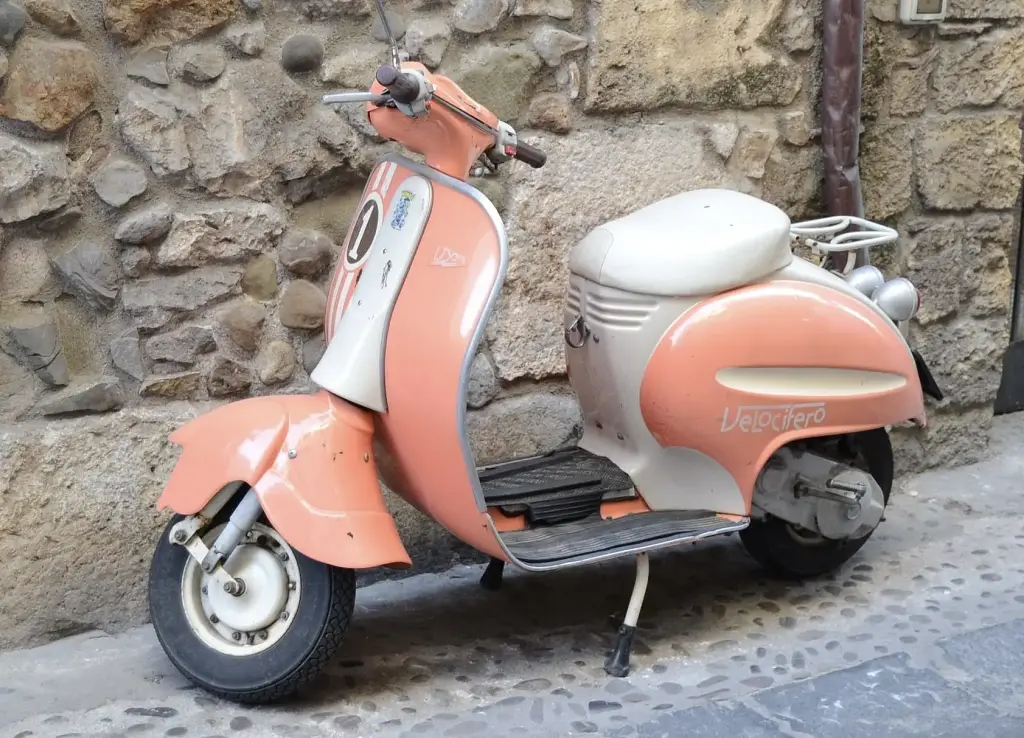
The Italjet Velocifero is a small scooter that Italjet sold from 1994 to 2000. It was styled after classic Vespa and Lambretta models, used a 50 cc two-stroke engine from Franco Morini and had 8-inch wheels and two headlights on the handlebar. An example was exhibited at the Museum of Modern Art in New York.
Italjet Velocifero at a glance
| Maker | Italjet, Italy |
|---|---|
| Production | 1994–2000 |
| Development | started in 1992 under the code “900” |
| Unveiled | Milan motorcycle show, 1993 |
| On sale in Italy | May 1994 |
| Price at launch | 3,750,000 lire, including a tool kit and a scooter cover |
| Engine | 50 cc two-stroke, Franco Morini |
| Transmission | automatic with variator |
| Wheels | 8-inch, 10-inch from 1996 |
| Brakes | drum front and rear |
| Front shield | made by Bajaj in India under Vespa licence |
| Replaced by | Italjet Jet Set, 2001 |
This page is based on the Italian Wikipedia article on the Velocifero, the only source available for the model (based on one source).
History of the Italjet Velocifero
Development
Work began in 1992 under the technical code “900”, with the aim of making a small scooter with retro lines inspired by the classic Vespa and Lambretta. The finished model was presented at the Milan motorcycle show in 1993 and went on sale in Italy in May 1994. Italjet supported the launch with a heavy advertising campaign on television and in the press; the price was 3,750,000 lire on the road, and it covered a tool kit and a scooter cover as well.
How it was built
The Velocifero used a 50 cc two-stroke engine from Franco Morini and an automatic transmission with a variator. Its wheels measured 8 inches and both brakes were drums. The front shield was produced by Bajaj in India, where the company built Vespa scooters under licence, so the panel was of Vespa origin, while the fork and the floor were designed specifically for this model. The most distinctive elements were the twin headlights on the handlebar and a very simple instrument panel, available with a faux burr-walnut background. Production started in the San Lazzaro di Savena works and moved in 1995 to the new factory at Roseto degli Abruzzi.
Updates and the end of production
For 1996 the scooter gained 10-inch wheels, which absorbed road surfaces better, and a two-up seat. Production ended in 2000; the Velocifero was replaced the following year by the Italjet Jet Set. The model was a particular success in the United States, and one example was put on show at the Museum of Modern Art in New York.
Design and features
- Retro styling: lines inspired by the classic Vespa and Lambretta, with an exposed front shield.
- Twin headlights: two lamps mounted on the handlebar, the scooter’s most recognisable detail.
- Franco Morini engine: a 50 cc two-stroke with an automatic variator transmission.
- Simple instruments: a minimal dashboard, optionally finished in faux burr walnut.
- Design recognition: an example was exhibited at the Museum of Modern Art in New York.
Italjet Velocifero versions
- Velocifero (1994): the launch version with 8-inch wheels, sold with a tool kit and a scooter cover.
- Velocifero (1996–2000): 10-inch wheels and a two-up seat.
- US-market examples: the scooter sold well in the United States, where one was shown at MoMA.
The Velocifero was replaced in Italjet’s range by the Jet Set, and it stood alongside the Dragster and the Torpedo in the 1990s. More machines are in the Italjet collection.
Video: Italjet Velocifero versus Vespa
Video on YouTube.
Sources
- Italjet Velocifero, Italian Wikipedia: development, price, construction, updates, MoMA