The Italjet Dragster is a scooter that the Italian manufacturer Italjet built from 1998 to 2003. Its trademark was an unconventional RAAD front suspension without forks, combined with a steel spaceframe — a layout that Alessandro and Leopoldo Tartarini patented in 1997. The scooter was sold with 50, 125 and 180 cc engines.
Italjet Dragster at a glance
| Maker | Italjet, Bologna, Italy |
|---|---|
| Production | 1998–2003 |
| Class | Scooter |
| Engines | 50, 125 and 180 cc |
| Front suspension | RAAD forkless double swingarm |
| Patent | 1997, Alessandro and Leopoldo Tartarini |
| Frame | Steel spaceframe of polygonal section |
| Tyres | 120/70–11 front, 130/70–12 rear |
| Wheelbase | 1,310 mm |
| 2007 models | 130/60–13 rear tyre |
| Revival | developed by Massimo Tartarini with Andrea Dovizioso |
History of the Italjet Dragster
A front end without forks
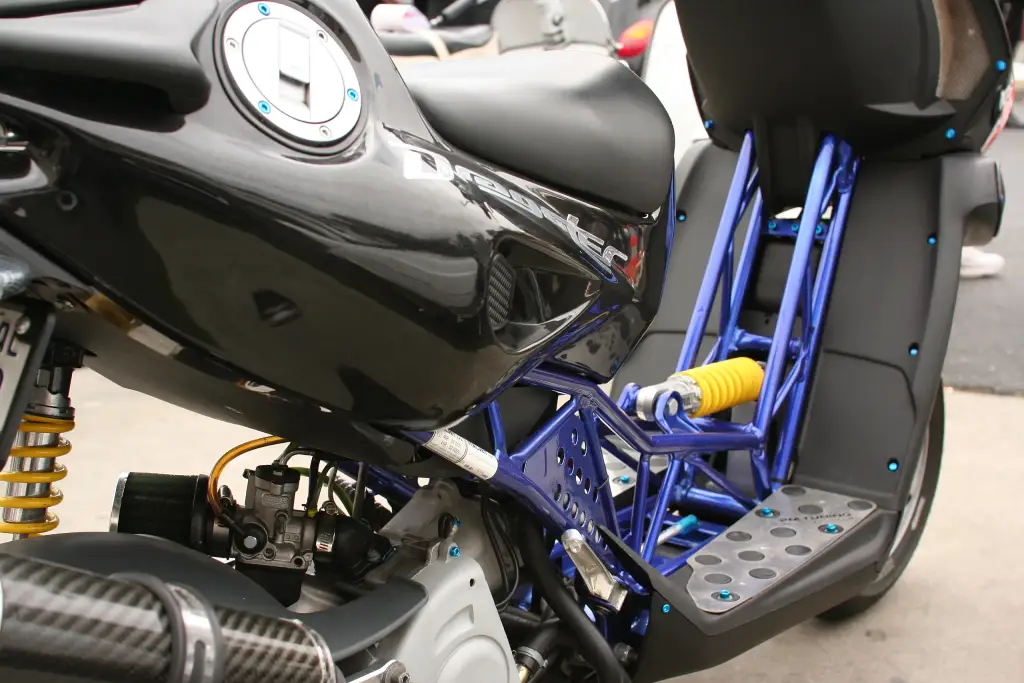
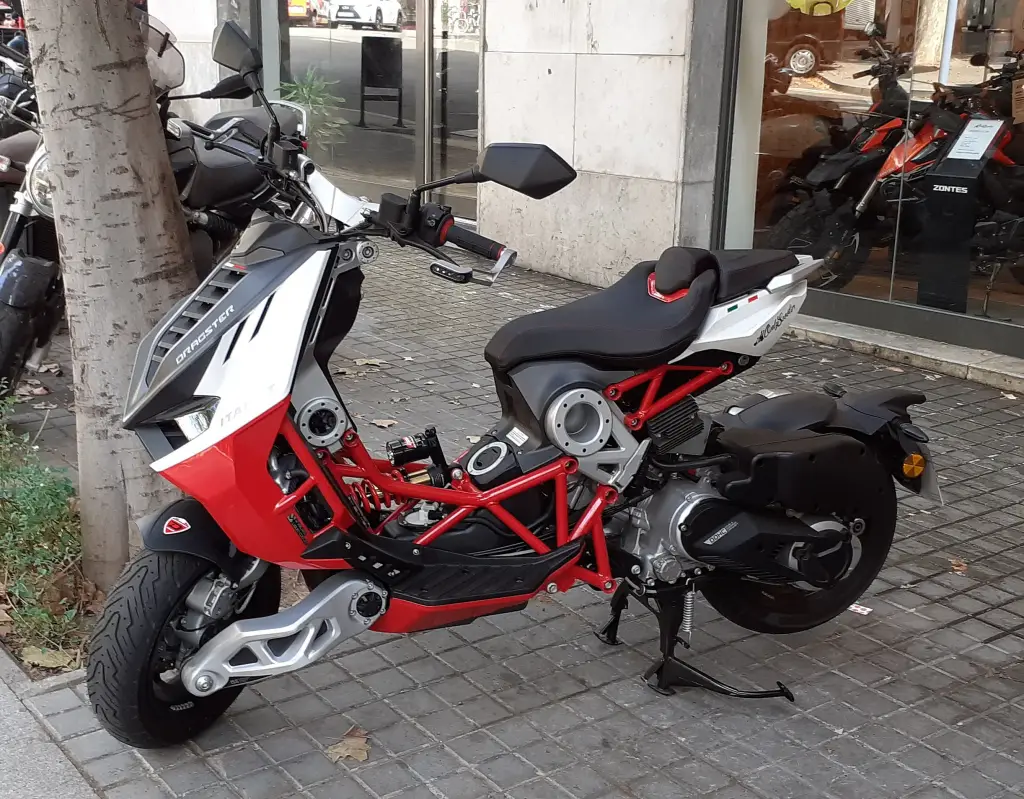
The Dragster carried no telescopic forks at the front. Instead it used the RAAD system, a front suspension with two swinging arms anchored to a spaceframe built as a reticular beam of polygonal section, which also carried the engine and the suspension components. A forkless front end was very unusual for a motorcycle or scooter, and the first machine to adopt a comparable solution was the Yamaha GTS 1000 of 1993, which may have inspired the Tartarini brothers. Together with the Italjet Formula, the Dragster was the only series-produced scooter with a forkless front suspension.
Production, 1998–2003
Italjet presented the Dragster in 180 cc form at the Intermot show in 1998 and then sold it as a 50, 125 and 180. The front wheel measured 120/70–11 and the rear 130/70–12, with a wheelbase of 1,310 mm. The spaceframe was designed to take more powerful engines than a conventional scooter frame, and the layout gave the machine its distinctive look, with the front wheel carried on an exposed arm.
Later versions and revival
The Dragster 50 was re-edited in 2007 alongside a Dragster 250, and the 2007 models used a 130/60–13 rear tyre. Italjet later developed a new Dragster under Massimo Tartarini, with the racing rider Andrea Dovizioso assisting in the project. Not every tester was convinced by the original: the forkless suspension was criticised for “non-harmonic and wobbly dynamics at lower speeds”, and some complained about the noise of the large water-cooled two-stroke engine, which was fitted with a catalytic converter.
Design and features
- RAAD front suspension: a double swingarm instead of telescopic forks, patented by Alessandro and Leopoldo Tartarini in 1997.
- Spaceframe: a reticular beam frame of polygonal section, stiff enough for larger engines.
- Distinctive stance: 11-inch front and 12-inch rear wheels on a 1,310 mm wheelbase, with the front arm left visible.
- Two-stroke power: the larger versions used a water-cooled two-stroke engine with a catalytic converter.
- Mixed reception: praised for its design, criticised for low-speed behaviour and engine noise.
Italjet Dragster versions
- Dragster 50: the smallest version, re-edited in 2007.
- Dragster 125: mid-range model of the original range.
- Dragster 180: the version shown first, at Intermot in 1998.
- Dragster 250: added in 2007 together with the re-edited 50.
- New Dragster: the later revival developed by Massimo Tartarini with Andrea Dovizioso.
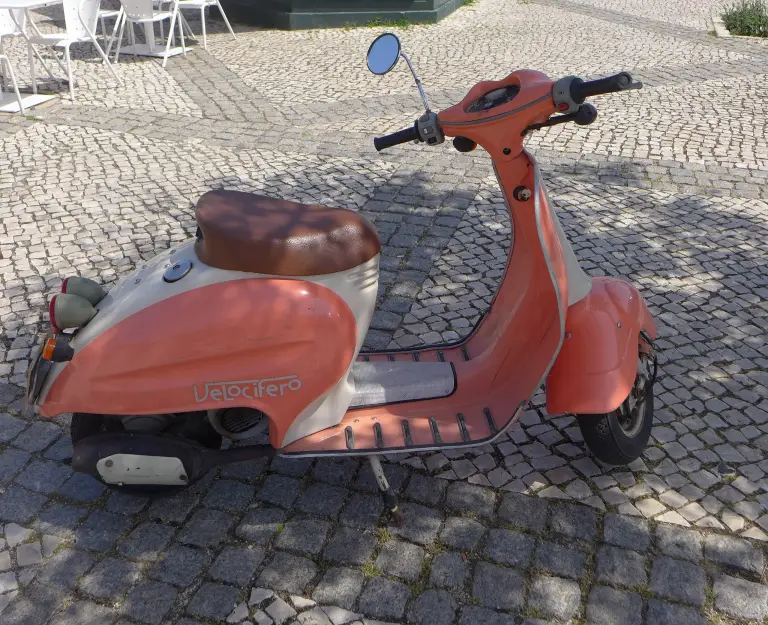
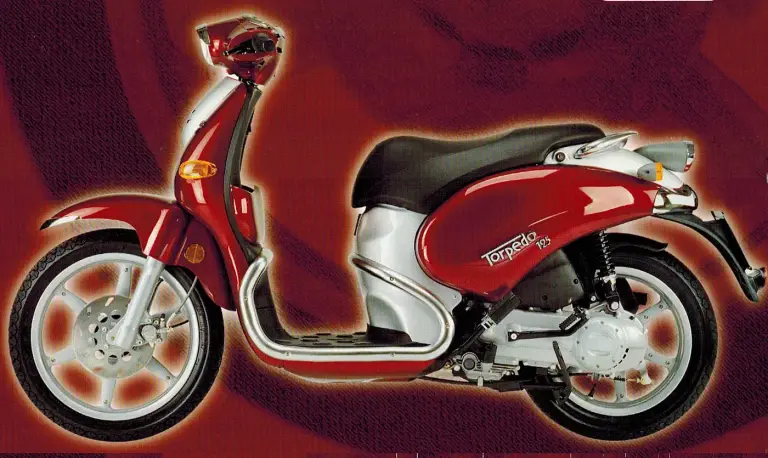
The Dragster was one of the scooters that made Italjet’s name in the 1990s, together with the Velocifero and the Torpedo. More machines are in the Italjet collection.
Video: Italjet Dragster in Aachen
Video on YouTube.
Sources
- Italjet Dragster, English Wikipedia: suspension, patent, criticism, revival
- Italjet Dragster, Italian Wikipedia: production years, versions, frame