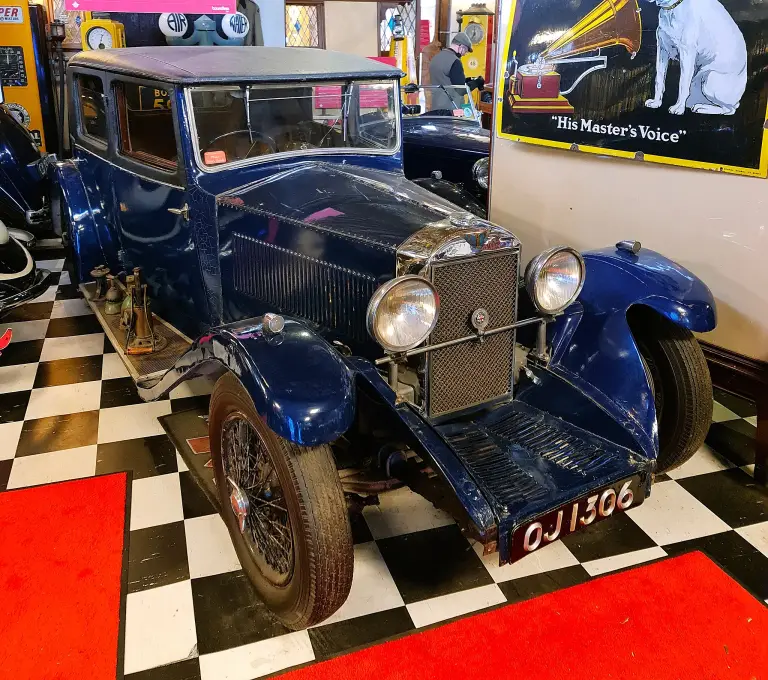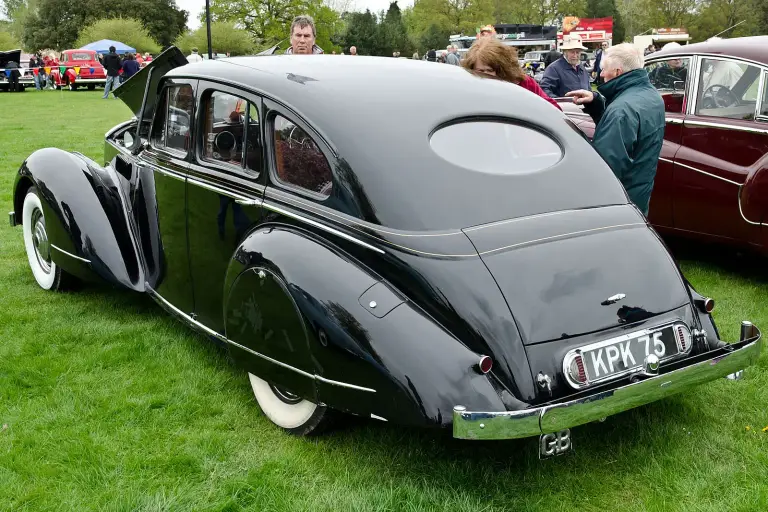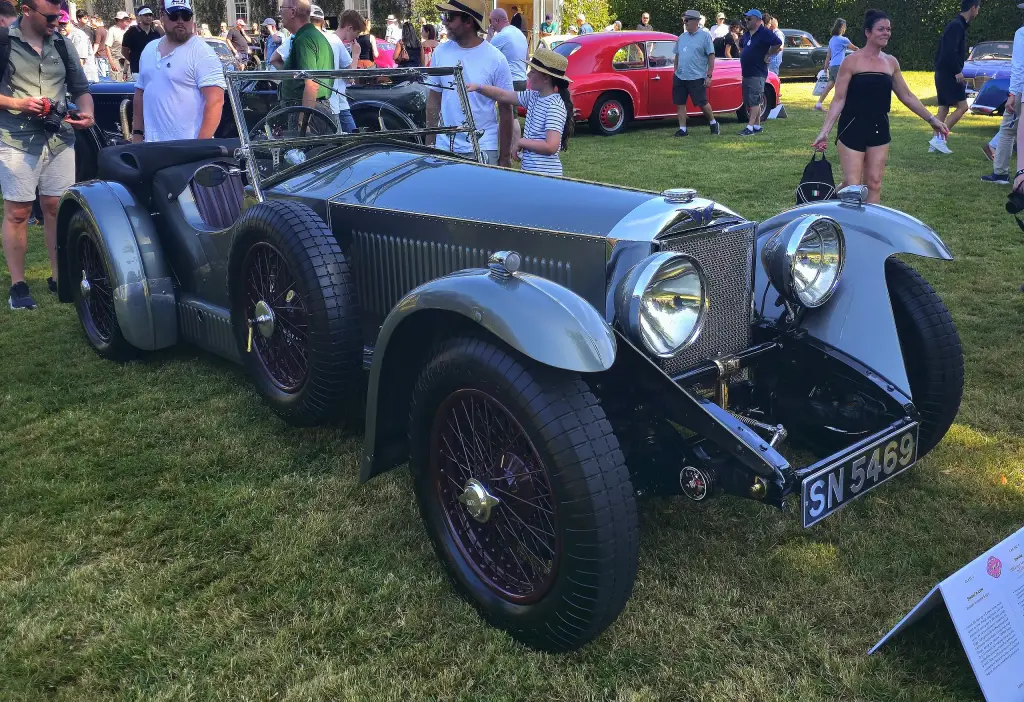
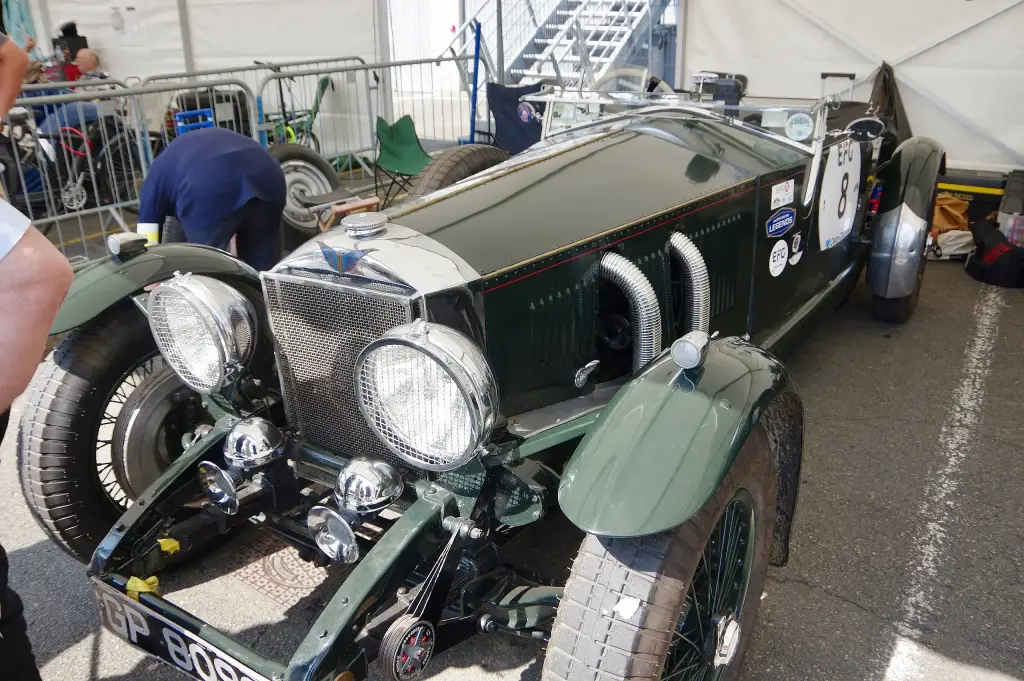
The Invicta S-Type was the sporting Invicta of the early 1930s. Launched at the London Motor Show in 1930, it kept the familiar 4½ litre Meadows six but set it in a low chassis slung beneath the rear axle, which gave the car its unmistakable long, low look. About seventy-five were made, and the model gave Invicta its greatest competition success when Donald Healey won the Monte Carlo Rally in 1931.
Invicta S-Type at a glance
| Maker | Invicta, Cobham, Surrey |
|---|---|
| Production | 1930–1935 |
| Engine | 4½ litre Meadows straight six, overhead valves |
| Chassis | low chassis slung under the rear axle |
| Wheelbase sizes | 9 ft 4 in (SC) and 10 ft (LC) chassis families |
| Launched at | London Motor Show, 1930 |
| Built | about 75 |
| Monte Carlo Rally | outright win, Donald Healey, 1931 |
| Company founded | 1925 by Noel Macklin |
| End of production | 1935 |
The English Wikipedia article covers the whole Invicta marque; this page uses only the parts about the company and the S-Type. One source.
History of the Invicta S-Type
The Invicta company
Invicta was founded by Noel Macklin, with finance from Oliver Lyle of the sugar family, and assembled cars in the garage of Macklin’s home at Fairmile Cottage on the London to Portsmouth road at Cobham, Surrey. The firm was based at Cobham from 1925 to 1933, then in Chelsea, London, until 1938. Macklin had already tried car making with Eric-Campbell & Co Limited and his own Silver Hawk Motor Company before turning to Invicta.
The cars were designed around two ideas: flexibility, meaning the ability to pull away from walking pace in top gear, and sporting performance. With help from William (Willie) Watson, his mechanic from pre-First World War racing days, Macklin built a prototype on a Bayliss-Thomas frame with a Coventry Simplex engine in the stables of his house.
From the 2½ litre to the S-Type
The first production Invicta of 1925 was a 2½ litre with a Meadows straight six, overhead-valve engine and four-speed gearbox, sold from £595. Two chassis lengths were offered, the 9 ft 4 in SC and the 10 ft LC, to suit whichever bodywork the customer chose. As demand grew much of the construction went to Lenaerts and Dolphens in Barnes, London, though final assembly and testing stayed at Fairmile. The engine grew to three litres in 1926 and to 4½ litres in late 1928.
For 1929 William Watson designed the 4½ litre NLC chassis in short (9 ft 10 in) and long (10 ft 6 in) versions. The cheaper A Type replaced the NLC in 1930, and in the same year the S-Type appeared at the London Motor Show. It used the same 4½ litre Meadows engine, but the chassis was slung low under the rear axle, a layout that defined the model. About seventy-five S-Types were built before Invicta car production came to an end.
Racing and record breaking
Invicta’s sporting reputation was largely made by Violette Cordery, Noel Macklin’s sister-in-law. She won the half-mile sprint at the West Kent Motor Club meeting at Brooklands in 1925 driving a 2.7 litre. In March 1926 she was one of a team of six drivers who set long-distance records at Monza, covering 10,000 miles at 56.47 mph and 15,000 miles at 55.76 mph; in July the same year at Linas-Montlhéry, near Paris, the team covered 5,000 miles at 70.7 mph over more than seventy hours of day and night driving, supervised by the Royal Automobile Club. Cordery was twice awarded the Dewar Trophy, the second time in 1929 for driving 30,000 miles in 30,000 minutes at Brooklands, an average of 61.57 mph.
Between February and July 1927 Cordery drove an Invicta around the world with a nurse, a mechanic and an RAC observer, covering 10,266 miles in five months at 24.6 mph through Europe, Africa, India, Australia, the United States and Canada. In 1930 Donald Healey took a class win on the Monte Carlo Rally and won the event outright in 1931 in an S-Type, starting from Stavanger. S. C. H. “Sammy” Davis had a spectacular accident in an S-Type at Brooklands in 1931, and Raymond Mays held the Brooklands Mountain Circuit class record in 1931 and 1932 and the outright Shelsley Walsh sports car record in 1932.
Design and features
- Low chassis: the frame was slung beneath the rear axle, which lowered the car and gave the S-Type its long, purposeful stance.
- 4½ litre Meadows six: the same overhead-valve engine that had powered the earlier Invicta chassis.
- Flexibility: Invicta’s design brief called for a car that would accelerate from walking pace in top gear.
- Proven in competition: an outright Monte Carlo Rally win in 1931 and Brooklands records in the hands of Raymond Mays.
- Rarity: only about seventy-five were built, which makes surviving cars among the most sought-after pre-war British sports cars.
Invicta S-Type versions
- S-Type (1930–1935): the standard low-chassis car with the 4½ litre Meadows engine.
- Coachbuilt bodies: chassis were supplied to independent coachbuilders, so no two cars are quite alike.
- Later 1930s cars: production of the S-Type continued alongside the 12/45 and ran to the end of Invicta car making in 1935.
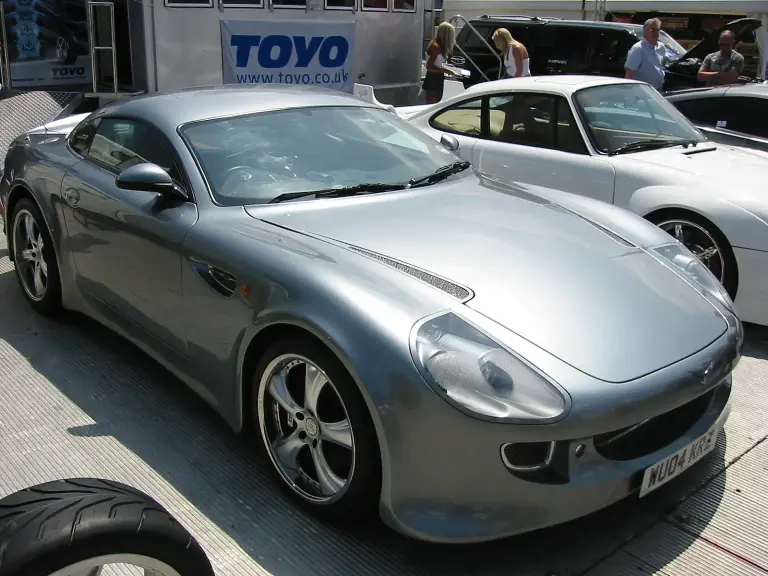
- Post-war use of the name: the Invicta name returned on the Black Prince from 1946 and on the S1 from 2004.
The smaller-engined Invicta of the period was the 12/45, and the post-war revival produced the Black Prince. More cars are in the Invicta collection.
Video: Invicta “S” type low chassis, 1935
Video by pennhillman on YouTube.
Sources
- Invicta (car), English Wikipedia: company history, chassis types, S-Type, records, rally results