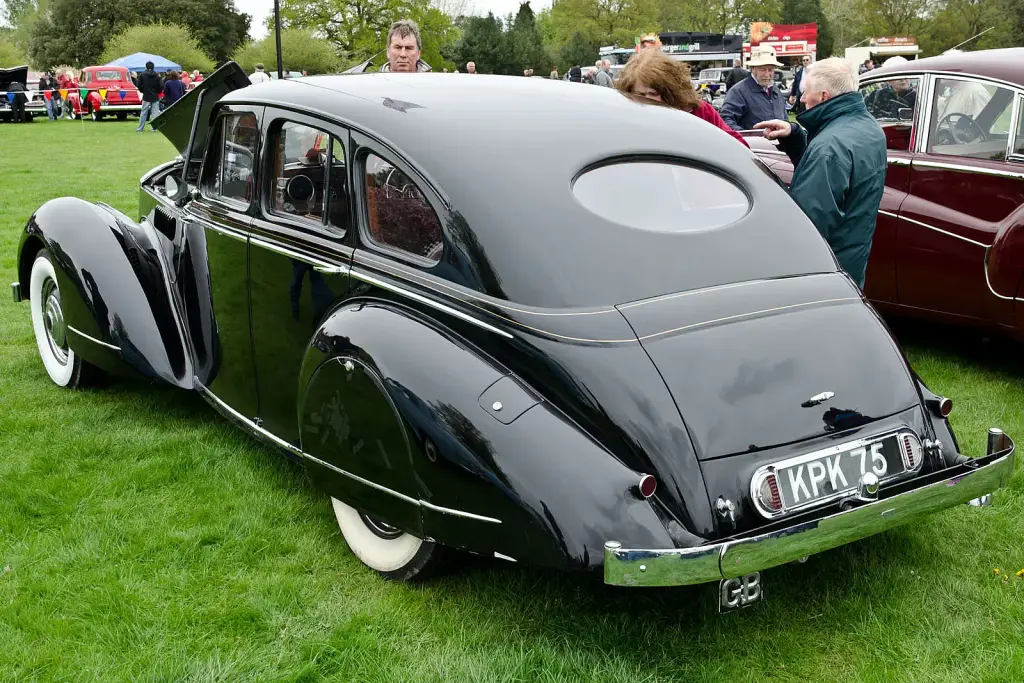
The Black Prince was the second life of the Invicta marque. Built from 1946 in Virginia Water, Surrey, it was an aluminium-bodied luxury car with a twin-camshaft 3-litre Meadows six, a torque converter instead of a gearbox, fully independent suspension and a list of luxury fittings that included built-in electric jacks. It was extremely complex and very expensive: about sixteen were made and twelve are thought to survive.
Invicta Black Prince at a glance
| Maker | Invicta Cars, Virginia Water, Surrey |
|---|---|
| Production | 1946–1950 |
| Engine | 3 litre straight six, twin overhead camshafts, three carburettors |
| Power | 120 bhp |
| Transmission | Brockhouse Hydro-Kinetic Turbo Transmitter, no gearbox |
| Control | small switch with forward and reverse positions |
| Suspension | fully independent, torsion bars |
| Body | aluminium |
| Notes | built-in electric jacks, trickle-charger, engine immersion heater, built-in radio |
| Built | about 16, of which 12 survive |
| Company sold to | AFN Ltd, makers of Frazer Nash, 1950 |
The English Wikipedia article covers the whole Invicta marque; this page uses only the 1946 revival section. One source.
History of the Invicta Black Prince
A new company in Virginia Water
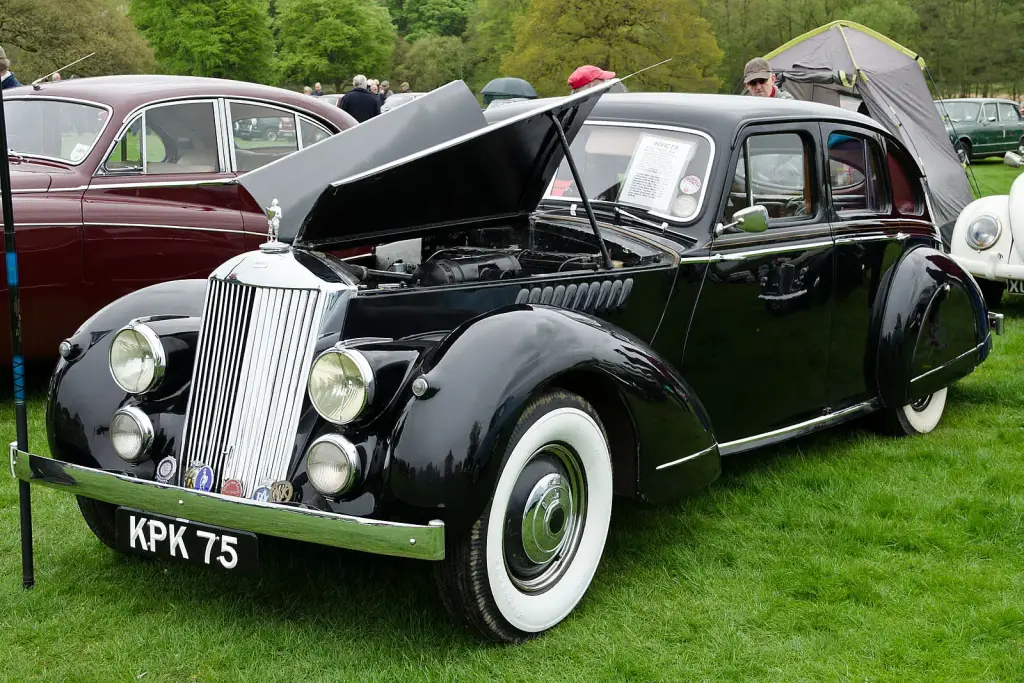
Invicta car production had ended in the 1930s and Invicta Cars Limited was wound up in 1938, but the name was revived in 1946 by an organisation calling itself Invicta Cars of Virginia Water, Surrey. Its first and only model was the Black Prince.
The engine and the missing gearbox
Meadows engines were used again, this time a twin-overhead-camshaft 3-litre straight six with three carburettors giving 120 bhp. The most remarkable feature was the transmission: a Brockhouse Hydro-Kinetic Turbo Transmitter replaced the gearbox entirely, and it was controlled by a small switch with forward and reverse positions. The cars were aluminium-bodied, partly because steel supplies were effectively non-existent for new businesses in Britain’s post-war planned economy.
Engineering and luxury
The Black Prince was extremely complex and very expensive. Suspension was fully independent using torsion bars, and the car had built-in electric jacks. Other luxury items included a trickle-charger to charge the battery from the domestic mains, an immersion heater in the engine, heating for the body interior and a built-in radio. About sixteen cars were made, of which twelve have survived. The company lasted until 1950, when it was bought by AFN Ltd, the makers of Frazer Nash.
Design and features
- No gearbox: a Brockhouse Hydro-Kinetic Turbo Transmitter did the job of a gearbox and was worked by a forward-and-reverse switch.
- Twin-cam Meadows six: 3 litres, three carburettors and 120 bhp.
- Aluminium body: steel was in short supply for new firms in post-war Britain.
- Unusual comfort equipment: electric jacks, an engine immersion heater and a built-in radio.
- Great rarity: about sixteen built, twelve surviving.
Invicta Black Prince versions
- Black Prince saloon (1946–1950): the only model the post-war company built.
- Surviving cars: twelve of the sixteen are known to survive.
- Pre-war Invictas: the S-Type and 12/45 of the 1930s were entirely different cars.
The pre-war Invictas were the S-Type and the 12/45; the name came back once more for the S1. More cars are in the Invicta collection.
Sources
- Invicta (car), English Wikipedia: 1946 revival, engine, transmission, equipment, production numbers