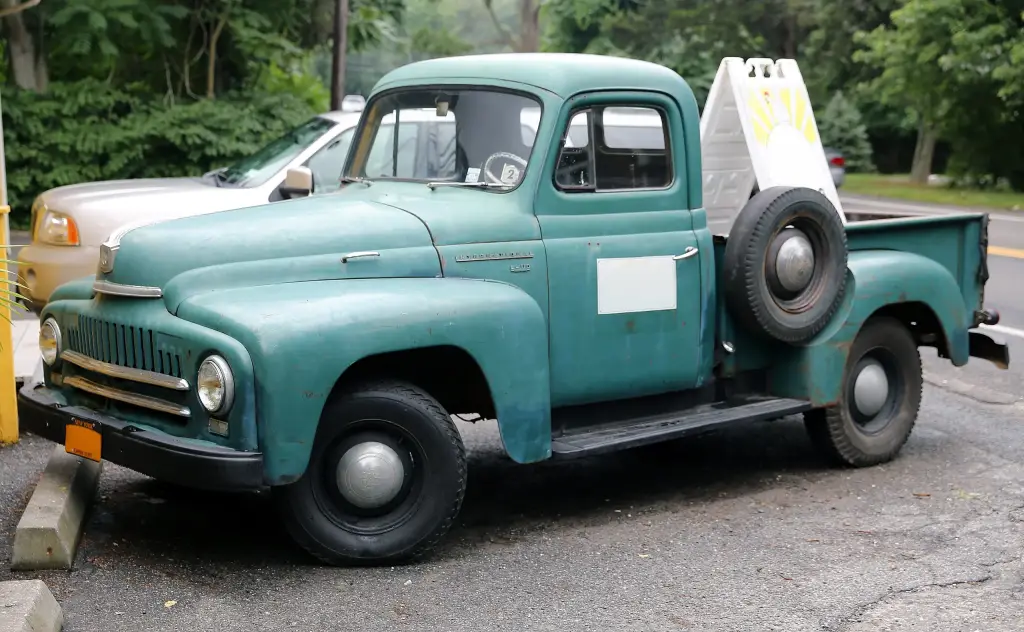
The International L series was introduced in the autumn of 1949 to replace the KB series, and it was available as everything from a light pickup or delivery van to a full-size tractor-trailer. International built the line until 1953, when the R series took over.
International L series at a glance
| Maker | International Harvester |
|---|---|
| Production | 1949–1953 |
| Predecessor | International KB series |
| Range | L-110 to L-210, plus specialised bodies |
| Pickup beds | 6 ft and 8 ft; 9.5 ft on the L-130 with dual rear wheels |
| Engines | Silver Diamond 220 and 240, Super Blue Diamond 269, Red Diamond 372, 406 and 450 |
| Power | about 100–108 hp for the light and medium sixes |
| Transmissions | three- and four-speed, five-speed from L-180, overdrive and two-speed axles optional |
| Comfort options | electric wipers, radio, clock |
| Body styles | pickup, Travelall, panel, flatbed, school bus chassis, cab-over, delivery van |
| Also built in | Australia, as the AL series |
Written from the English Wikipedia article on the L series, a single source.
History of the International L series
The L series replaced the KB in the autumn of 1949 and was International Harvester’s first postwar light truck range in the fullest sense: for the first time such things as electric wipers, a radio and a clock appeared on the options list. Under the skin the range was wide. Of the pickup-type bodies there were 6 ft and 8 ft versions, and on the L-130 a 9.5 ft bed of the same design could be ordered with dual rear wheels. International also sold two styles of its own flatbed with removable sides up to L-180 size.
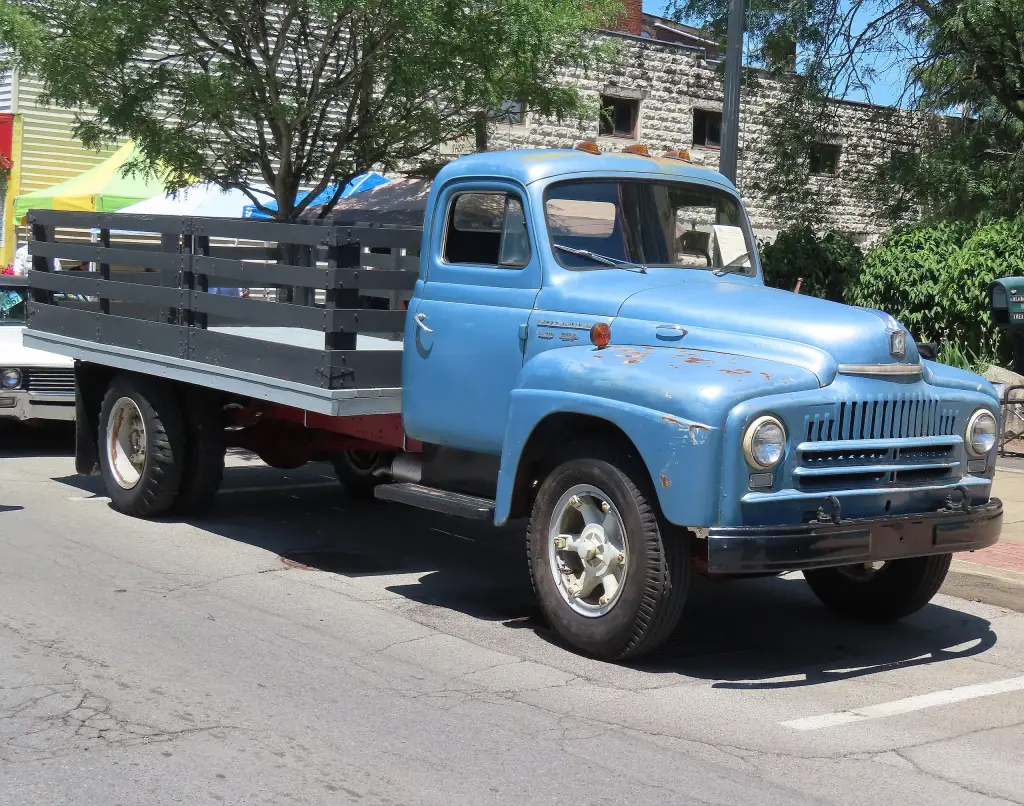
The bigger trucks looked different on purpose. Heavier versions from the L-150 to the L-180 had taller bodywork to make room for a larger engine, a stronger chassis and bigger wheels, and International hid the extra height behind a third full-width chrome bar below the other two and the headlamps. The L-185 to L-210 models went further, with a longer, narrower bonnet and a taller grille surrounded by oversized wings — a different look, although the cab was the same as on the smaller trucks.
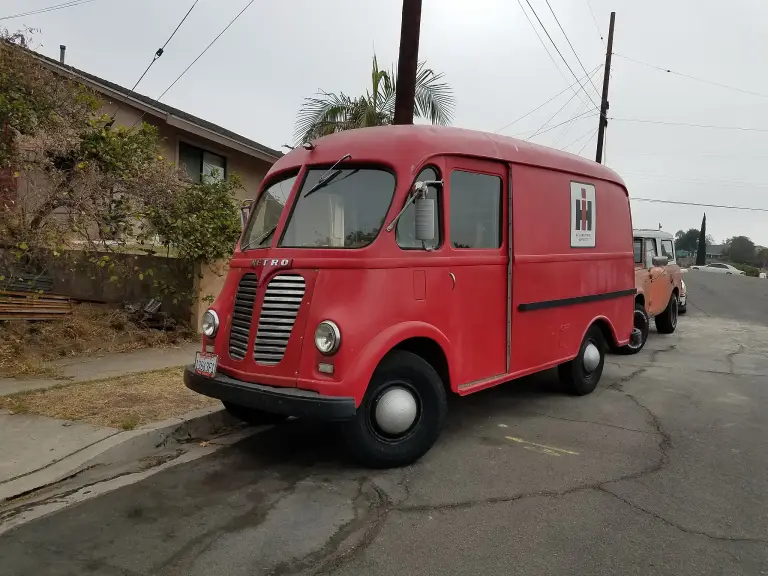
Not every L series truck was a conventional-cab pickup. The Metro LM-120 to LM-122 and LM-150 to LM-152 were the “bread trucks” used by bakeries and laundries and barely resembled the rest of the line. The LB-140 milk delivery truck was another oddity, with a semi-automatic clutch but the L-line face, and the LC-160 to LC-162 and LC-180 to LC-182 were cab-over-engine trucks, or “cab-forwards”. International also used the L series range to introduce marketing names that outlived it: Schoolmaster for the L-153 to L-193 school bus chassis, Loadstar for the heaviest model in each family (the L-164 to L-204) and Roadliner for the L-165 to L-205 tractor units.
The engine list shows how wide the range was. Light-duty trucks used the new overhead-valve Silver Diamond six in 220 and 240 cubic inch sizes, the medium-duty trucks kept the older 269 cubic inch Blue Diamond in improved Super Blue Diamond form, and the largest models moved to Red Diamond engines of 372, 406 and 450 cubic inches. Gearboxes ranged from a three-speed synchromesh column shift to five-speed floor shifts with overdrive, and a two-speed rear axle was optional from the L-160 upwards. International also built the L series in Australia as the AL series, and for mining, construction and heavy haulage there were tandem-axle LF-170, LF-190 and LF-210 versions whose gross weights ran far beyond those of the equivalent 4×2 trucks.
Design and features
- One range, many jobs: pickup, wagon, panel van, flatbed, bus chassis and tractor unit.
- Comfort options: electric wipers, radio and clock for the first time.
- Chrome grille bars: a third full-width bar marked the heavier, taller models.
- Marketing names: Schoolmaster, Loadstar and Roadliner began here.
- Engine choice: Silver Diamond, Super Blue Diamond and Red Diamond sixes.
International L series versions
- L-110 to L-150: light trucks and pickups.
- L-160 to L-180: medium-duty trucks with taller bodywork.
- L-185 to L-210: larger models with the long, narrow bonnet.
- LB-140: milk delivery truck with a semi-automatic clutch.
- LC-160 and LC-180: cab-over-engine versions.
The L series followed the K and KB series and was replaced by the R series; its delivery-van cousin is the Metro Van.
Video: 1952 (1950-1952) International Harvester L-Series Custom (L110-L112) Hot Rod Pick up
Video by Juan Acevedo on YouTube.
Sources
- International L series, English Wikipedia: range, bodies, engines, transmissions, Australia