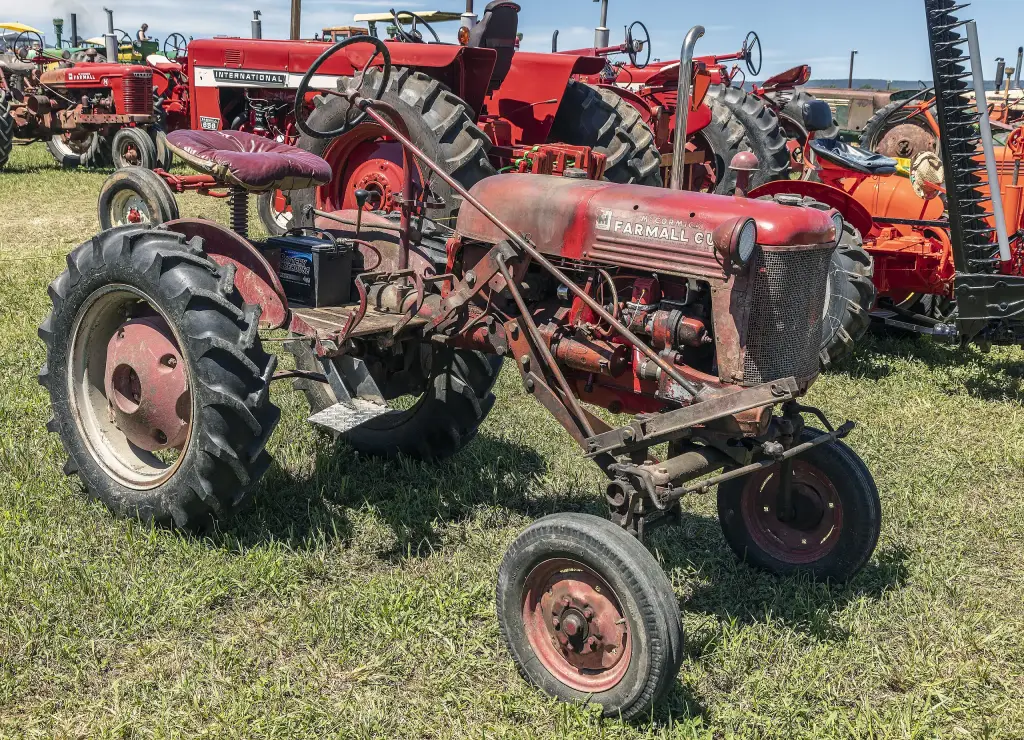
The Farmall Cub, later the International Cub, was International Harvester’s smallest tractor. Built in Louisville, Kentucky from 1947 to 1979, it was designed to replace a horse or mule on small acreages and became one of the most popular small tractors ever made.
Farmall Cub at a glance
| Maker | International Harvester, Louisville, Kentucky |
|---|---|
| Production | 1947–1979, with the last Cubs built in 1981 |
| Built | over 245,000 |
| Engine | C-60 four-cylinder petrol, 59.5 cu in (0.981 L) |
| Bore and stroke | 2⅝ in by 2¾ in (67 by 70 mm) |
| Power | 9.25 hp at the belt and 8 hp at the drawbar at first; up to 18 hp in the 184 and 185 Lo-Boy |
| Wheelbase | 69¼ in (1,760 mm) |
| Lo-Boy (1955) | lowered version with a 62½ in (1,590 mm) wheelbase |
| Layout | offset to the left, the seat and steering wheel on the right (“CultiVision”) |
| Colours | IH Red or Federal Yellow; white demonstrators in 1950 |
| French Cub | built at St Dizier from 1955; Super Cub from 1958 to 1964 |
Based on one source (English Wikipedia).
History of the Farmall Cub
Development and launch
The project began in July 1943 as the Farmall X, planned with a two-cylinder engine, then changed to a four-cylinder unit; a prototype was running by December 1944 and the tractor was named the Farmall Cub in September 1945. It went into production at Louisville in 1947. Its purpose was simple: to replace a horse or mule on small farms. The tractor was offset to the left while the driver’s seat and steering wheel sat on the right, a layout International called CultiVision, which gave a clear view of the row being worked. Early C-60 engines produced 9.25 horsepower on the belt and 8 horsepower at the drawbar at 1,600 rpm.
Lo-Boy and the colour change
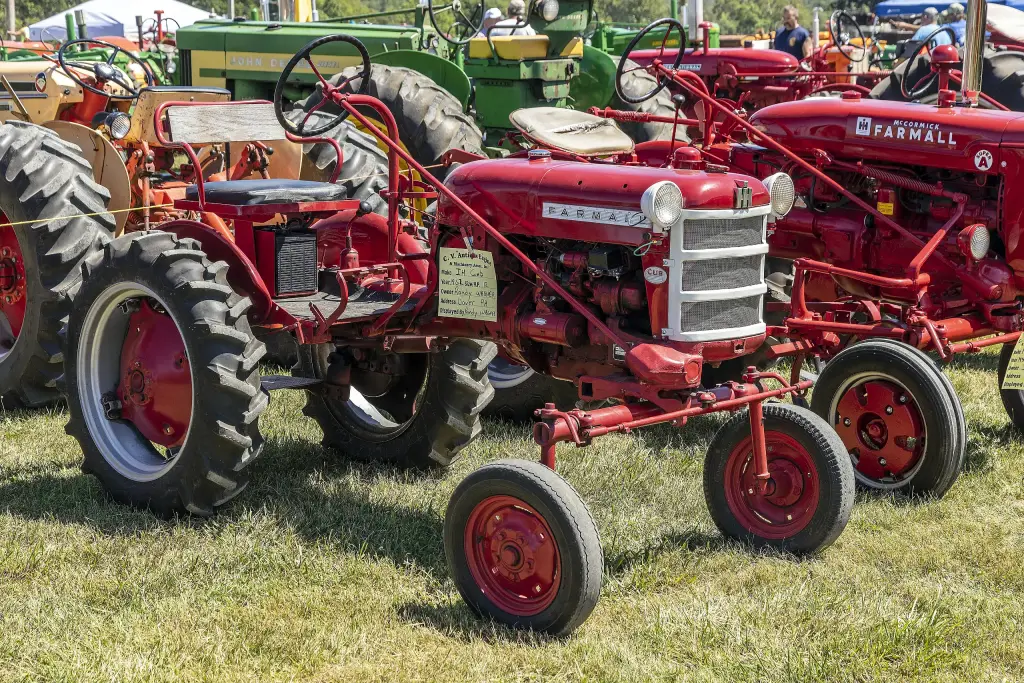
In 1955 International added the Cub Lo-Boy, a lowered version of the standard tractor. The rear axle housings were rotated, dropping the machine about 7 to 8 inches (180 to 200 mm), the front axle extensions were lowered too and the wheelbase was shortened to 62½ inches (1,590 mm). The lower centre of gravity and tighter turning circle made the Lo-Boy more manoeuvrable and better for mowing. Sales shifted from farming towards industrial use in the late 1950s, and in 1960 the standard colour changed from IH Red to Federal Yellow, with red as an option. In 1963 the grille became flat and the Farmall name was dropped in favour of International. In 1950 a batch of white demonstrator Cubs with red wheel centres was supplied to dealers, who were expected to repaint them red before sale; some were sold white.
Later versions and the end
Engine power rose steadily through the 1960s, reaching 15 horsepower in the International Cub and the 154 Lo-Boy by 1975. The original Lo-Boy was replaced in 1969 by the 154 Lo-Boy, which looked like the smaller Cub Cadet garden tractor; the 184 and 185 Lo-Boy were more powerful developments of it with a higher output of up to 18 horsepower. International also built Cubs in France at St Dizier from 1955; the French Cub became the Super Cub with a more powerful engine in 1958 and stayed in production until 1964. Production at Louisville ended in 1981, when the last Cubs were again painted IH Red. More than 245,000 were built between 1947 and 1981, and many are still at work on small farms.
Design and features
- CultiVision layout: the tractor is offset to the left so the driver can see the row and the implement.
- C-60 engine: a 59.5 cubic inch four-cylinder L-head, simple and easy to maintain.
- Lo-Boy option: a lowered, shorter-wheelbase version from 1955 that was handier for mowing.
- Two colours: IH Red at first, Federal Yellow as standard from 1960.
- Huge production: more than 245,000 built, making it one of the most popular small tractors in history.
Farmall Cub versions
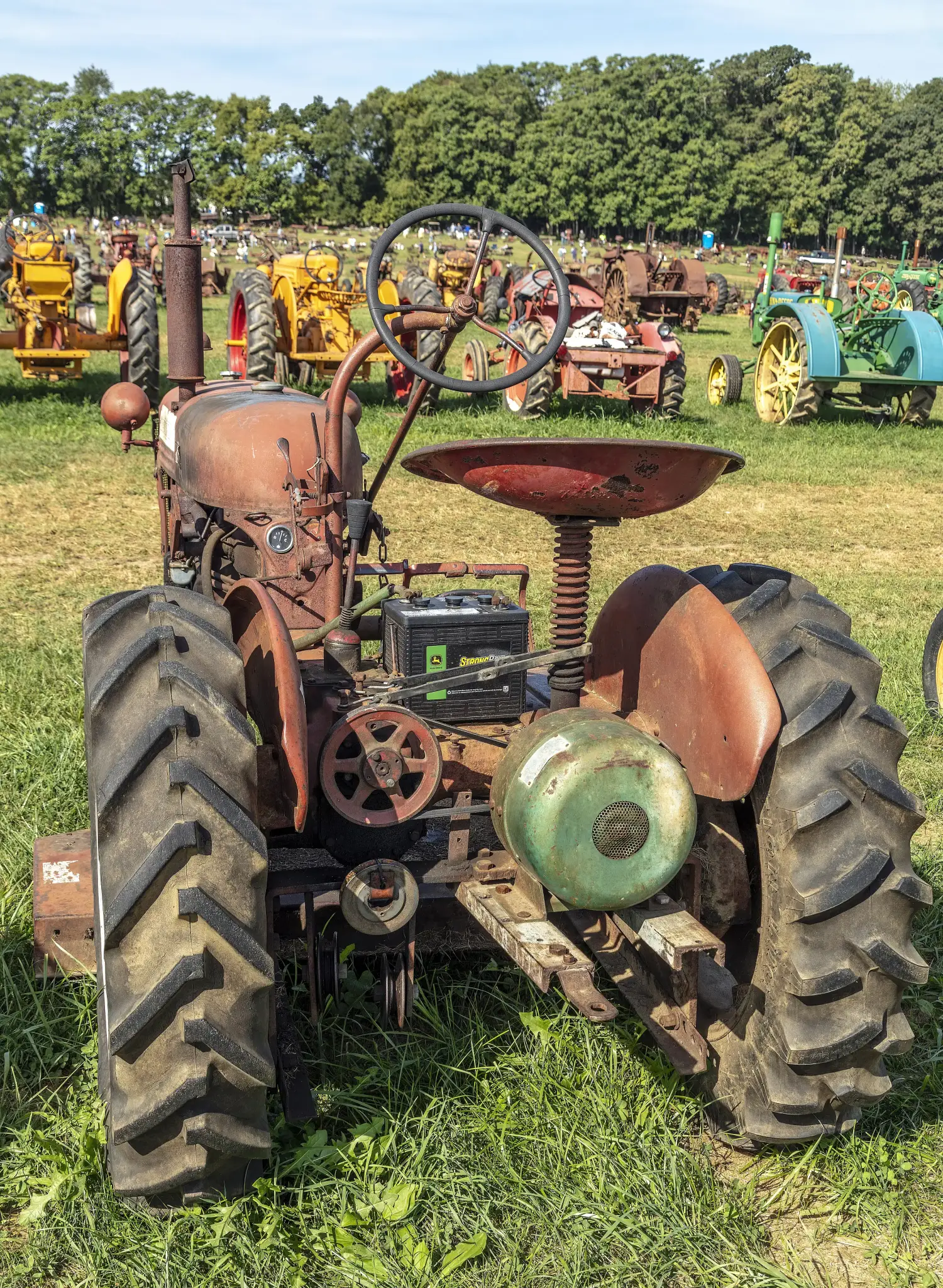
- Standard Cub (1947–1979): the original offset tractor on a 69¼ inch wheelbase.
- Cub Lo-Boy (1955–1969): lowered and shortened version for mowing and industrial work.
- 154 Lo-Boy (1969): replacement for the Lo-Boy with Cub Cadet-style bodywork.
- 184 and 185 Lo-Boy: more powerful developments of the 154, up to 18 horsepower.
- French Cub and Super Cub: built at St Dizier from 1955, the Super Cub from 1958 to 1964.
The Cub was the smallest of International’s tractors; the International 1066 was one of the largest. More vehicles are in the International collection.
Sources
- Farmall Cub, English Wikipedia: development, engine, versions, production