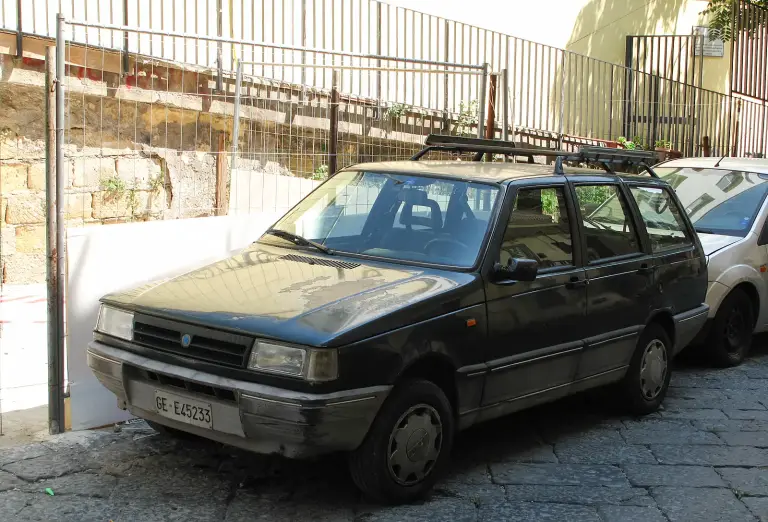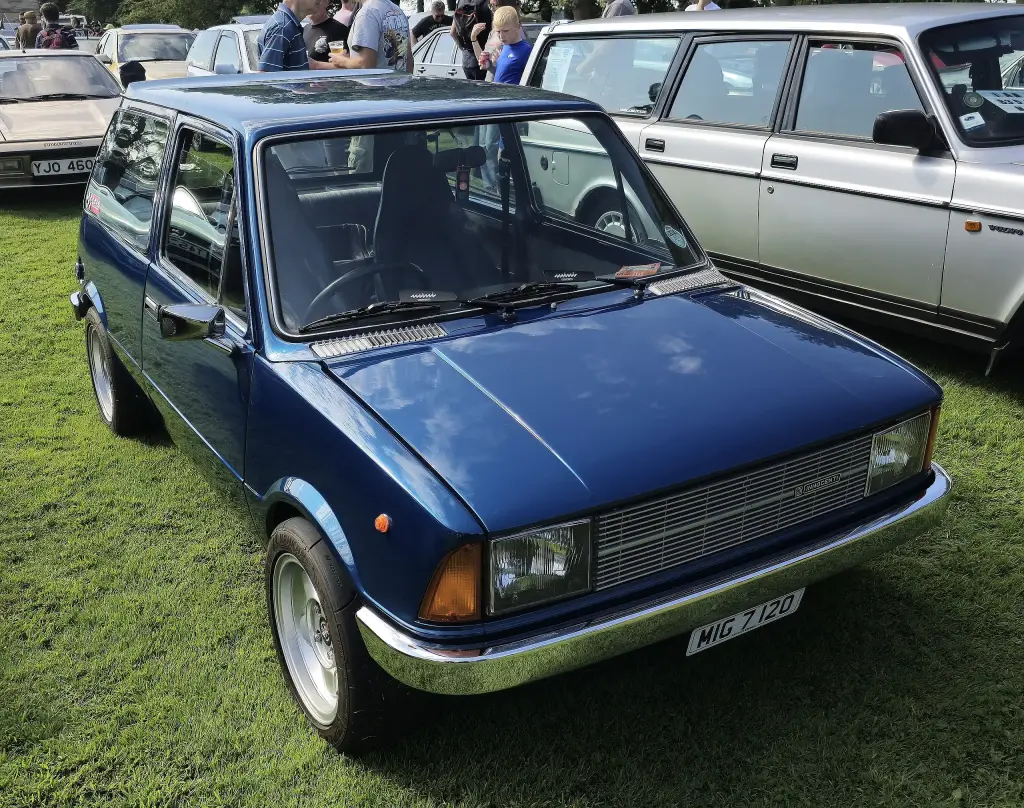
The Innocenti Mini was the longest-running model from Lambrate. It began in 1965 as a licence-built BMC Mini, became the Bertone-styled Mini 90/120 in 1974, and continued with Daihatsu three-cylinder engines as the Minitre, 990, Turbo and Small until 1993.
Innocenti Mini at a glance
| Maker | Innocenti, Lambrate, Milan |
|---|---|
| Production | 1965-1993 |
| First model | Innocenti Mini 850, November 1965 |
| Classic Mini versions | 850, 1000, 1001, Cooper, Cooper 1300, Mini T estate |
| Bertone hatchback | Mini 90L and 120L, Turin show 1974 |
| De Tomaso version | Mini de Tomaso, 1977, 71 to 75 hp |
| 1980 facelift | Mini Mille |
| Daihatsu era | Tre Cilindri / Minitre from 1982 |
| Short-lived model | 650, with a 617 cc two-cylinder and five-speed gearbox |
| Long version | 990, from 1986 |
| Turbo | Turbo De Tomaso, turbocharged one-litre |
| Final versions | Innocenti Small 500 and Small 990, until 1993 |
History of the Innocenti Mini
Licence-built Mini (1965-1975)
Before developing its own hatchback, Innocenti assembled the original Mini from CKD kits. The car was introduced in November 1965 as the Innocenti Mini 850, and later versions included the 1000, the 1001, the Cooper, the Cooper 1300 and the Mini T, an estate and the only non-saloon variant. Assembly ended in early 1975. Only the very earliest cars used CKD kits; most production used locally sourced shells and components that differed in many ways from English-built Minis. The Italian cars were generally better finished, and a longer final drive gave the Mini 1000 and 1001 almost the performance of the Cooper 1000. The range used 848, 998 and 1275 cc engines and stayed on the price list until 1975.
The Bertone hatchback (1974)
Under British Leyland ownership, Innocenti developed rebodied versions of the Mini, the Mini 90L and 120L, released at the Turin show in 1974. The new body was a three-door hatchback styled by Bertone, with the final design credited to Marcello Gandini, and it was the first car to carry vertical front indicators at the corners. The 90L had the 998 cc A-series engine of 43 bhp, the 120L the 1275 cc unit with 20 bhp more; outputs later rose to 49 and 65 bhp. Both kept the Mini’s dry rubber cone suspension and a four-speed manual gearbox. The rear hatch improved access to the small luggage compartment, and drag was slightly lower than the original Mini, 0.41 Cd against 0.42.
De Tomaso and the Mille
Within a year of the launch British Leyland went bankrupt, and in May 1976 Innocenti was sold to De Tomaso and GEPI. The new owners renamed the company Nuova Innocenti and continued building the car. At the 1976 Turin show the sporting Mini de Tomaso appeared, in production from early 1977 with moulded plastic bumpers, integral foglights, a bonnet scoop and wheelarch extensions; power was 71 bhp, rising to 74 bhp in 1978. In 1980 the facelifted Mini Mille arrived with plastic bumpers, backward-sloping headlights and redesigned taillights, 5 cm longer, replacing the 120 in most markets. The 90 LS II followed for 1981 and the 90 SL for 1982.
Daihatsu engines: Tre, Minitre, 990, Turbo and Small
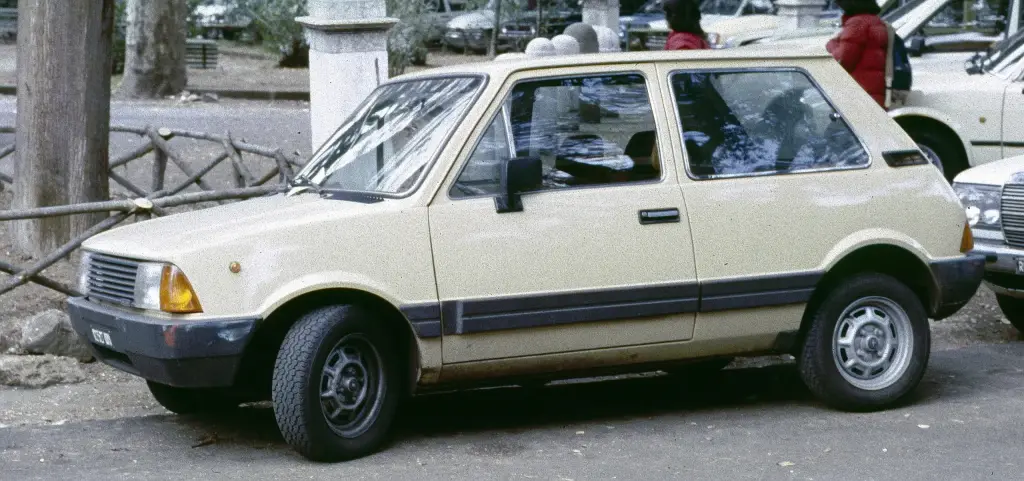
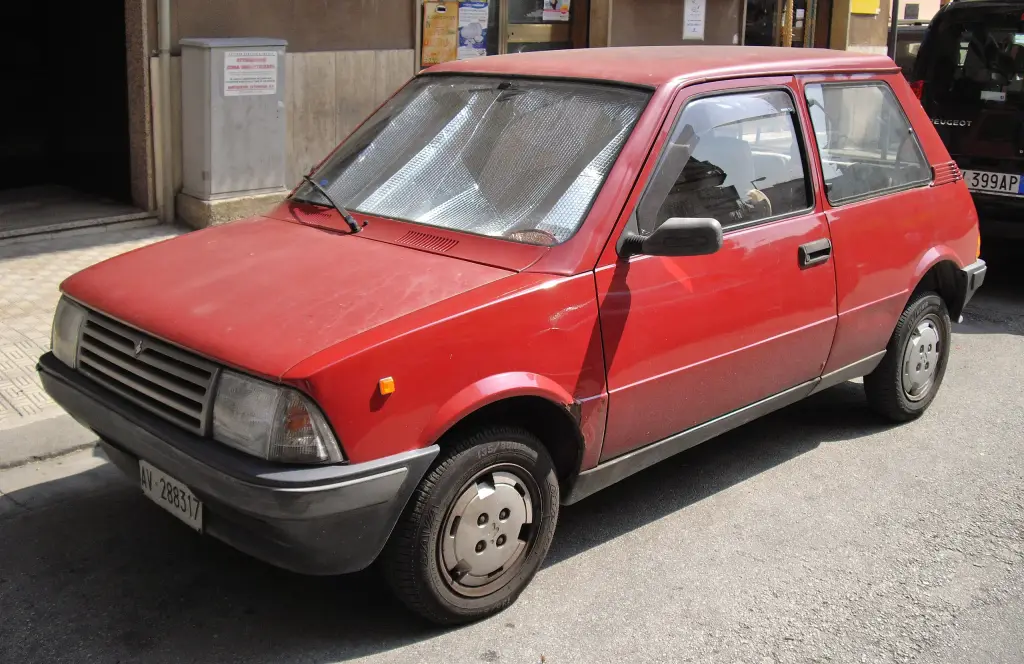
In April 1982 the English engines were replaced by Daihatsu three-cylinder units, and the rubber suspension gave way to MacPherson struts at the front and an independent rear with lower wishbones and a transverse single-leaf spring. The cars were renamed Innocenti Tre Cilindri, or Tre. A facelift in January 1984 brought the name Minitre, sometimes written Mini 3; the carburetted engine gave 52 PS, with S, SL and SE trim, a five-speed gearbox and, from July 1984, a two-speed semi-automatic called Minimatic. For a short period there was also the 650, with a 617 cc two-cylinder engine and a five-speed gearbox, described as the first segment A car with five speeds. In 1986 came the longer and roomier 990, with a four-door version planned but never built, and a 990 SE with air conditioning. The Turbo De Tomaso used a turbocharged one-litre engine. Under Fiat the final versions were the Small 500 and Small 990, built until the Lambrate works closed in 1993.
Design and features
- Bertone hatchback body: a modern three-door shape with a rear hatch and vertical corner indicators.
- Better finish than the English Mini: higher equipment and a longer final drive.
- Daihatsu engines from 1982: three-cylinder units and a five-speed gearbox.
- New suspension: MacPherson struts and an independent rear replaced the rubber cones.
- Many versions: from the 90/120 and De Tomaso to the Minitre, 650, 990, Turbo and Small.
Innocenti Mini versions
- Classic Mini (1965-1975): 850, 1000, 1001, Cooper, Cooper 1300 and Mini T estate.
- Mini 90/120 (1974-1982): the Bertone hatchback with 998 and 1275 cc engines.
- Mini de Tomaso (1977-): sporting version with plastic bumpers and 71-75 hp.
- Mini Mille (1980-1982): facelifted model with sloped headlights and new taillights.
- Tre Cilindri / Minitre (1982-1993): Daihatsu three-cylinder engines, new suspension, Minimatic option.
- 650, 990 and Turbo De Tomaso: two-cylinder 617 cc model, long 990 and turbocharged one-litre.
- Innocenti Small 500 and 990: the final versions sold under Fiat, until 1993.
The Mini followed the Innocenti A40 and the 950 Spider in the Milan range, and its Bertone body was the company’s second independently designed car. More models are in the Innocenti collection.
Video: Spot – Innocenti – automobile – Mini 90 e 120
Video on YouTube.
Sources
- Innocenti Mini, English Wikipedia: classic assembly, Bertone 90/120, De Tomaso, Mille, Minitre
- Innocenti Nuova Mini, Italian Wikipedia: Bertone design, versions, production history
- Innocenti, Italian Wikipedia: 650, 990, Turbo De Tomaso, Small, end of production