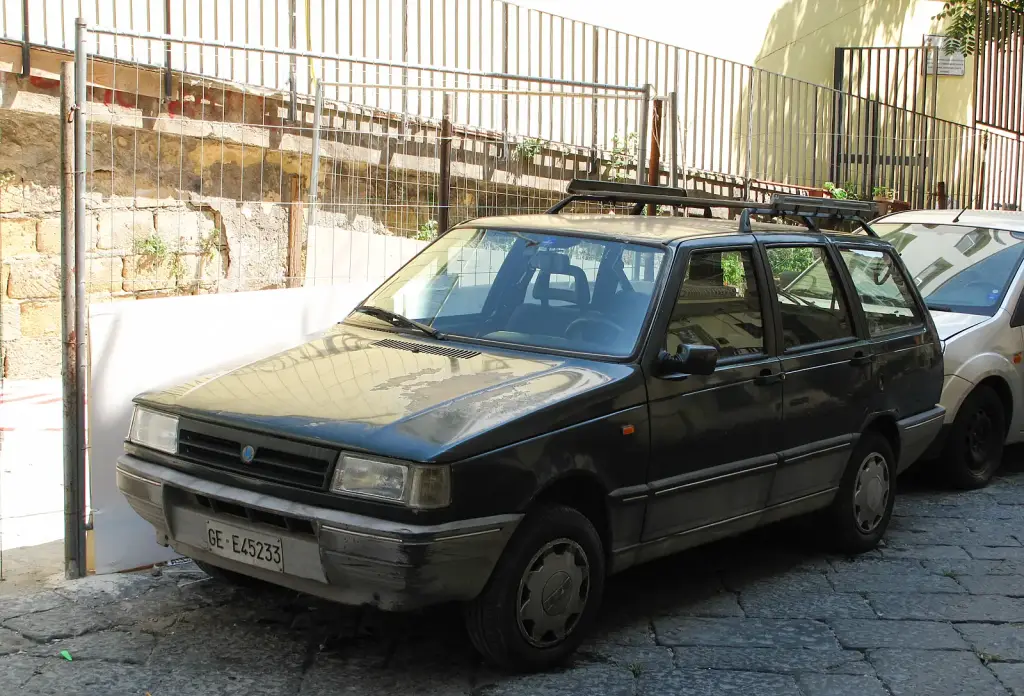
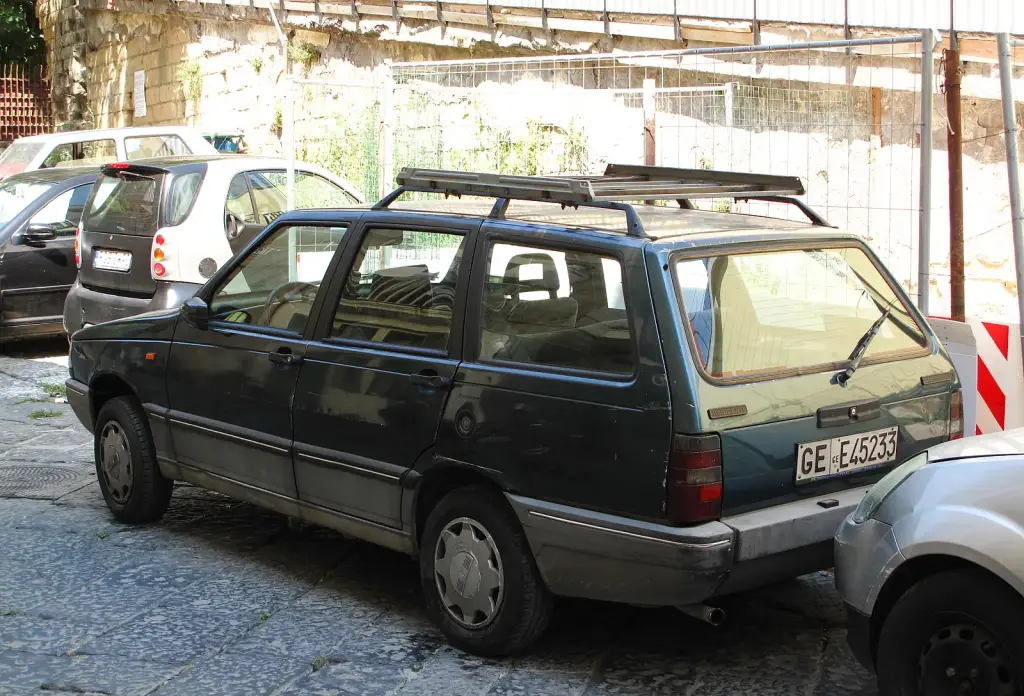
The Innocenti Elba was an estate car sold in Italy from 1991 to 1997. It was a lightly facelifted, rebadged Brazilian-built Fiat Duna Weekend, and it was the last car to be marketed under the Innocenti name.
Innocenti Elba at a glance
| Maker | Innocenti, under Fiat ownership |
|---|---|
| Production | 1991-1997 |
| Built in | Brazil, in Fiat plants |
| Based on | Fiat Duna Weekend |
| Body | five-door estate; three-door from 1993 |
| Engines at launch | 1.3 70 hp, 1.5 i.e. 75 hp, 1.7 diesel 60 hp |
| From 1993 | 1.4 i.e. 69 hp and 1.6 i.e. 75 hp from the Fiat Tipo |
| Van version | Elba Van, three-door, 1.7 diesel |
| Last update | September 1995 restyling and Euro2 engines |
| Replaced | Fiat Duna Weekend in the Italian market |
History of the Innocenti Elba
Fiat takes over the badge
In 1990 Fiat began buying Innocenti, and soon afterwards Maserati, from GEPI and Alejandro de Tomaso. The Turin company was only marginally interested in the Lambrate works, which closed in 1993 when the Innocenti Small, the last evolution of the 1974 Bertone Mini, went out of production. The Innocenti badge was then reserved for low-cost cars imported from plants in Brazil, Argentina, Poland and the former Yugoslavia.
Born in Brazil
The Elba was one of those cars: a rebadged and lightly facelifted Fiat Duna Weekend, launched in 1991. Differences from the Fiat were minimal and concentrated at the front, where a new thinner grille with the Innocenti logo, painted in body colour, was combined with new and thinner headlights. At launch there were three engines: a 1301 cc carburetted four of 70 hp, a 1498 cc single-point injection unit of 75 hp with catalytic converter (the 1.5 i.e. cat Europa, from May 1992 to June 1994), and a 1697 cc diesel of 60 hp.
1993 and 1995 changes
In 1992 the diesel was replaced by a new 1697 cc Ecodiesel, still with 60 hp. In 1993, when catalytic converters became mandatory, the petrol engines came from the Fiat Tipo: a 1372 cc single-point unit of 69 hp and a 1581 cc multi-point unit of 75 hp. The diesel was unchanged, but the Elba adopted the dashboard of the second-series Fiat Fiorino. The 1.4 i.e. was also offered as a three-door, and a commercial Elba Van with the 1.7 diesel and blanked rear windows joined the range. In September 1995 came a light restyling, Euro2 engines and the Happy trim, with pearlescent red paint, power steering and electric windows, available only with the 1.6. The Elba left the price list in 1997, a year after the Fiat Palio, and with it ended the sale of Innocenti-badged cars.
Design and features
- Brazilian-built estate: a rebadged Fiat Duna Weekend with a light Italian facelift.
- Wide engine range: petrol units from 1.3 to 1.6 litres and a 1.7 diesel.
- Commercial version: the three-door Elba Van with blanked rear side windows.
- Late updates: Euro2 engines and the Happy trim from September 1995.
Innocenti Elba versions
- Elba 1.3 (1991-1993): carburetted 70 hp.
- Elba 1.5 i.e. cat Europa (1992-1994): 75 hp with catalytic converter.
- Elba 1.7 Diesel / Ecodiesel: 60 hp.
- Elba 1.4 i.e. and 1.6 i.e. (from 1993): Fiat Tipo engines of 69 and 75 hp.
- Elba Van: three-door commercial version with the 1.7 diesel.
- Elba Happy (1995-1997): 1.6 only, with power steering and electric windows.
The Elba was sold alongside the Innocenti Mille and the Innocenti Koral, all rebadged low-cost Fiat-group cars. More models are in the Innocenti collection.
Sources
- Innocenti Elba, Italian Wikipedia: launch, engines, updates, production years
- Fiat Duna, English Wikipedia: Brazilian production and the Duna Weekend