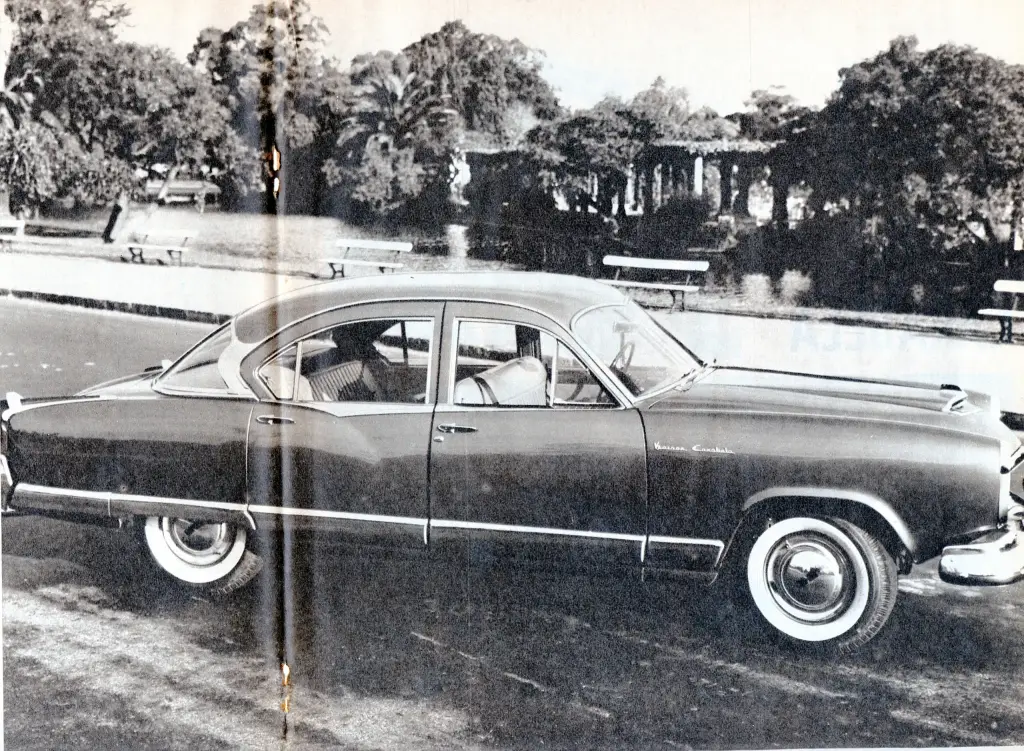
The Kaiser Carabela was the first Argentine saloon built on an assembly line. Made by Industrias Kaiser Argentina from 1958 to 1962, it was a localised Kaiser Manhattan with a big six-cylinder engine, and it was the largest and heaviest car built in the country at the time.
Kaiser Carabela at a glance
| Maker | Industrias Kaiser Argentina, Santa Isabel, Córdoba |
|---|---|
| Production | 1958–1962 |
| Based on | Kaiser Manhattan of 1954–1955 |
| Engine | Continental 6L-226, 3707 cc, six cylinders in line |
| Power | 138 km/h top speed |
| Gearbox | three-speed manual, gear lever on the steering column |
| Dimensions | 5475 mm long, 1900 mm wide, 3010 mm wheelbase |
| Weight | 1638 kg |
| Seats | six or seven |
| Built | 10,225, of which 57 were taxis |
History of the Kaiser Carabela
In 1955 IKA imported the first Kaiser Manhattans, and these became the basis of the first Argentine car, the Kaiser Carabela. Nearly complete cars were shipped from the Toledo, Ohio plant to Argentina to be reproduced at Santa Isabel, and the Carabela was largely a carryover of the 1954 and 1955 Manhattan. For Argentina the automatic transmission and the superchargers were deleted, the suspension was improved, the car was modified for the country’s unpaved roads, and a domestic three-speed gearbox replaced the American automatic.
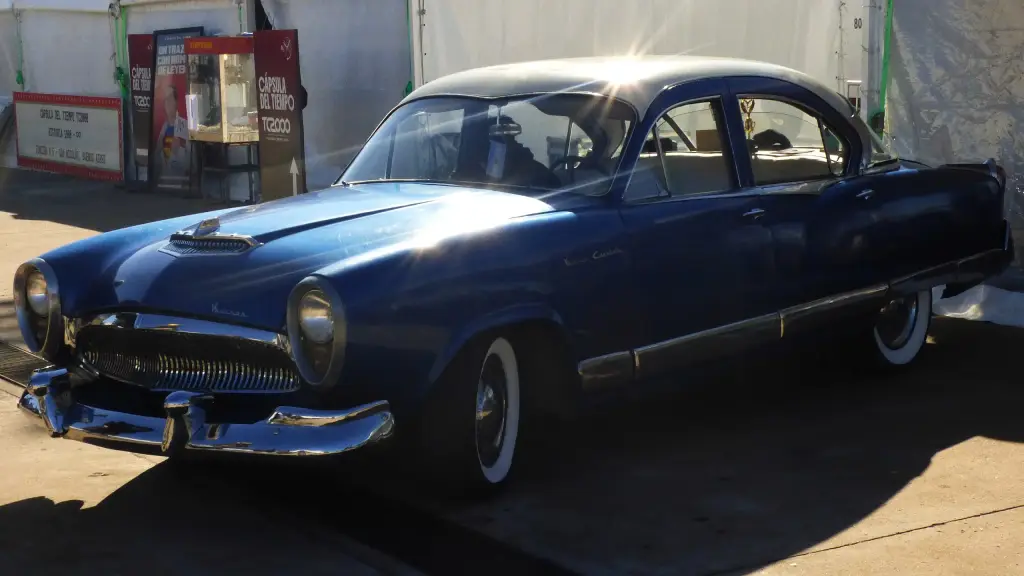
The Carabela was a large, comfortable six-seater, and by Argentine standards of 1958 an unusually big one: 5475 mm long, 1900 mm wide, 1545 mm tall on a 3010 mm wheelbase, weighing 1638 kg. Its Continental 6L-226 six of 3707 cc gave a top speed of 138 km/h. It was the first Argentine passenger car built in series, the first saloon assembled on a production line, and the longest, widest, heaviest car with the longest wheelbase then made in the country.
On the road the car had a mixed reputation. It was elegant, solid and comfortable, but its styling looked dated next to the compact Fiat 600 and Fiat 1500, it was large, it had no power steering, and it was thirsty: the Spanish article quotes a litre of petrol every 5 to 7 km. After IKA’s agreements with Alfa Romeo and Renault brought the Bergantín and the Renault Dauphine, the Carabela lost ground and was discontinued in 1962. Its engine, the Continental 226, was also used in the Estanciera, the Bergantín and the Rambler line.
Official business gave the model a second life. A number of limousines were built for Argentine officials, among them President Arturo Frondizi, and a funeral car and a flower car were made locally; how many of these bodies were built, and how many survive, is not known. Of the 10,225 Carabelas produced, 57 served as taxis.
Design and features
- Argentina’s first series saloon: the first passenger car built on an assembly line in the country.
- Manhattan ancestry: a carryover of the 1954–1955 Kaiser Manhattan.
- Big six: the 3707 cc Continental 6L-226, shared with the Estanciera and the Ramblers.
- Local changes: no automatic gearbox or supercharger, improved suspension for Argentine roads.
- Official cars: limousines for government use, plus funeral and flower car bodies.
Kaiser Carabela versions
- Standard saloon (1958–1962): the main production car.
- Taxi: 57 cars were used as taxis.
- Limousine: built for Argentine officials, including President Arturo Frondizi.
- Funeral car and flower car: custom bodies made locally in unknown numbers.
The Carabela was replaced by the Rambler line in 1962, and it shared its chassis engineering with the Estanciera. More cars are in the IKA collection.
Sources
- Kaiser Carabela, English Wikipedia: production, Manhattan basis, local changes, totals
- Kaiser Carabela, Spanish Wikipedia: dimensions, engine, market reception, official cars