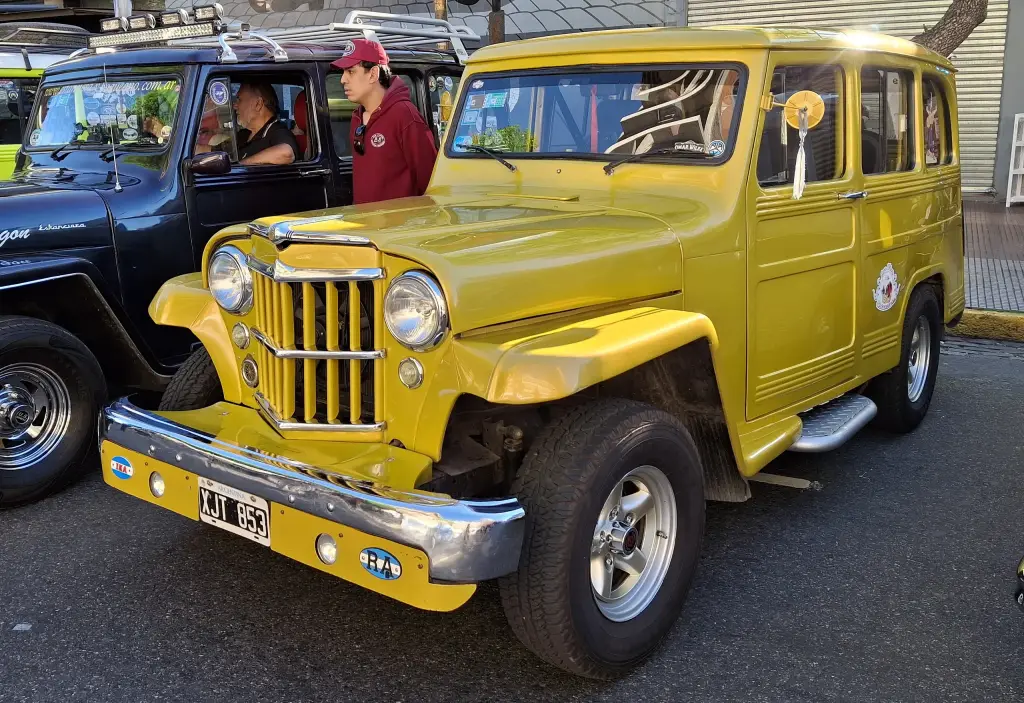
The IKA Estanciera was the Argentine edition of the Willys Jeep Station Wagon, built by Industrias Kaiser Argentina from 1957 to 1970. It came as a passenger estate, a load-carrying van and the Baqueano pickup, and its tall, boxy shape is often described as a forerunner of the modern SUV.
IKA Estanciera at a glance
| Maker | Industrias Kaiser Argentina, Santa Isabel, Córdoba |
|---|---|
| Production | 1957–1970 |
| Based on | Willys Jeep Station Wagon |
| Bodies | rural estate, Utilitario panel van, Baqueano pickup |
| Engines | Continental 226, Tornado Special 181 and Tornado Special 230, all six-cylinder |
| Drive | rear wheels, four-wheel drive available |
| Facelift | around 1966, similar to the Brazilian version |
| Baqueano | pickup built 1961–1963 with 500–1000 kg payload |
| End of production | 1970, after AMC took over Kaiser-Jeep |
History of the IKA Estanciera
The Estanciera was the third product of IKA, after the Jeep and the Kaiser Carabela. Production followed an agreement between IKA and Willys-Overland, which had belonged to Kaiser Motors since 1953, and the car was a licensed Argentine reproduction of the Willys Station Wagon. IKA used production equipment transferred from the United States and assembled the car at its new Santa Isabel plant outside Córdoba.
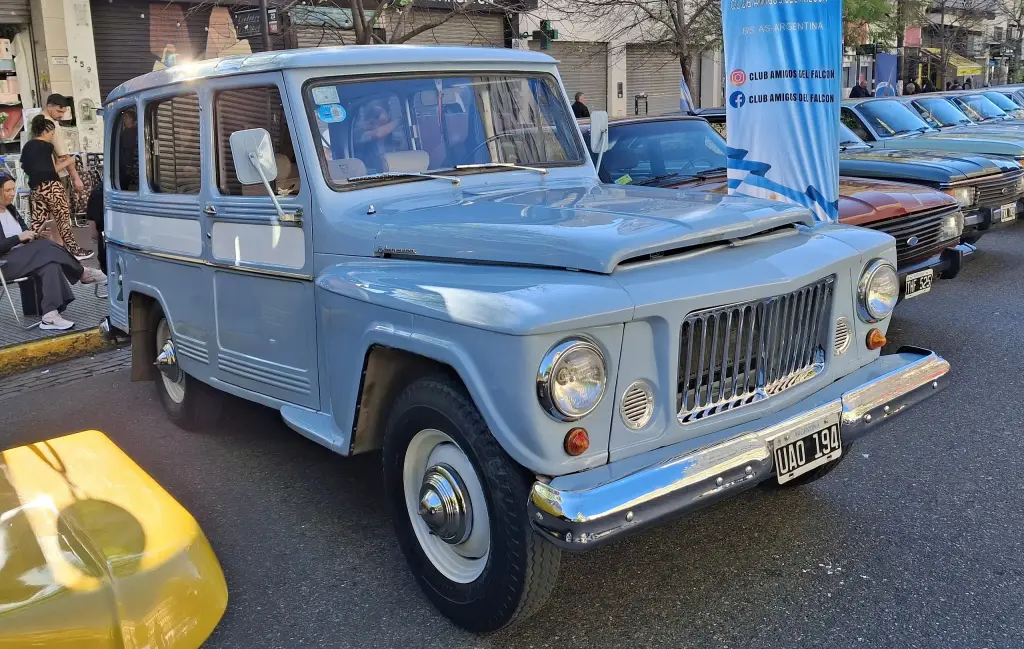
The range covered three distinct jobs. The Rural carried passengers, the Utilitario was a panelled load carrier, and the Baqueano was the pickup: a version of the 1950 Willys Pickup Truck whose cab took the front of the Estanciera and whose load bed accepted between 500 and 1000 kg. The Baqueano was built from 1961 to 1963, when the Jeep Gladiator took its place.
Under the bonnet the Estanciera used six-cylinder engines in line: first the Willys Continental 226, then the Tornado Special 181 and the Tornado Special 230. Around 1966 the range received a facelift with an appearance close to the model then being built in Brazil. Production ended in 1970, after the American Motors Corporation bought Kaiser-Jeep and took control of IKA in Argentina, and the company went on to form IKA-Renault with Renault.
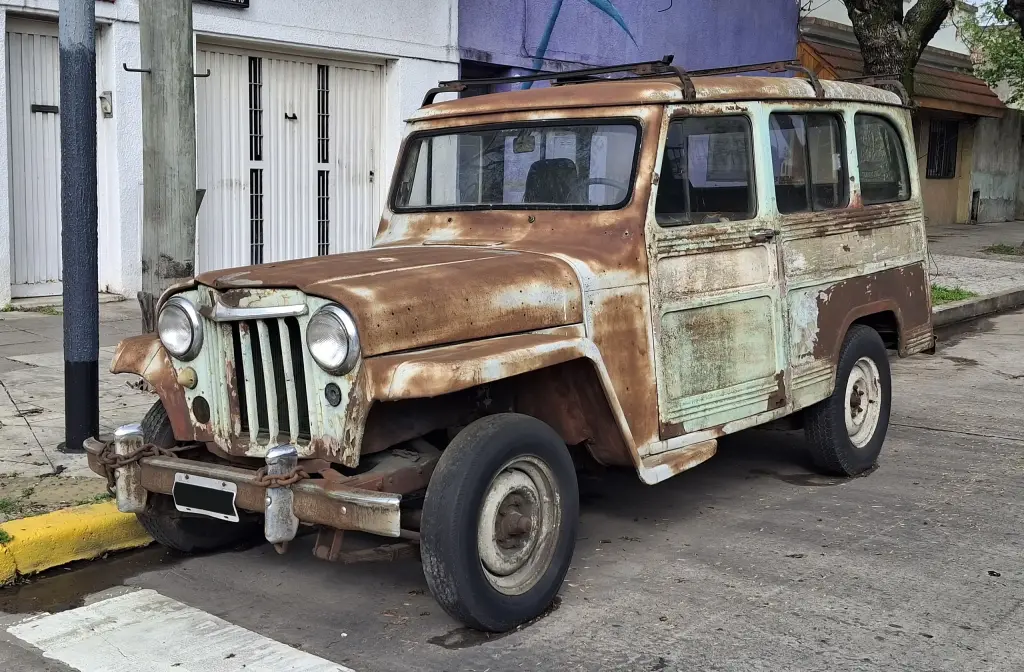
The Estanciera has aged into a cult car. Its separate chassis, roomy body and simple mechanics keep it in demand among restorers, and owners often swap the old Continental six for more modern units: the Ford 221 six from the Falcon and F-100, the 292 cu in Ford V8, the Chevrolet 250 six or the Perkins four-cylinder diesel. The earliest cars are the least loved for their engine, which is old and short of spare parts, and these engine swaps have produced a whole family of hybrids with Estanciera bodies and other makers’ power.
Design and features
- Willys pedigree: a licensed Argentine version of the Willys Jeep Station Wagon, built with transferred US tooling.
- Three bodies: passenger estate, panelled Utilitario van and the Baqueano pickup.
- Six-cylinder engines: Continental 226 and later Tornado Special 181 and 230 units.
- Rugged construction: separate chassis and a body that survives in restoration today.
- SUV ancestor: the tall estate shape is regularly compared with modern sport utility vehicles.
IKA Estanciera versions
- Rural: the passenger estate, the best known form of the Estanciera.
- Utilitario: a panelled van for carrying loads.
- Baqueano (1961–1963): pickup with the Estanciera front and a 500–1000 kg payload.
- 1966 facelift: revised front and rear close to the Brazilian-built version.
- Hybrids: restored cars fitted with Ford, Chevrolet or Perkins engines.
The Estanciera shared its chassis family with the IKA Jeep and came after the Kaiser Carabela in the IKA range. More cars are in the IKA collection.
Sources
- IKA Estanciera, English Wikipedia: production years, body versions, facelift
- IKA Estanciera, Spanish Wikipedia: engines, Baqueano, end of production, engine swaps