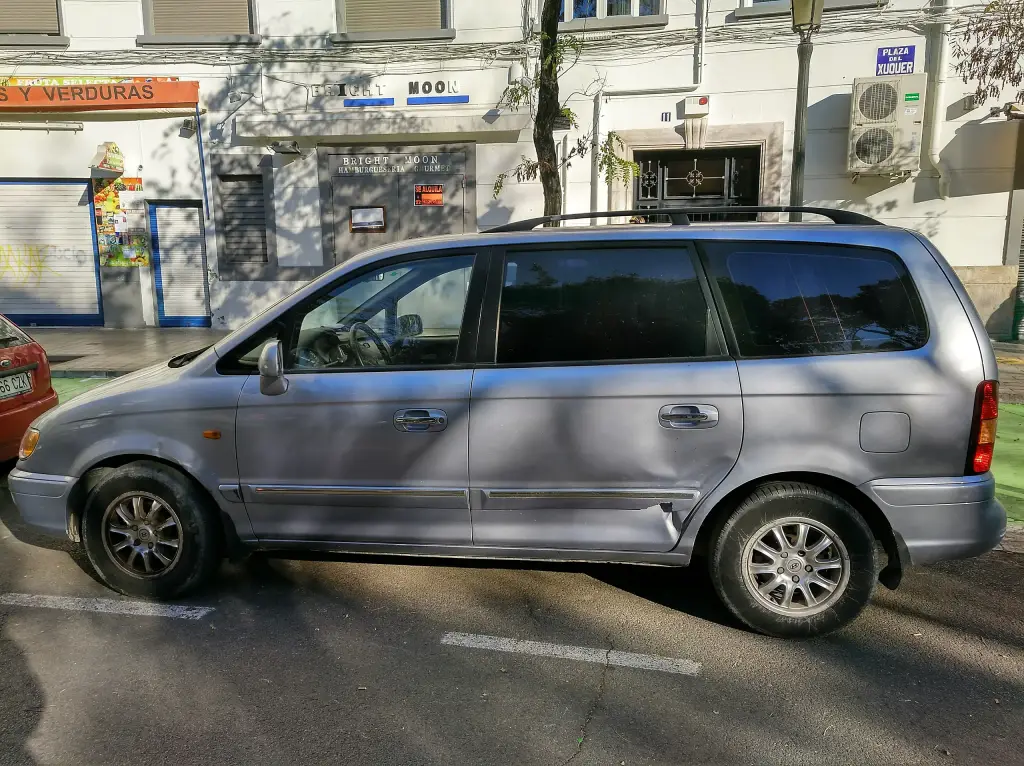
The Hyundai Trajet is the seven-seater multi-purpose vehicle Hyundai built from 1999 to 2008. Its name comes from the French word “trajet”, meaning journey or route, and in Korea it was sold as the Trajet XG to tie it to the Grandeur XG, whose platform it shared along with the Sonata and the first Santa Fe. It was styled in Frankfurt and shown publicly at the London motor show in 1999.
Hyundai Trajet at a glance
| Maker | Hyundai Motor Company |
|---|---|
| Production | 1999–2008 |
| Bodies | five-door seven-seat MPV |
| Platform | shared with the Sonata and the first Santa Fe |
| Styled in | Frankfurt |
| Public debut | London motor show, October 1999 |
| European sales from | spring 2000 |
| UK launch model | 2.0 GSI; SE with 2.7 V6 from 2001 |
| 2.0-litre output | 139 PS, 180 N·m |
| Top speed, 2.0 manual | 178 km/h, claimed |
| Fuel | petrol, diesel or LPG depending on market |
| Replaced by | no direct successor |
Based on one source, the English Wikipedia article on the Hyundai Trajet. The video attached to the old record is dead, so the page carries no video.
History of the Hyundai Trajet
Hyundai developed the Trajet for large families and the shuttle market. Sales began in Korea in spring 1999, the British premiere was at the London Motorfair in October that year, and European sales started in spring 2000. In Britain only the 2.0 GSI was offered at first, with a limited-edition SE using the 2.7-litre V6 added in 2001.
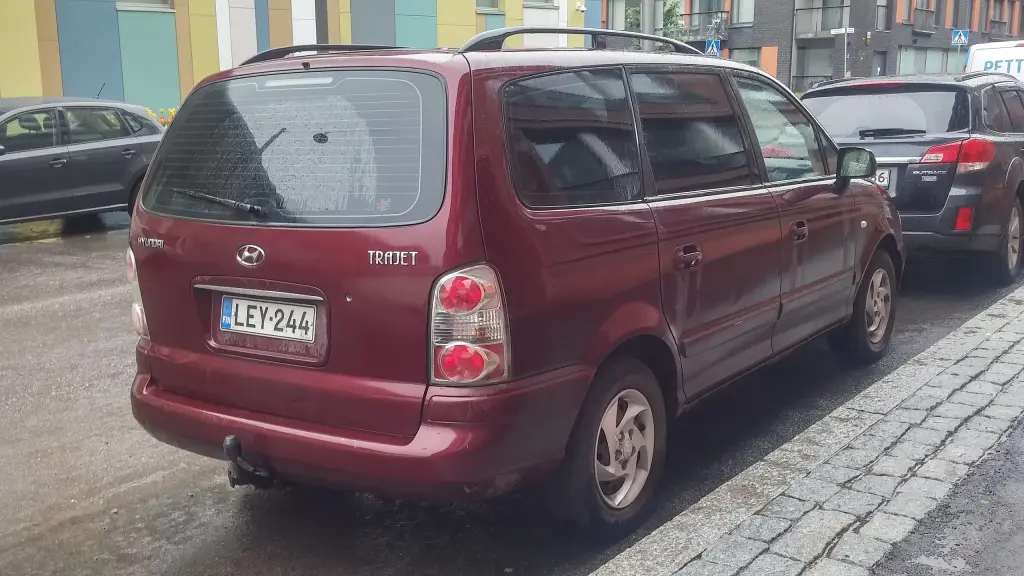
The car was larger than many of its rivals and offered room for seven adults with the seats in place. The front seats could rotate 180 degrees to face the rear passengers when the car was standing, and the back seats could be turned into tables, making a workspace or a picnic area; the second and third rows folded in two and could be removed altogether. Unusually for a minivan, Hyundai kept conventional hinged rear passenger doors rather than sliding ones, and fitted the automatic gearbox selector to the steering column with no centre console.
The 2.0-litre petrol Sirius II engine in European trim produced 139 PS at 5,800 rpm and 180 N·m at 4,000 rpm, enough for a claimed 178 km/h with the five-speed manual. Reviews were mixed: the ride was called firm around town and bouncy at speed, with a lot of body lean in corners, light steering and noisy engines under acceleration, and the long gearing of the 2.0-litre made the car slower than rivals even though it helped at the fuel pump.
The range was updated in September 2004. The 2.0 GSI moved to the Beta II engine with CVVT, gaining power from 133 to 139 bhp and cutting CO2 from 223 to 208 g/km, while combined fuel consumption improved from 30.4 to 32.5 mpg. All rear passengers then got three-point seat belts. Production and marketing ended in 2008 without a direct successor.
Design and features
- Seven seats: room for seven adults with the seats in use.
- Flexible interior: rotating front seats, folding rear rows and seats that convert into tables.
- Hinged doors: conventional rear doors instead of the sliding doors most minivans used.
- Shared platform: the same base as the Sonata and the first Santa Fe.
Hyundai Trajet versions
- Trajet 2.0 GSI: the main European model with the Sirius II engine.
- Trajet SE: British limited edition with the 2.7-litre V6 from 2001.
- Trajet XG: the Korean name, linking it to the Grandeur XG.
- 2004 update: Beta II engine with CVVT and three-point belts for all rear seats.
The Trajet shared its platform with the Sonata and the first Santa Fe, and it was replaced in the range by the smaller Lavita and later the ix20. More Hyundai models are in the Hyundai collection.
Sources
- Hyundai Trajet, English Wikipedia: dates, name, platform, interior, engines, reviews, update