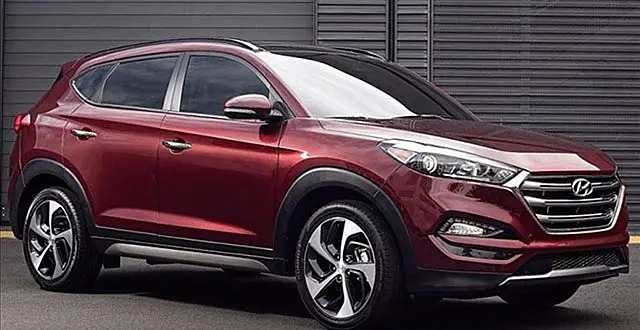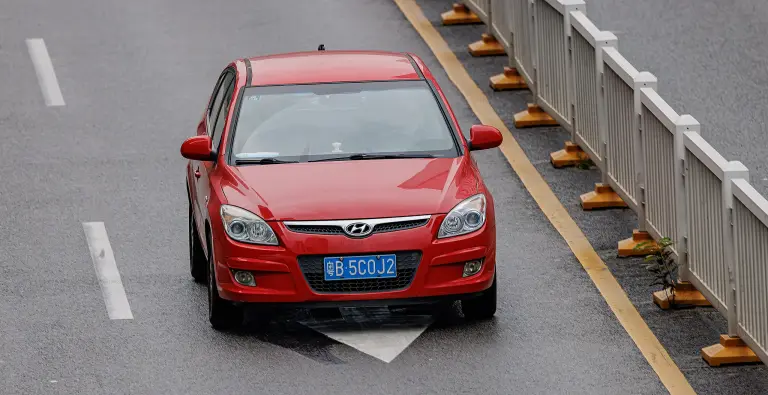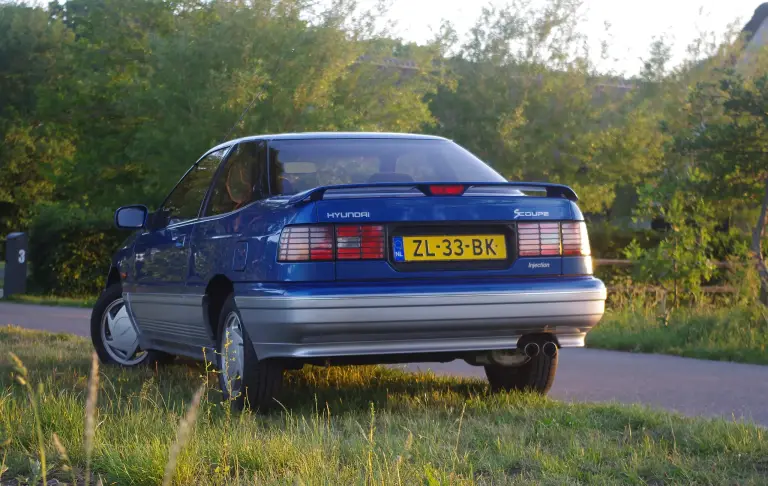
The Hyundai Accent is the subcompact car with which Hyundai replaced the Excel in 1994. Its name stands for “Advanced Compact Car of Epoch-making New Technology”, and the car was sold under a different badge in almost every market: Verna in Korea, Solaris in Russia, Brio in Puerto Rico, Pony in France. The first generation, known as the X3, was for a time the third best-selling car in Australia.
Hyundai Accent at a glance
| Maker | Hyundai Motor Company |
|---|---|
| Production | from 1994 |
| Replaced | Hyundai Excel |
| First generation | X3, 1994 |
| Replaced in Korea by | Hyundai Verna, 2000 |
| Also sold as | Verna, Solaris, Brio, Excel, Pony, Bimantara Cakra, Dodge Brisa |
| Bodies | three-door liftback, four-door sedan, five-door liftback, coupé |
| Australian engines | 1.5 SOHC 91 hp; 1.5 DOHC 99 hp; GT 105 hp |
| British engines | 1.3 12v 85 hp, 1.5 12v 92 hp, 1.5 16v 105 hp |
| Australian sales | about 200,000 X3 between 1994 and 2000 |
History of the Hyundai Accent
The Accent arrived in 1994 as the replacement for the Excel. The first generation, the X3, kept the Excel name in some markets – the Netherlands, Belgium, Indonesia and Australia – while France called it the Pony. In Indonesia the car was first assembled and sold as the Bimantara Cakra, and after the 1998 crisis Hyundai took the plant over and sold it under its own name. In China the same car was built by Dongfeng Yueda Kia as the Kia Qianlima from 2002 to 2006.
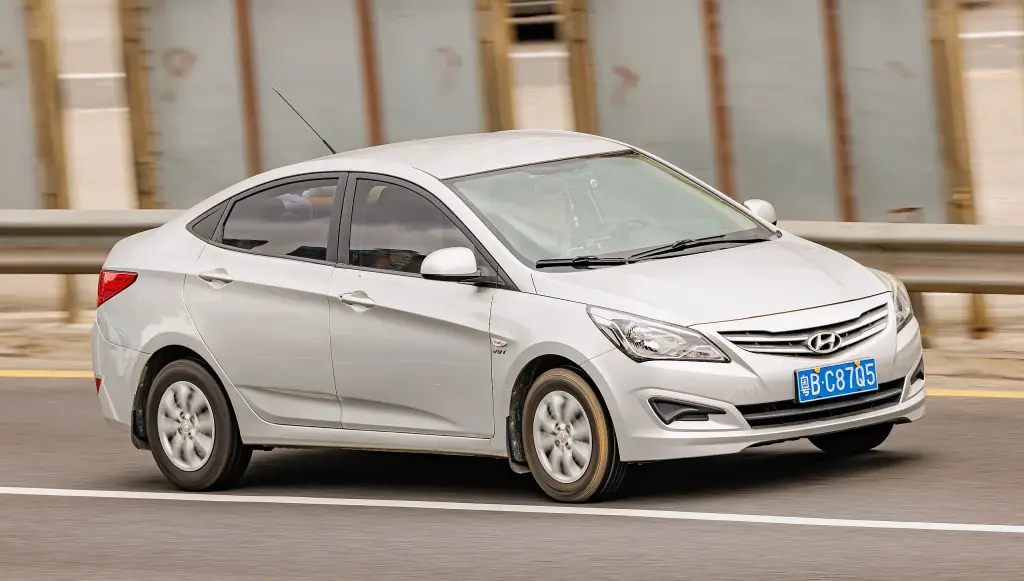
Australia was the Accent’s strongest export market. The X3 was launched there in November 1994 in Sprint, GX, LX and GLX trims, with the three-door Sprint taking the overwhelming majority of sales thanks to free air-conditioning and driveaway pricing. The car was the third best-selling vehicle in the country in both 1996 and 1998; in 1998 it sold more than 44,000 units, a record for an imported car, and in June of that year it briefly led the market ahead of the Holden Commodore. Between 1994 and 2000 some 200,000 X3s were sold in Australia.
The facelift reached Australia in April 1997. The 1.5-litre G4EK single-cam engine with 91 hp was joined from November 1997 by a twin-cam G4FK unit of 74 kW (99 hp) and 134 N·m, badged “Twin Cam”. The American Accent GT used a more powerful version of that engine with 105 hp. In Britain the Accent came as saloon, liftback and coupé with a choice of 1.3 and 1.5-litre petrol engines and no diesel.
Design and features
- Name as an acronym: Accent stands for Advanced Compact Car of Epoch-making New Technology.
- Many badges: Verna, Solaris, Brio, Pony, Excel and Dodge Brisa were all the same car in different markets.
- Wide body choice: three and five-door liftbacks, a four-door sedan and, in Britain, a coupé.
- Australian success: the X3 was for a time the country’s third best-selling car.
Hyundai Accent versions
- X3 (1994): the first generation, with 1.3 and 1.5-litre petrol engines.
- Sprint, GX, LX and GLX: Australian trim levels; the three-door Sprint was the volume seller.
- Twin Cam: Australian X3 with the 99 hp double-overhead-cam engine from late 1997.
- Accent GT: American version of the twin-cam car with 105 hp.
- Classique and Sportz: Australian special editions of 1995–1996 and 1999–2000.
- Verna and Solaris: later names for the same car in Korea and Russia.
The Accent took over from the Excel and was later joined in the range by the smaller Getz. More Hyundai models are in the Hyundai collection.
Video: 2013 Hyundai Accent GLS AUTO Start up, Walkaround and Vehicle Tour
Video by Justins Car Reviews on YouTube.
Sources
- Hyundai Accent, English Wikipedia: names, first generation, markets, engines, Australian sales