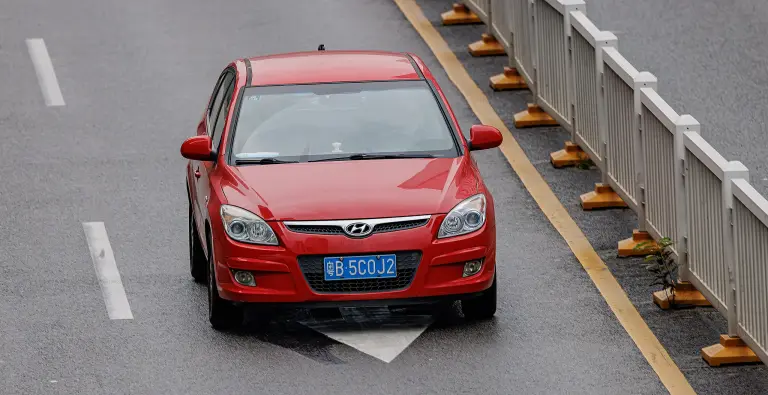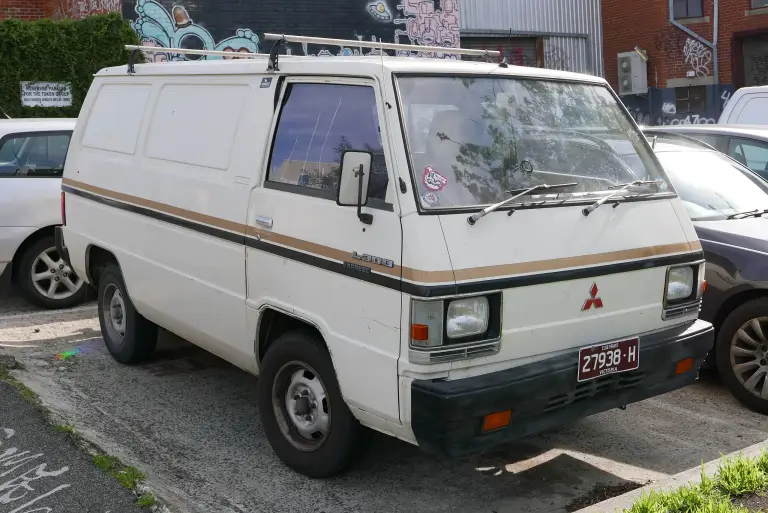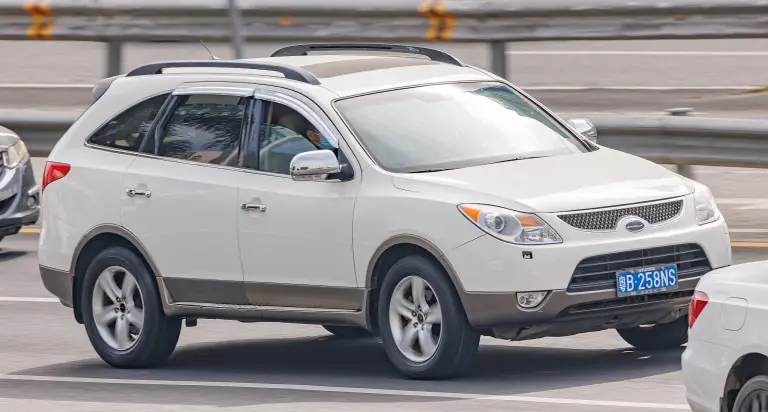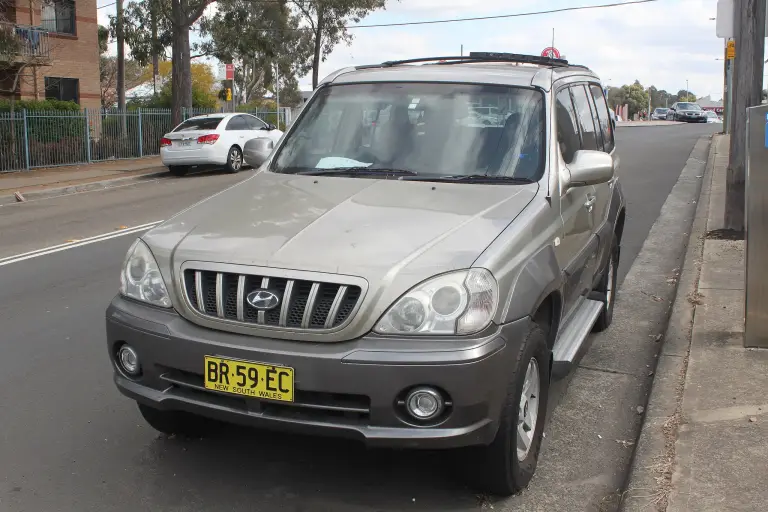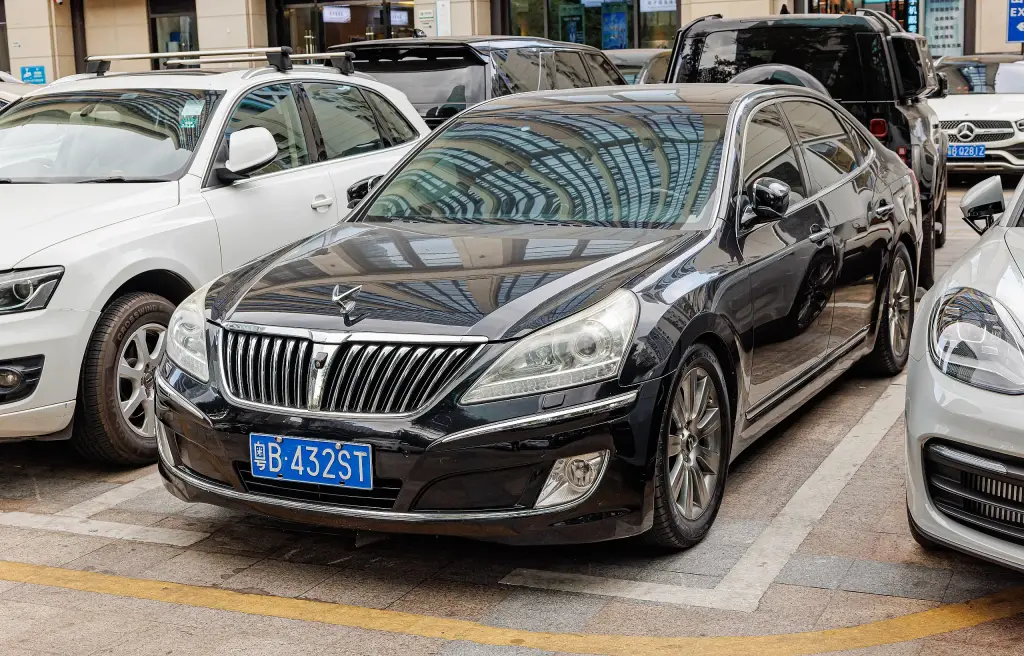
The Hyundai Equus is the full-size, rear-wheel-drive luxury sedan Hyundai made from 1999 to 2016. Its name comes from the Latin word for horse. It was built in two generations, the first of them a front-wheel-drive car developed with Mitsubishi, the second a clean-sheet Hyundai design; its 2016 successor became the Genesis G90.
Hyundai Equus at a glance
| Maker | Hyundai Motor Company |
|---|---|
| Production | 1999–2016 |
| Class | full-size luxury sedan |
| Bodies | four-door sedan and long-wheelbase limousine |
| First generation | LZ/YJ, 1999, front-wheel drive, 5.1 m long |
| First generation engines | 3.0 and 3.5 Sigma V6, 4.5 Omega V8 |
| Twin model | Mitsubishi Proudia and Dignity |
| Second generation | VI, 2009, rear-wheel drive |
| Second generation engines | 3.8 and 4.6 V6 and V8, later 5.0 V8 |
| Also sold as | Hyundai Centennial in some markets |
| Successor | Genesis G90 (EQ900 in Korea until 2018) |
History of the Hyundai Equus
The first generation arrived in 1999. Hyundai said it had built a full-size sedan to take on the Mercedes-Benz S-Class and BMW 7 Series in Korea, though in practice its rival was the SsangYong Chairman. The car was designed by Mitsubishi, which sold its own version as the Proudia and the Dignity limousine, and it was built jointly by the two companies. It was front-wheel drive and measured 5.1 metres long and 1.9 metres wide.
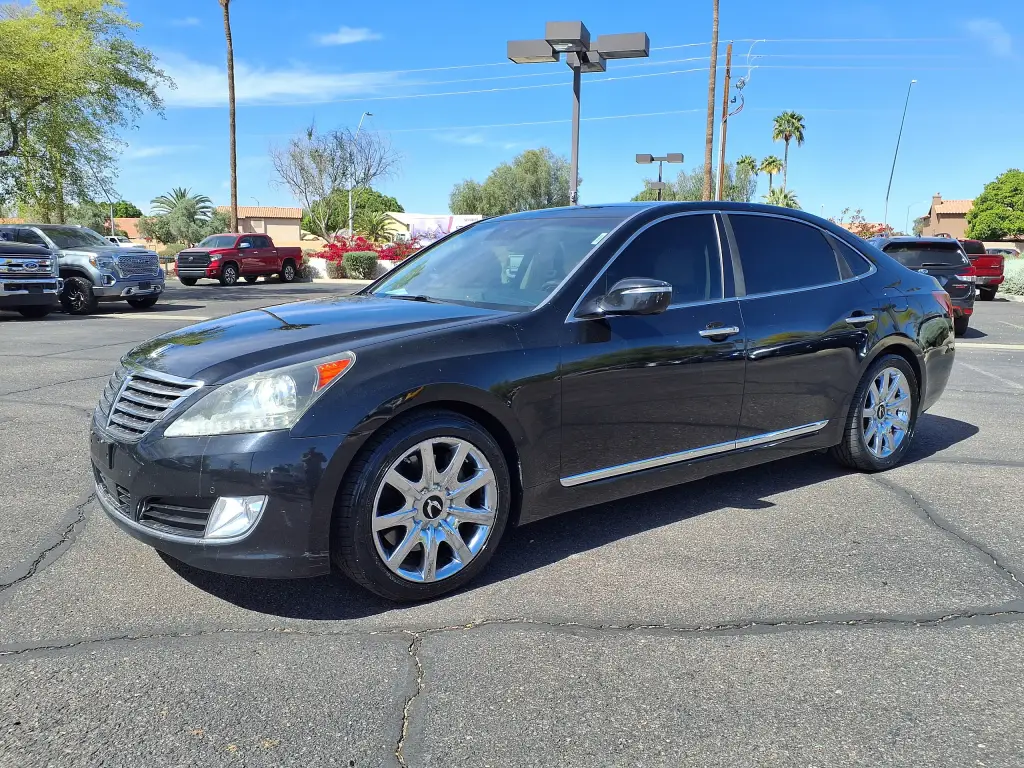
Under the bonnet there were initially two engines, a 3.5-litre Sigma V6 and a 4.5-litre Omega V8, with a 3.0-litre V6 added a few months later. Two bodies were offered: a sedan with the 3.0, 3.5 or 4.5 engine and a limousine with the 3.5 or 4.5. The limousine was for Korea only and, at 92,510,000 won for a 2008 car with the V8 and no options, was the most expensive model Hyundai sold. The 4.5 V8 was a Mitsubishi gasoline-direct-injection design; because premium unleaded was hard to find in Korea at the time, most cars ran on ordinary fuel and suffered performance problems, which Hyundai solved by converting the engine to multi-point injection. Curtain airbags arrived in 2001 and active head restraints in 2002.
A revised New Equus came in 2003 with a changed bonnet, a seven-inch screen for the rear passengers, xenon headlamps and front parking sensors. Seat ventilation, a climate-control air purifier and Alcantara trim followed in 2003 and 2007, and from 2005 Hyundai’s own 3.3 and 3.8-litre Lambda V6 engines replaced the Sigma units. The first generation went out of production in November 2009.
The second generation, codename VI, was unveiled at the Grand Hyatt in Seoul and launched in March 2009. It switched to rear-wheel drive on an all-new in-house platform with a longer wheelbase. Korean buyers could choose a 3.8-litre Prime or a 4.6-litre Prestige; the American car, shown at Pebble Beach in 2009 and at the New York auto show in 2010, used the 4.6-litre V8 from the Genesis with 385 hp, a horizontal grille, a bonnet badge instead of the ornament and an iPad with the owner’s manual instead of a printed book. It was the first Hyundai with electronically controlled air suspension and continuous damping control, and the first with the Vehicle Stability Management system. In November 2015 Hyundai moved the Genesis name to a separate luxury division, and the Equus was replaced by the Genesis G90.
Design and features
- Two architectures: a front-wheel-drive first generation and a rear-wheel-drive second.
- Limousine version: a long-wheelbase car sold mainly in Korea.
- Mitsubishi link: the first Equus was designed by Mitsubishi and sold there as the Proudia.
- Technical firsts: air suspension, continuous damping and Vehicle Stability Management.
Hyundai Equus versions
- Equus sedan (1999–2009): 3.0 and 3.5 V6 or 4.5 V8, front-wheel drive.
- Equus limousine (1999–2009): long wheelbase, 3.5 or 4.5 engine, Korea only.
- New Equus (2003): revised nose and interior, rear-seat screen and xenon lamps.
- Equus VI (2009–2016): rear-wheel-drive second generation with V6 and V8 engines.
- Hyundai Centennial: the name used for a limited number of cars in some export markets.
The Equus took over the flagship role from the Dynasty in 1999, and its platform relative was the Genesis. More Hyundai models are in the Hyundai collection.
Video: 2014 Hyundai Equus Ultimate – Redline: Review
Video by Redline Reviews on YouTube.
Sources
- Hyundai Equus, English Wikipedia: generations, engines, limousine, equipment, successor