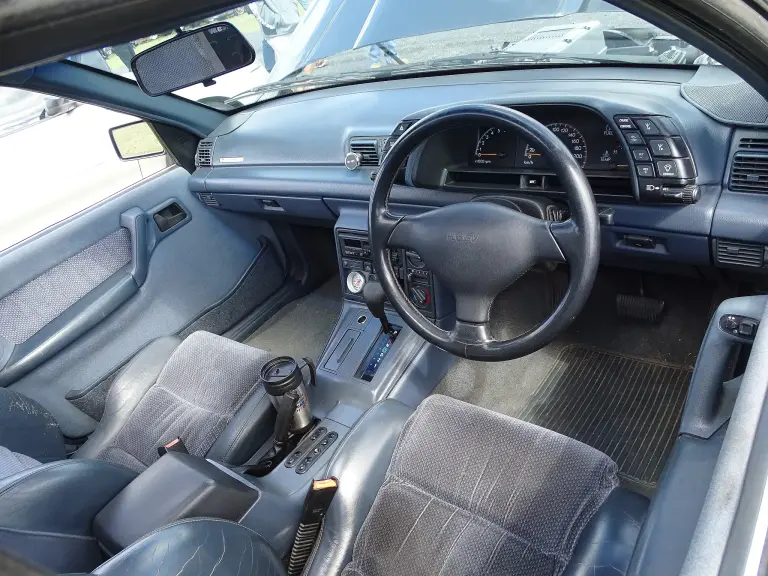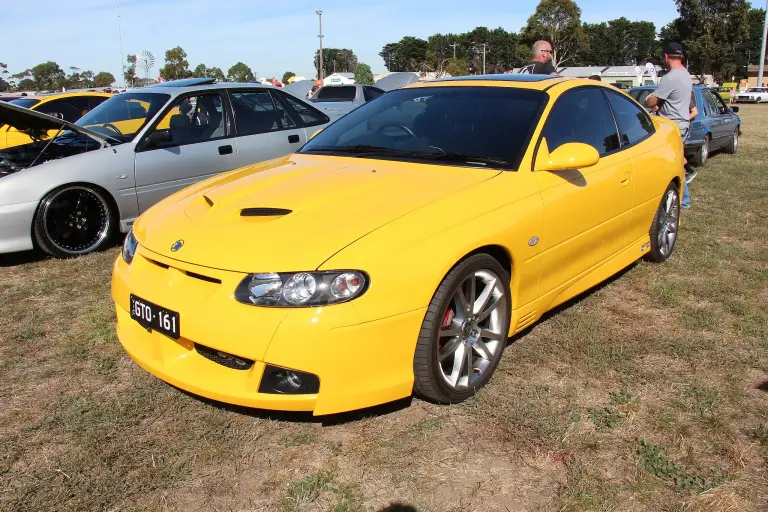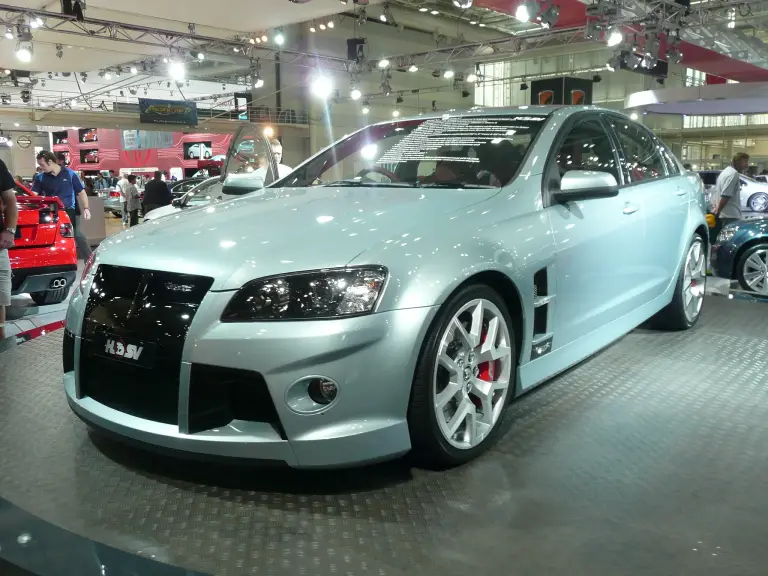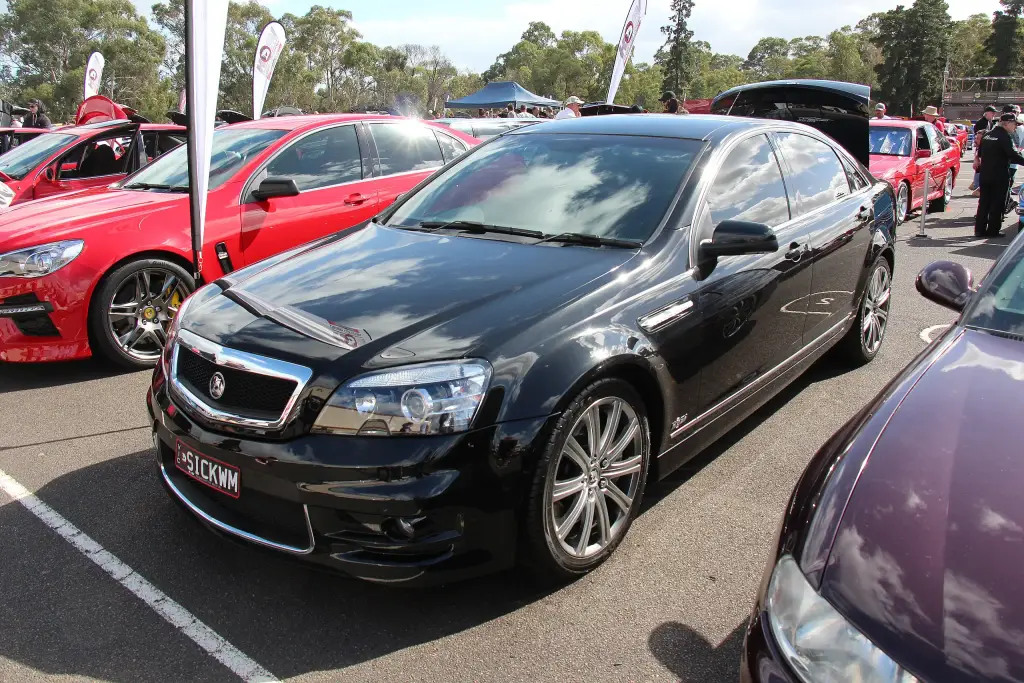
The HSV Grange was the performance-luxury long-wheelbase sedan of the Holden Special Vehicles range, built from 1996 to 2016 on the Holden Caprice and Statesman. It was the model for buyers who wanted HSV power with more rear-seat room than a Senator, and it ran through seven series before the limited Grange SV closed the line.
HSV Grange at a glance
| Maker | Holden Special Vehicles, Clayton, Victoria |
|---|---|
| Production | October 1996–2016 |
| Basis | Holden Caprice and Statesman |
| First model | VS II Grange 185i, 5.0-litre V8 at 185 kW |
| Also offered | Grange 215i with 5.7-litre stroker V8 at 215 kW |
| Supercharged V6 | 3.8-litre Buick V6 at 180 kW, WH Series only |
| Last full model | WN Grange, LS3 at 340 kW |
| Limited edition | Grange SV, 2016 |
| End of production | 2016 |
History of the HSV Grange
The VS II and WH series
The Grange was released in October 1996 as a VS II Series car based on the Holden VS Caprice. Two versions were offered: the Grange 185i with the 5.0-litre Holden V8 at 185 kW (248 hp) and the Grange 215i with a 5.7-litre stroker Holden V8 at 215 kW (288 hp). The WH Series Grange of 1999 switched to the long-wheelbase WH body and offered either a supercharged 3.8-litre Buick V6 at 180 kW (241 hp) or the 5.7-litre LS1 V8 at 250 kW (335 hp). In October 2000 the supercharged V6 was dropped and the LS1 raised to 255 kW (342 hp); the WHII Series of September 2001 kept that output.
WK, WL and WM
The WK Series Grange of September 2003 brought the LS1 at 285 kW (382 hp), and the WL Series of September 2004 the 6.0-litre LS2 at 297 kW (398 hp). The WM Series arrived in May 2007 with the LS2 at 307 kW (412 hp), later changing to the 6.2-litre LS3 at 317 kW (425 hp). The WM III of September 2010 raised the LS3 to 325 kW (436 hp) and added a bi-fuel option running on liquefied petroleum gas and petrol.
The WN and the Grange SV
The WN Series Grange of 2013 came with the LS3 at 340 kW (456 hp), the most powerful of the line. A limited-production Grange SV followed in 2016, and the model’s production ended that year after two decades. The Grange was never replaced in the HSV range: by then the company was concentrating on the Gen-F range and, from 2018, on converting imported Chevrolet models to right-hand drive.
Design and features
- Long-wheelbase body: the Grange used the Caprice and Statesman shell, giving more rear-seat room than the Senator.
- V8 throughout: every full-series Grange carried a V8, from the Holden 5.0-litre to the 6.2-litre LS3.
- One V6 exception: the WH Series offered a supercharged 3.8-litre Buick V6 at 180 kW for two years.
- Bi-fuel option: the WM III of 2010 could run on LPG as well as petrol.
- Power growth: output rose from 185 kW in 1996 to 340 kW in 2013 on the same basic recipe.
HSV Grange versions
- VS II Grange 185i (1996): 5.0-litre Holden V8 at 185 kW.
- VS II Grange 215i: 5.7-litre stroker Holden V8 at 215 kW.
- WH Grange (1999): supercharged 3.8-litre V6 at 180 kW or LS1 at 250 kW.
- WK and WL Grange (2003–2006): LS1 at 285 kW, then LS2 at 297 kW.
- WM and WM III Grange (2007–2013): LS2 then LS3, up to 325 kW, with bi-fuel from 2010.
- WN Grange (2013): LS3 at 340 kW.
- Grange SV (2016): the limited-edition finale.
The Grange was the long-wheelbase stablemate of the HSV Senator and shared its engines with the Clubsport R8; all three are in the HSV collection.
Video: Top Gear Australia – HSV Grange VS Jag XJ Supersport
Video on YouTube.
Sources
- HSV Grange, English Wikipedia: history by series, engines and outputs
- Holden Special Vehicles, English Wikipedia: marque history and the end of Holden-based production